What Size Egg Pan Should You Buy for 1, 2, or 4 Eggs?

For four eggs, a pan with about 8 to 9 inches of flat cooking surface is a practical target, with enough room for the eggs to spread without crowding. A pan that is too small makes the whites bunch together and cook harder at the edges. This guide explains how pan shape, base width, and egg size affect the right fit.
Egg pan sizing table
| Rim diameter | Usable cooking surface | Egg count | Best egg style | Usable surface warning |
|---|---|---|---|---|
| 6 inches | About 4 to 5 inches flat | 1 egg | Fried, over-easy, small omelet | Best for one large egg. Size up if you want extra-large eggs, a thicker omelet, or more room for butter and tilt control. |
| 8 inches | About 6 to 7 inches flat | 2 eggs | Fried, scrambled, two-egg omelet | Usually enough for two large eggs. Tight for two extra-large eggs if you want separate whites and cleaner flipping. |
| 10 inches | About 8 to 9 inches flat | 4 eggs | Scrambled, four fried eggs, family omelet | Good for four eggs, but a single egg can spread too thin and sit in pooled fat unless you keep the heat and butter under control. |
Most egg pans look larger at the rim than they cook in the middle. That is why a pan labeled 8 inches can have a smaller flat area than you expect, and why the usable surface matters more than the outside number when you are choosing a pan for eggs.
What size pan do you need for 1 egg?
For one large egg, a 6-inch pan is often a good starting point because the egg stays compact and is easier to shape. A pan with about 4 to 5 inches of flat cooking surface gives the white less room to run, so the edges set before the center overcooks.
Best fit for fried and over-easy eggs
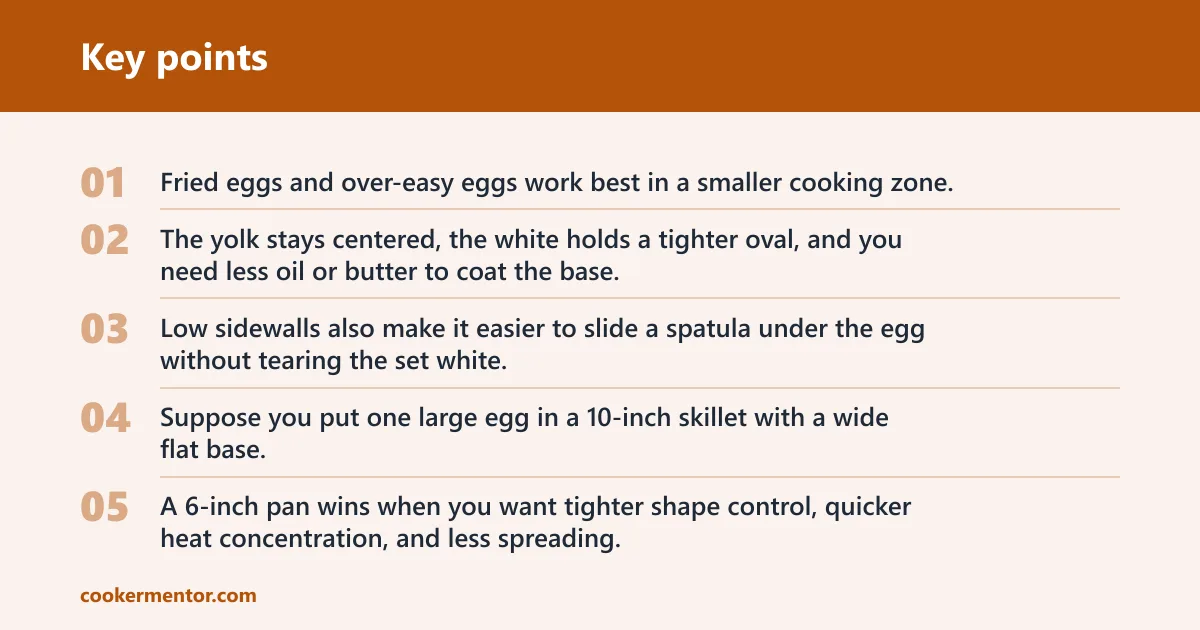
Fried eggs and over-easy eggs work best in a smaller cooking zone. The yolk stays centered, the white holds a tighter oval, and you need less oil or butter to coat the base. Low sidewalls also make it easier to slide a spatula under the egg without tearing the set white.
Suppose you put one large egg in a 10-inch skillet with a wide flat base. The white can spread far enough to make a thin lacey edge, and the extra surface area may leave more butter or oil sitting around the egg instead of helping it set evenly.
When a 6-inch pan beats an 8-inch pan
A 6-inch pan wins when you want tighter shape control, quicker heat concentration, and less spreading. That matters most for one fried egg, one over-easy egg, or a small omelet that should fold neatly. An 8-inch pan can still work, but you may need more fat and closer heat control.
Extra-large eggs and small omelets
Use more surface area if the eggs are extra-large or if you want a thicker one-person omelet. Extra-large eggs spread more than large eggs, so the rule of thumb shifts upward if you want the egg to stay thick instead of running thin. For a small omelet, many cooks will prefer the larger end of the 6-inch range or a compact 8-inch pan with a flat, even base.
What size pan is best for 2 eggs?
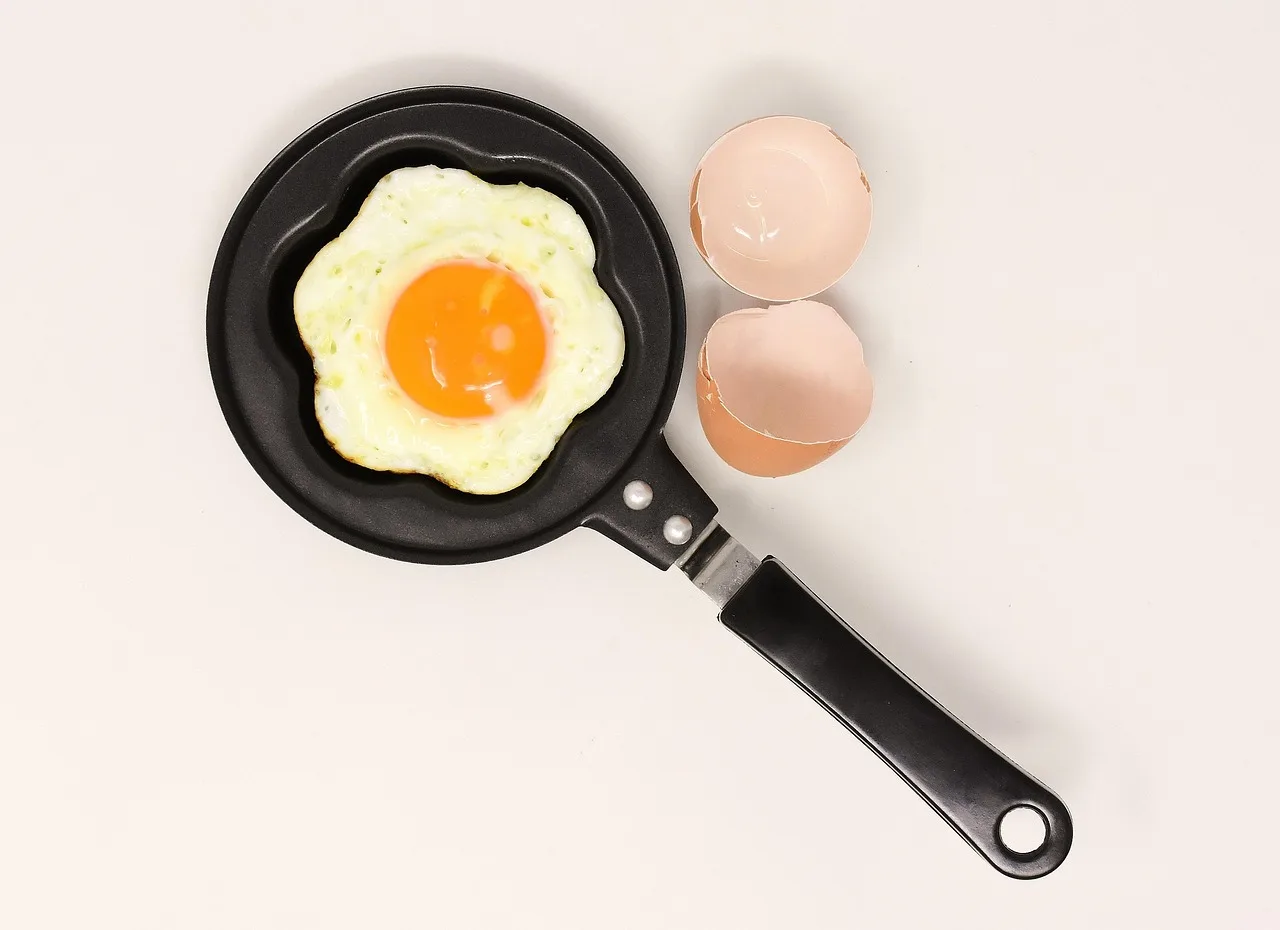
An 8-inch pan is commonly used as a starting point for two large eggs. It gives enough flat cooking surface for both eggs to sit beside each other without crowding, while still keeping the whites close enough that heat reaches them evenly and the edges do not dry out first.
Why 8-inch pans are the usual sweet spot
Two eggs need more room than one, but not much more. A pan with about 6 to 7 inches of usable flat area usually leaves enough space for the whites to spread, for a little butter to move around the base, and for the eggs to cook at a similar pace.
That is why many home cooks find an 8-inch pan easier for two eggs than a 6-inch pan. The extra room reduces overlap and makes it simpler to turn two fried eggs without the whites sticking together.
How egg spread changes the answer
Large eggs are the default sizing reference for egg pans. Extra-large eggs have a larger footprint, so two of them can feel crowded in a pan that would be fine for two large eggs. If you like wide, flat fried eggs, or if you want two eggs with clean edges, a pan with a bit more usable room is the safer choice.
A common shopper mistake is choosing a pan by the widest edge instead of the flat cooking area needed for one, two, or four eggs. A pan marked 8 inches may have sloped sides that leave only a smaller flat center, so the eggs move into the sloped area before they are fully set.
When to size up for thicker eggs
Choose a larger pan if you want thick scrambled eggs, a folded omelet, or two extra-large eggs with enough room to keep the eggs separate. Size up when you notice the whites spreading too far, the edges cooking faster than the center, or the pan filling up with steam because the eggs sit too close together.
What size pan should you buy for 4 eggs?
For four eggs, a 10-inch pan is often a practical starting point because it gives enough room for the eggs to spread without stacking into each other. A smaller pan can handle four eggs only if you are making very soft scrambled eggs and do not mind a tighter cook surface.
Why 10-inch pans give more room
A 10-inch pan with about 8 to 9 inches of usable cooking surface gives four eggs breathing room. That matters for fried eggs, larger omelets, and scrambled eggs that need a little space to move before they set. It also helps keep heat distribution steadier when you are cooking a batch.
When a smaller pan becomes crowded
A 6-inch pan is too small for four eggs, and an 8-inch pan is usually cramped unless you are making a loose scramble. Crowding makes the whites stack, which slows even cooking and raises the chance that the bottoms brown before the tops finish. It also makes flipping harder.
For four eggs, the main tradeoff is speed versus control. A tighter pan concentrates heat, but it also leaves less room for turning, folding, and spacing out the eggs. If the eggs are extra-large, the case for a 10-inch pan becomes stronger.
Family cooking and mixed-use buying
If you cook one egg on weekdays and four eggs on weekends, buy for the larger job unless storage space is tight. A 10-inch pan covers the weekend use better, while a 6-inch pan is better for a single-egg routine. An 8-inch pan sits between them and is often the most flexible choice for two eggs plus occasional extras.
How pan shape and material change egg results
Pan size matters most, but shape and material can change how that size feels in use. Low sidewalls help with flipping and sliding eggs out cleanly. Sloped sides suit omelets. A flat base matters because it gives the eggs even contact with the hot surface.
Low sides versus sloped sides
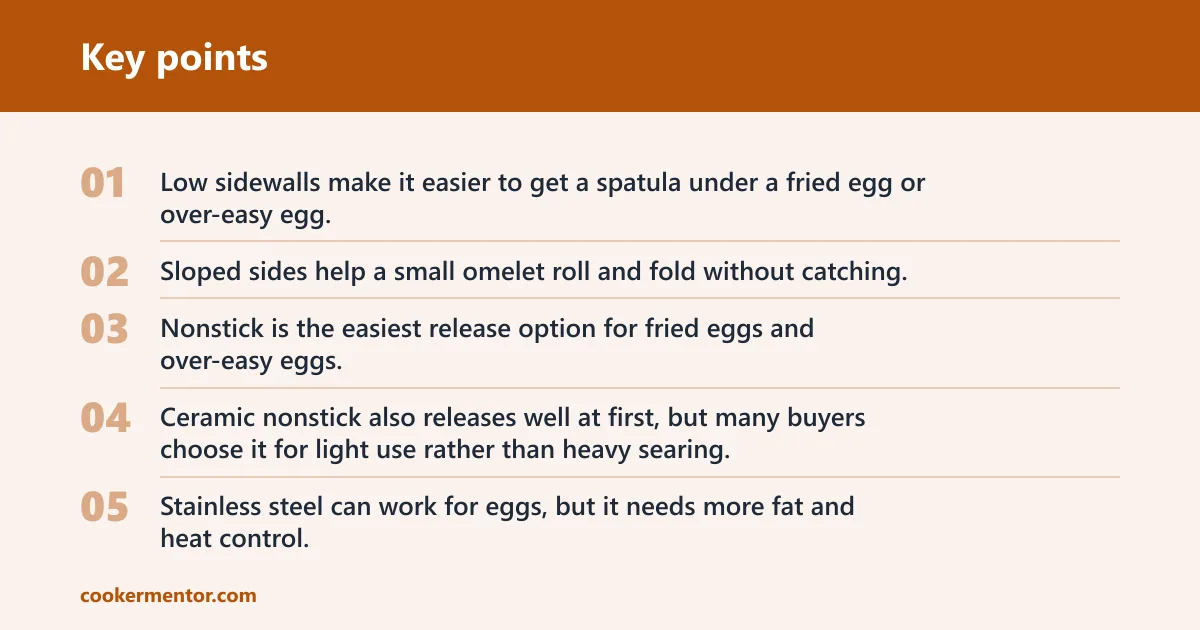
Low sidewalls make it easier to get a spatula under a fried egg or over-easy egg. Sloped sides help a small omelet roll and fold without catching. If the pan has tall, straight sides, the effective cooking area may feel smaller, especially for eggs that need room to move.
Nonstick, ceramic nonstick, stainless steel, and cast iron
Nonstick is the easiest release option for fried eggs and over-easy eggs. Ceramic nonstick also releases well at first, but many buyers choose it for light use rather than heavy searing. Stainless steel can work for eggs, but it needs more fat and heat control. Cast iron holds heat well, yet its weight and seasoning maintenance make one-handed egg turning harder.
For eggs, lighter pans are easier to tilt. A small pan should be easy to lift, rotate, and wrist-turn with one hand, especially if you like to baste butter over the white or slide the egg onto a plate quickly.
Flat base and hot-spot control
Check the base, not only the rim. A flat base gives more even heating on a small burner and reduces hot spots that can brown one side of the egg before the other. This matters more on gas hobs with small burners and on induction tops, where a pan that is too large for the ring can heat unevenly around the edges.
What to check before you buy
Measure the pan diameter before buying, then compare that number with the flat cooking surface. The label alone can mislead you, because the curved sides reduce the usable space. After that, match the pan to your burner size, cooktop type, and the way you turn eggs.
-
Measure the flat surface.
Check the base width or the listed cooking surface if the brand gives it. For eggs, that number matters more than rim diameter because it tells you how much room the whites really have. -
Match the burner size.
On a gas hob, choose a pan that sits well over the flame without hanging far past the hot zone. On a small burner, an oversized pan can heat unevenly and leave the outer ring slower than the center. -
Confirm induction compatibility.
If you use induction, make sure the pan is marked induction-ready and that the base sits flat on the cooktop. A warped or undersized base can reduce contact and create uneven heating. -
Check handle balance.
Pick a pan you can lift and tilt with one hand. A short handle on a small pan can improve control, while a heavy pan can make quick wrist turns harder during flipping or basting. -
Choose the right material.
Nonstick is the easiest choice for low-fat eggs. Stainless steel and cast iron can still work, but they ask for more heat control and more cleanup, especially if you are cooking delicate fried eggs.
Frequently asked questions
How many eggs can you cook in a 6-inch pan?
A 6-inch pan is usually best for one egg, though it can sometimes handle two if you are making a loose scramble and do not mind less separation. For fried eggs or over-easy eggs, one egg is the cleaner fit because the whites need room to set neatly.
Is an 8-inch pan enough for two eggs?
Yes, an 8-inch pan is often enough for two eggs, especially large eggs. It usually gives enough usable surface for the whites to spread and for a spatula to slide under each egg. If you want two extra-large eggs or a thicker omelet, size up.
How do pan diameter and cooking surface affect egg size?
Pan diameter tells only part of the story. The usable cooking surface is smaller than the rim because of sloped sides, so a pan can look large but still cook like a smaller one. Bigger eggs spread more, so extra-large eggs need more room than large eggs.
What pan size is best for fried eggs without spreading?
A 6-inch pan is usually best for fried eggs that should stay compact. The smaller flat area helps the white hold its shape, especially with one large egg. Use low sides and enough fat to keep the egg from sticking while it sets.
What size pan is best for an omelet for one person?
For one-person omelets, a 6-inch pan is a good starting point if you want a smaller, thicker omelet. If you prefer a larger fold or use extra-large eggs, an 8-inch pan may work better. Sloped sides help the omelet slide and fold cleanly.