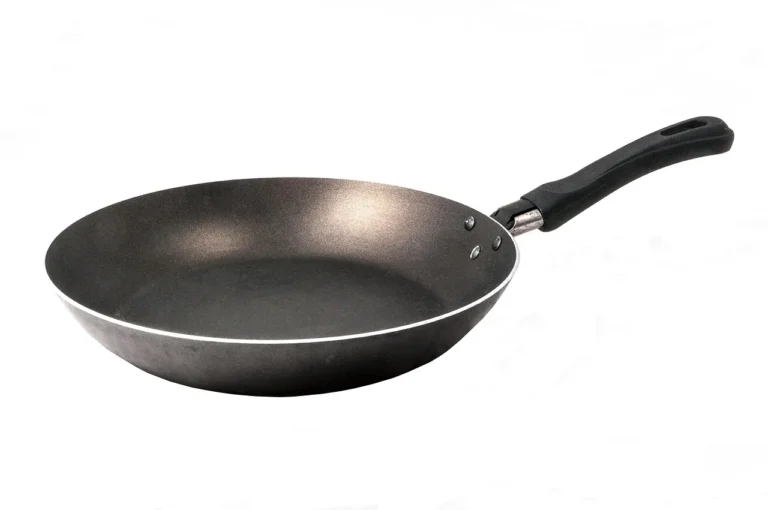
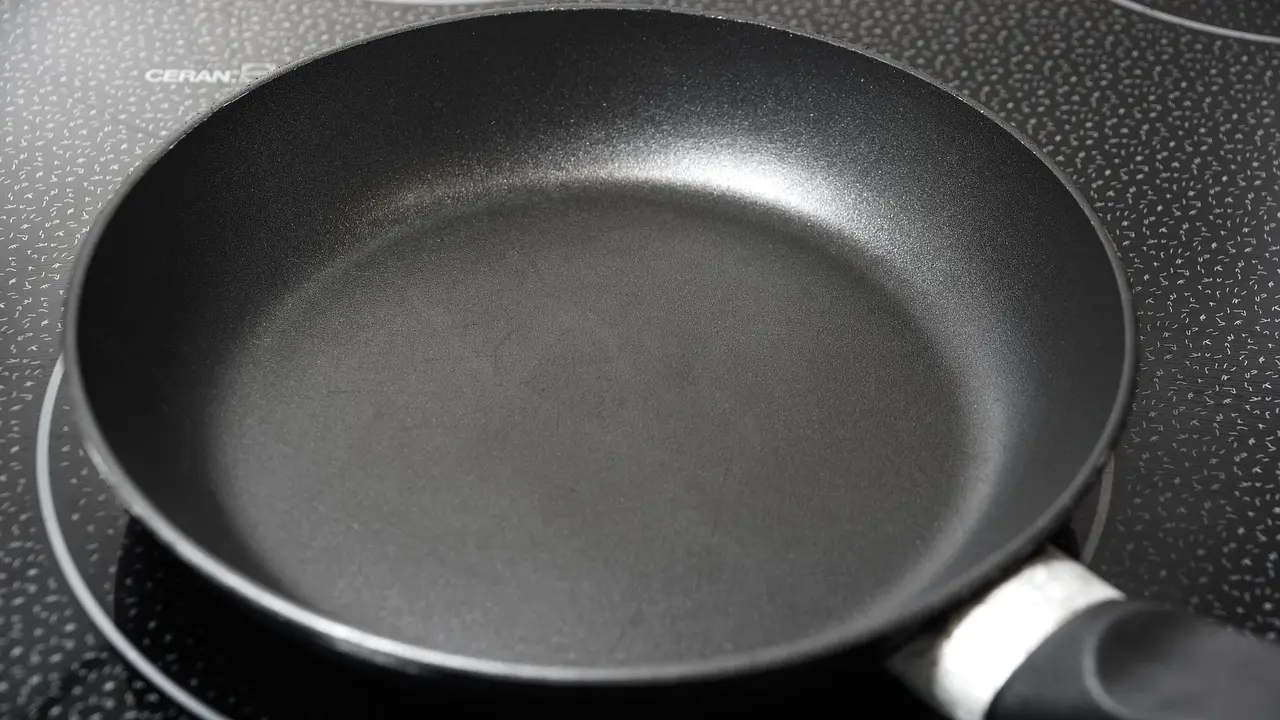
Ceramic Pan vs PTFE Nonstick: Which Is the Better Replacement?
PTFE nonstick is the better replacement for most home cooks: it usually lasts longer, stays slick longer, and delivers lower cost per usable year; choose ceramic only if you want a PFAS-free option and can accept a shorter service life. A poor replacement means paying more for a pan that loses release early, then sticks, scorches, or gets tossed sooner. This guide compares ceramic and PTFE by lifespan, failure mode, heat limits, care, and real replacement value.
| Decision factor | Ceramic pan | PTFE nonstick | Winner |
|---|---|---|---|
| Day-one release | Very good on eggs and delicate foods | Excellent on eggs and delicate foods | PTFE nonstick |
| Long-term release | Usually fades faster, often around 12 to 24 months | Usually keeps slickness longer, often 3 to 5 years in benchmark comparison | PTFE nonstick |
| Heat sensitivity | Sensitive to overheating and heat cycling | Also should not be overheated; moderate heat is the right zone | PTFE nonstick |
| PFAS preference | Often marketed as PFAS-free | Classic Teflon-style nonstick, not the PFAS-free pick | Ceramic pan |
| Cost per usable year | Often higher because replacement comes sooner | Usually lower because life is longer | PTFE nonstick |
Ceramic vs PTFE at a glance
Ceramic pan and PTFE nonstick are both easy-release coatings for eggs, cakes, muffins, and other delicate foods. PTFE is the classic Teflon-style option, and it is usually the better pick for maximum easy release and less fuss. Ceramic is the better fit when PFAS-free marketing matters more than service life.
The real split is not day one. It is what happens after repeated heating, washing, and cooling: ceramic usually loses release faster, while PTFE more often stays usable longer before eggs start to grip and cleanup slows down.
Day-one release versus long-term value
On a fresh pan, both coatings can feel slick. That makes first impressions misleading if you plan to keep the pan in regular rotation. The smarter comparison is lifespan-adjusted value, because a pan that costs less upfront can still cost more per year if it wears out fast.
Heat cycling matters here. Repeated hot-cold swings stress the coating, and ceramic tends to show that stress sooner in the form of higher friction, duller sheen, and eggs that stop sliding off cleanly.
Common use cases for each coating
For low-to-moderate heat breakfast cooking, both coatings can handle eggs, pancakes, and fish fillets. PTFE is usually the safer bet if you want the least resistance and the fewest surprises. Ceramic is the better fit when you want a PFAS-free surface and accept that the surface may need replacement sooner.
Which cooks better day to day?
PTFE nonstick is usually better for daily convenience because it releases food more easily for longer. Ceramic can cook very well at first, but its release performance tends to fall off sooner, so day-to-day use becomes less forgiving sooner even when the pan still looks fine.
Eggs and delicate foods
Egg release is the standard check for a reason. It shows whether the coating still lets food lift cleanly without tearing or dragging. For eggs, PTFE usually stays the more reliable choice, while ceramic may start requiring more oil and more spatula help as the surface ages.
Picture a 10-inch skillet used for two eggs on moderate heat every morning. Early on, either coating can slide the eggs around. After repeated heat cycling, the ceramic pan is more likely to turn sticky at the edges first, while PTFE is more likely to keep the same easy release longer.
Pancakes, fish, and light sautéing
Pancakes and delicate fish need a pan that releases cleanly without tearing the surface. PTFE usually wins if you want consistent flipping and less cleanup from stuck batter or skin. Ceramic can still do the job, but once friction rises, the same foods start to grab more readily.
For light sautéing, the difference is less about searing power and more about how much you want to manage the pan. PTFE is the lower-fuss option. Ceramic makes sense if your buying filter starts with PFAS-free materials, not maximum glide.
What cleanup feels like after cooking
Fresh nonstick usually wipes clean easily. As the coating ages, cleanup changes in a visible way: residue clings a little more, the pan feels less slick under a sponge, and you may need more soaking or more wiping to clear egg film and browned bits.
Hand-washing helps both coatings last longer. A dishwasher, harsh scrubber, or aggressive utensil contact speeds wear on either surface, but ceramic tends to show the penalty sooner.
How long does each coating last?
Ceramic nonstick usually fades faster than PTFE nonstick. A common replacement window for ceramic is around 12 to 24 months, while benchmark PTFE pans are often treated as longer-lived, with a 3 to 5 year comparison window in competitor content. The useful question is not whether both start nonstick, but how long they remain nonstick enough to keep using.
What coating failure looks like
Failure is not a dramatic chip on day one. In normal kitchens, it shows up as eggs sticking, a duller surface sheen, and more friction when you slide a spatula across the pan. At that point, you may still be able to cook in it, but the pan has moved out of the easy-release category.
Why ceramic usually fades faster
Ceramic coatings are often marketed as PFAS-free, which is why many buyers consider them in the first place. The trade-off is lifespan. Ceramic tends to degrade faster than PTFE, so the surface loses release sooner and reaches the replacement point earlier for many home cooks.
How heat cycling changes lifespan
Heat cycling means a pan heats up, cools down, then heats up again. That repeated stress matters because both coatings dislike abuse, and ceramic in particular is sensitive to overheating. Hard-anodized aluminum bodies can help stabilize the pan structure and reduce stress on the coating, but they do not stop wear by themselves.
A common first-timer mistake is leaving a nonstick skillet empty over high heat while preheating the burner. That can shorten the life of either coating and make the surface age faster than expected.
Is PTFE safe at normal heat?
PTFE nonstick is used at normal cooking temperatures all the time, and that is the setting it is meant for. The key is moderation: keep the pan out of high-heat abuse, avoid heating it empty for long stretches, and use it for eggs, delicate fish, and light cooking rather than aggressive searing.
Normal cooking temperatures
For everyday stovetop use, PTFE belongs in the moderate-heat range. That is where it does its best work. It is also where cleanup stays easy and the coating is less likely to wear early from unnecessary stress.
What happens when a pan is overheated empty
Overheating empty is a bad habit for both coatings. It can accelerate wear, change the surface feel, and shorten usable life. Ceramic is especially sensitive here, but PTFE should not be treated as heat-proof either.
Care habits that reduce wear
Use a gentle sponge, avoid metal utensils unless the maker specifically allows them, and let the pan cool before washing. Those habits slow coating loss for both ceramic and PTFE. They matter more than brand slogans.
- Cook at moderate heat, not maximum burner output.
- Do not preheat an empty pan for long periods.
- Hand-wash after the pan cools.
- Use non-scratching tools.
- Stop using the pan once sticking becomes routine.
Ceramic PTFE decision table
This table ties the coating choice to cooking style, heat tolerance, PFAS preference, and replacement budget. The right answer depends on what problem you are solving: lowest fuss, PFAS-free materials, or the best value over time.
| Buyer factor | Ceramic pan | PTFE nonstick | Best fit |
|---|---|---|---|
| Daily eggs and delicate foods | Good if you accept faster fade | Best for the easiest release | PTFE nonstick |
| Want PFAS-free material | Often the better match | Not the priority choice | Ceramic pan |
| Low replacement budget | Usually costs more per year if replaced sooner | Usually better value over time | PTFE nonstick |
| Willing to replace every 12 to 24 months | Reasonable fit | More life than needed for this goal | Ceramic pan |
| Want less fuss | Needs more attention as it ages | Easier for longer | PTFE nonstick |
Use the table as a replacement filter, not a brand contest. Ceramic can be the right answer for a buyer who values PFAS-free marketing more than longevity. PTFE is the stronger default when the goal is fewer sticky mornings and fewer premature replacements.
Which pans set the benchmark?
Benchmark examples help separate coating type from body design. A pan can have a better shell and still lose the comparison if the coating fades quickly. That is why construction details and coating family should be read separately.
GreenPan Valencia Pro and greenPan Paris Pro
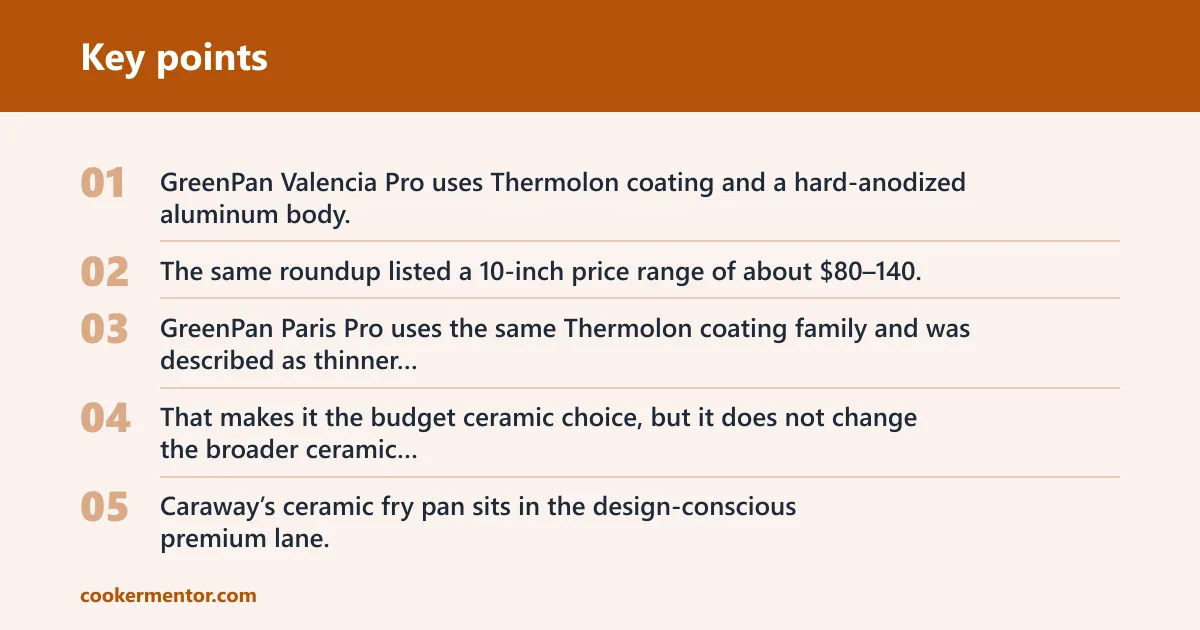
GreenPan Valencia Pro uses Thermolon coating and a hard-anodized aluminum body, and competitor testing placed it as the best overall ceramic option. The same roundup listed a 10-inch price range of about $80–140, day 1 egg release at 40 seconds, day 14 egg release at 43 seconds, and an estimated lifespan of 1.5–2 years.
GreenPan Paris Pro uses the same Thermolon coating family and was described as thinner and less durable than Valencia Pro in some competitor testing. That makes it the budget ceramic choice, but it does not change the broader ceramic trade-off: quicker loss of release than PTFE.
Caraway Nonstick Fry Pan
Caraway’s ceramic fry pan sits in the design-conscious premium lane. In competitor testing, it held up better than expected by day 14, which matters because ceramic buyers often want better-than-average appearance and a more considered finish along with the PFAS-free angle.
All-Clad HA1 Non-Stick Fry Pan
All-Clad HA1 is often used as a PTFE comparison point in competitor content and is described as PFOA-free PTFE. It is also treated as a longer-lasting comparison point, with an estimated 3 to 5 year lifespan and strong egg performance on both day 1 and day 14 in comparison testing. For shoppers comparing categories, it is the clearest price/performance alternative to ceramic.
Choose Ceramic pan if… / Choose PTFE nonstick if…
Choose Ceramic pan if you want a PFAS-free surface, cook at moderate heat, and are fine replacing the pan in about 12 to 24 months. It also fits if your priority is a cleaner materials story and you do not mind that egg release will usually fade sooner.
Choose PTFE nonstick if you want the most easy release, the least fuss, and better cost per usable year. It is the stronger pick for daily eggs, pancakes, and delicate fish, and it is also the better choice if you want the pan to stay slick longer before replacement.
Choose based on replacement cadence, not sticker price. If you hate tossing pans early, PTFE is the safer buy. If your main filter is PFAS-free marketing and you are comfortable with a shorter service life, ceramic is the more appropriate replacement.
Frequently asked questions
Is a ceramic pan better than PTFE nonstick for everyday cooking?
For most everyday cooking, PTFE nonstick is better because it usually keeps its release longer and needs less fuss. Ceramic is the better everyday pick only if PFAS-free materials matter more to you than lifespan. Both can handle eggs and delicate foods, but the long-term value usually favors PTFE.
How long does ceramic nonstick last compared with PTFE?
Ceramic often falls into a replacement window of about 12 to 24 months, while PTFE benchmark pans are commonly treated as longer-lasting, with 3 to 5 years in comparison content. Actual life depends on heat, washing, and how often the pan is abused on the stove.
Which pan is easier to clean, ceramic or PTFE?
PTFE is usually easier to clean for longer. Ceramic may wipe clean well at first, but as friction rises you may see more sticking and more residue left behind after eggs or batter. Hand-washing helps both, yet PTFE generally stays easier to wipe down over time.
Is PTFE nonstick safe at normal cooking temperatures?
PTFE nonstick is intended for normal cooking temperatures and works well there. The caution is overheating, especially heating the pan empty for too long. Used at moderate heat and cleaned gently, it is the more forgiving option for day-to-day stovetop use.
Does ceramic nonstick really hold up better over time?
No. Ceramic often performs well at the start, but it usually loses release faster than PTFE. The failure signs are practical: eggs stick sooner, the coating looks duller, and the pan feels less slick under a spatula or sponge. PTFE is the longer-lasting benchmark.
Which pan gives the best cost per year: ceramic or PTFE?
PTFE usually wins on cost per year because it lasts longer before replacement. Ceramic can seem cheaper at purchase, but a shorter lifespan raises the annual cost unless you strongly prefer PFAS-free materials. If value is the goal, the longer service life of PTFE matters more than the starting price.