Is Cooking with Cast Iron Healthy and Safe?

Yes, cast iron is generally healthy and safe for most cooks if the pan is well-seasoned, dried after washing, and you avoid long-simmered acidic foods. Skip those basics, and seasoning can strip, rust can start, and iron transfer can climb higher than you want. This guide separates seasoning, acidity, iron transfer, and maintenance so you can decide what belongs in the skillet.
Cast iron basics
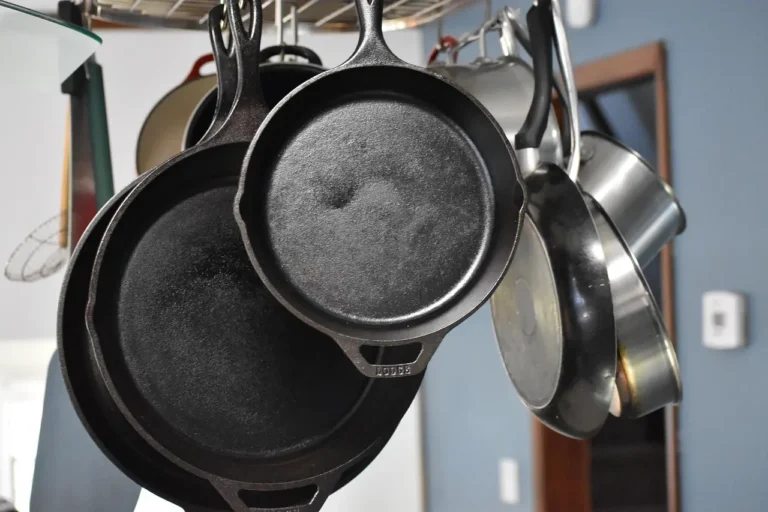
Bare cast iron is typically a heavy metal pan with a thin seasoning layer of baked-on oil or fat. That coating helps keep rust away and gives the pan its less sticky surface. Enameled cast iron is different: it has a coated surface, does not need seasoning, and resists rust in a different way.
With proper care, cast iron cookware is extremely durable. It works on gas, electric, and induction stovetops, and it can be used over an open flame or in the oven. It is especially suited to browning and searing, and it is also used for baking and frying.
What seasoning does
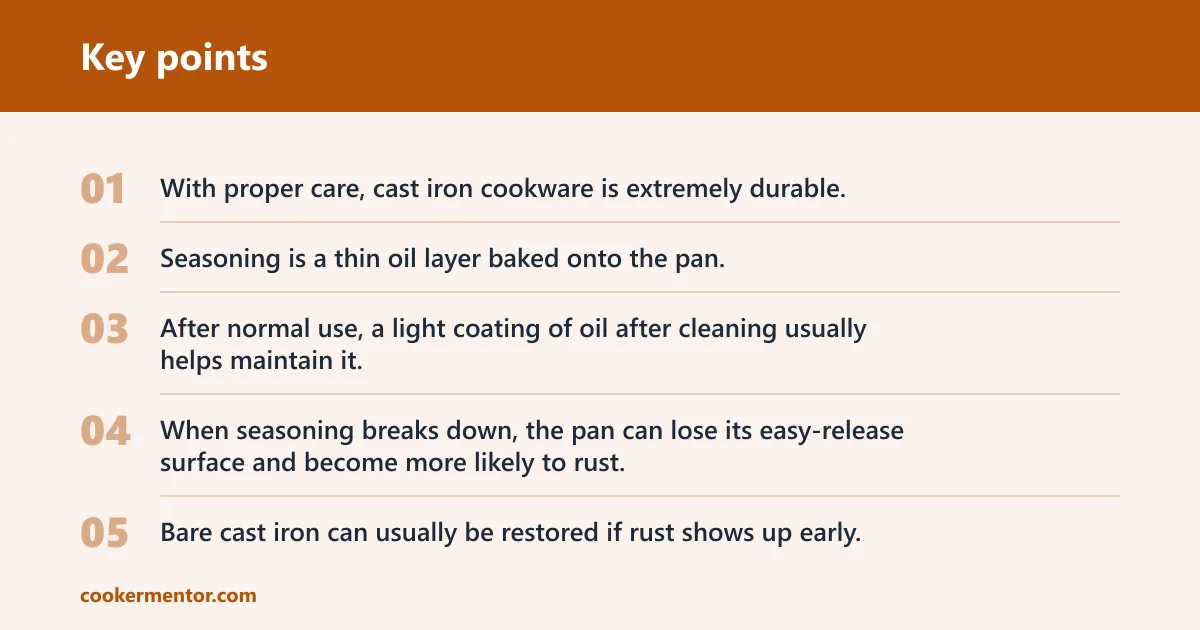
Seasoning is a thin oil layer baked onto the pan. It protects the metal from moisture, helps build a less sticky cooking surface, and needs periodic re-seasoning as it wears. After normal use, a light coating of oil after cleaning usually helps maintain it.
When seasoning breaks down, the pan can lose its easy-release surface and become more likely to rust. That is a maintenance issue, not a sign that the pan is ruined. Bare cast iron can usually be restored if rust shows up early.
Is cast iron healthy and safe?
For most home cooking, cast iron is healthy and safe when you keep the seasoning intact and avoid misuse. The pan itself does not make food healthier on its own, but it can be a practical, durable tool. Safety problems usually come from damaged seasoning, leftover moisture, or cooking the wrong foods for too long.
What it can and cannot do for iron intake
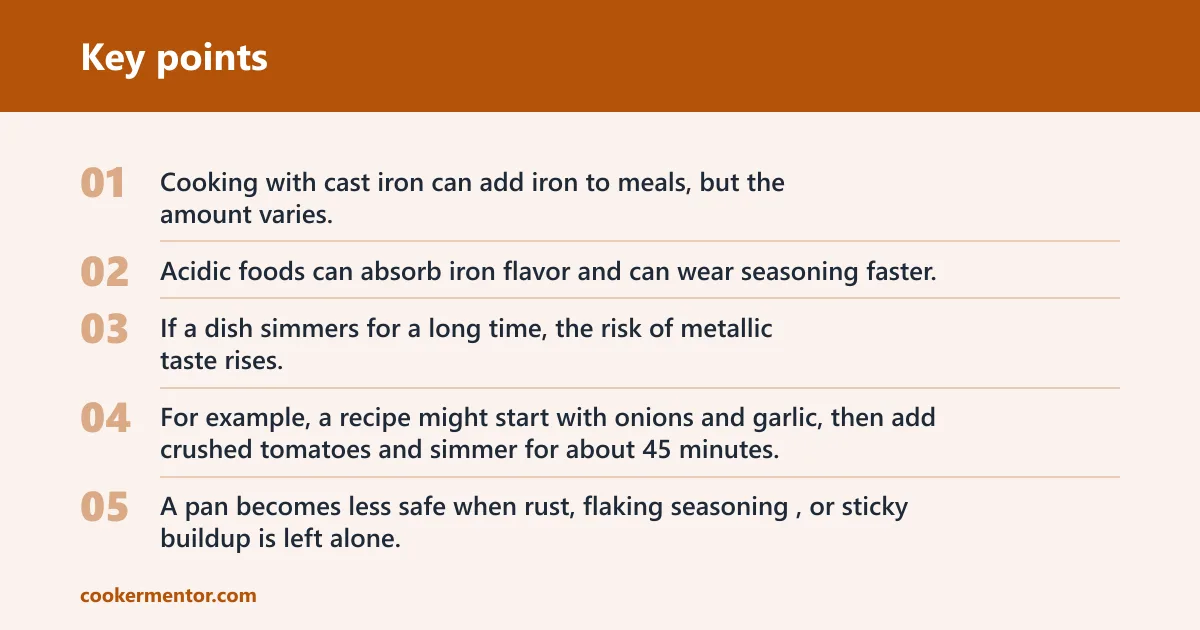
Cooking with cast iron can add iron to meals, but the amount varies. That extra iron is usually small and depends on the food, acidity, moisture, and cooking time. Evidence for treating iron deficiency anemia with cast iron is limited, so it should not be used as a substitute for iron therapy.
Who should be careful with acidic cooking?
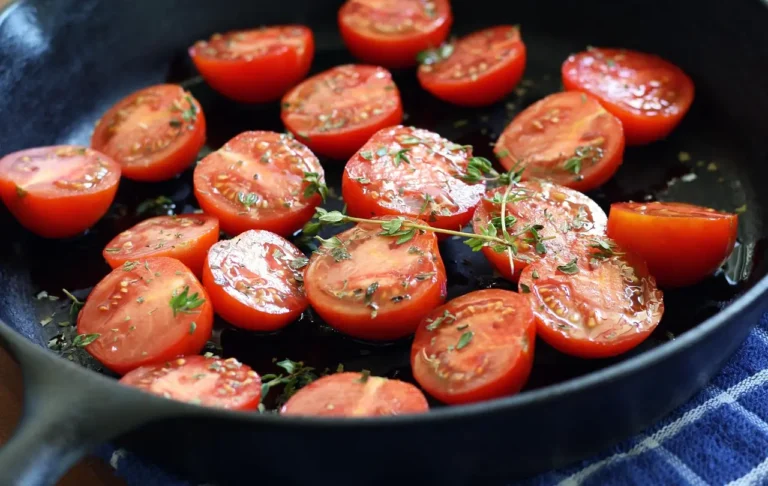
People who cook tomato sauces, wine reductions, vinegar-heavy dishes, or citrus-based recipes often should choose enameled cast iron or another pan. Acidic foods can absorb iron flavor and can wear seasoning faster. If a dish simmers for a long time, the risk of metallic taste rises.
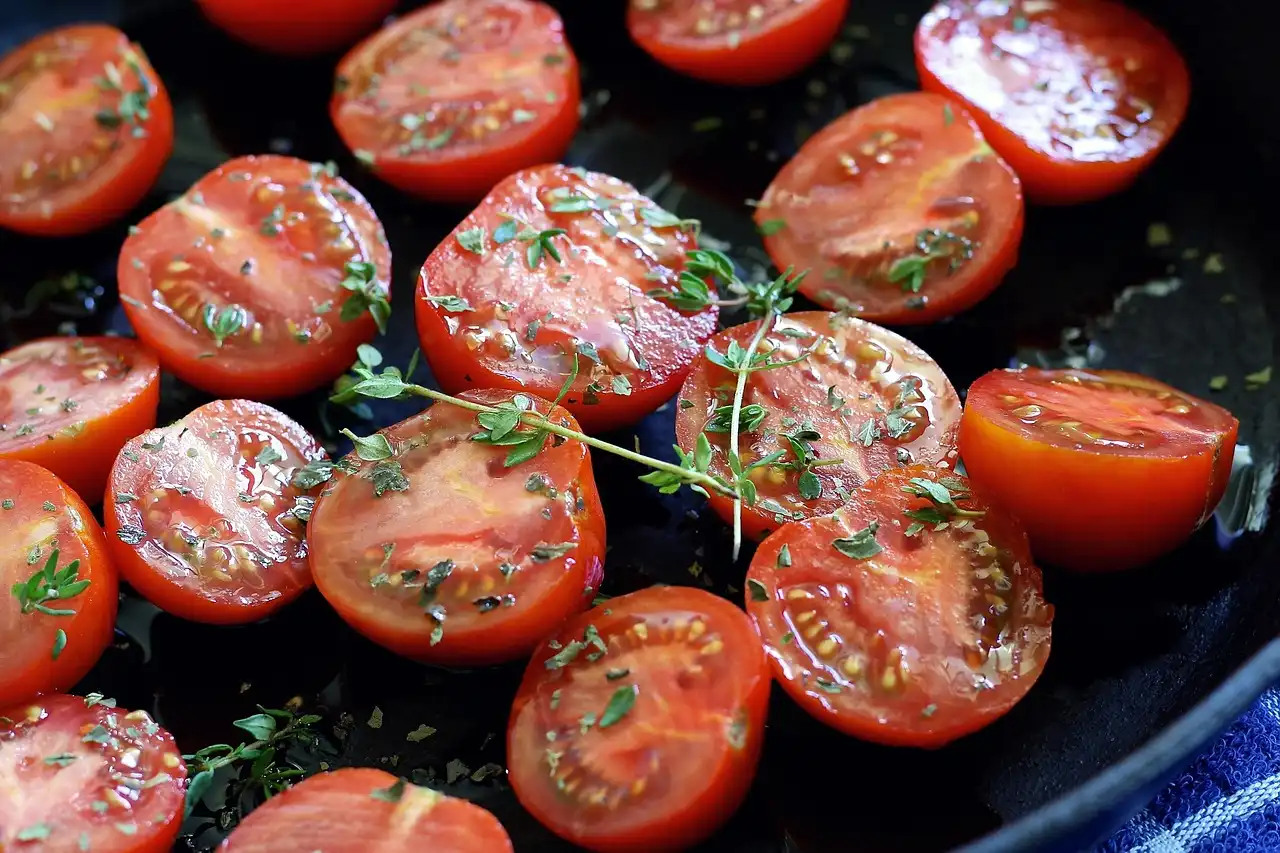
For example, a recipe might start with onions and garlic, then add crushed tomatoes and simmer for about 45 minutes. Bare cast iron may work for the sautéing step, but enameled cast iron is the safer choice for the full simmer because it avoids seasoning wear and reduces the chance of a metallic taste.
When the pan itself becomes a maintenance risk
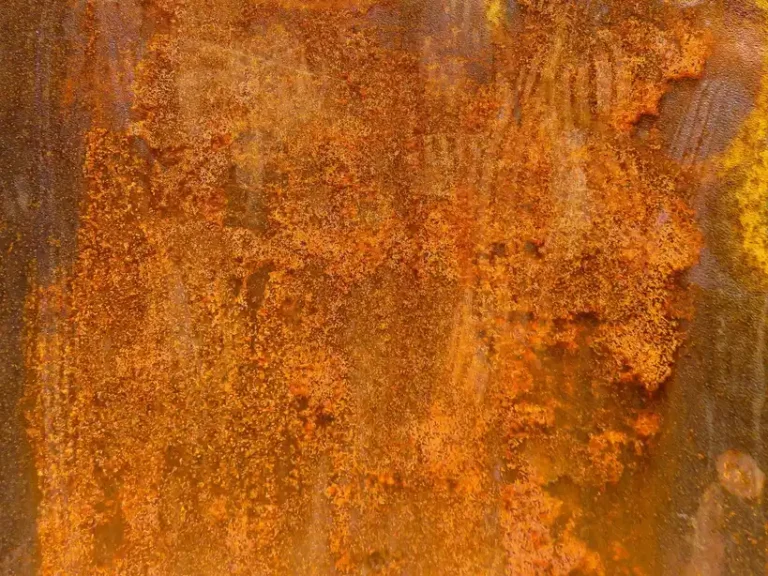
A pan becomes less safe when rust, flaking seasoning, or sticky buildup is left alone. Rust can usually be cleaned off if caught early, but damaged seasoning should be re-oiled and rebuilt. If the cooking surface feels rough, patchy, or tacky after cleaning, the pan needs maintenance before the next use.
A common first-timer mistake is heating a cold, wet pan and then rinsing it with cold water while it is still very hot. Hot cast iron should cool before rinsing to avoid shock, and the pan should be dried completely so moisture does not start rust.
Does cast iron add iron to food?
Yes, but the effect is variable and usually modest. Foods with more moisture and acidity tend to pick up more iron than dry foods, and longer cooking times can increase transfer. That can be useful for some cooks, but it is not a reliable medical strategy.
Who may notice the biggest effect?
People cooking tomato sauce, chili, braised dishes, or other wet foods may see the most iron transfer. A newly seasoned or poorly seasoned pan can also transfer more than a well-seasoned one. Even then, the added iron is still a small dietary increase, not a treatment plan.
Why it is not a substitute for iron therapy
Cast iron is not a substitute for iron therapy because the amount transferred is inconsistent and not medically controlled. Someone with diagnosed iron deficiency should follow a clinician’s guidance instead of trying to manage iron intake by pan choice alone. Cooking in cast iron can support diet, but it should not replace treatment.
What foods should not go in cast iron?
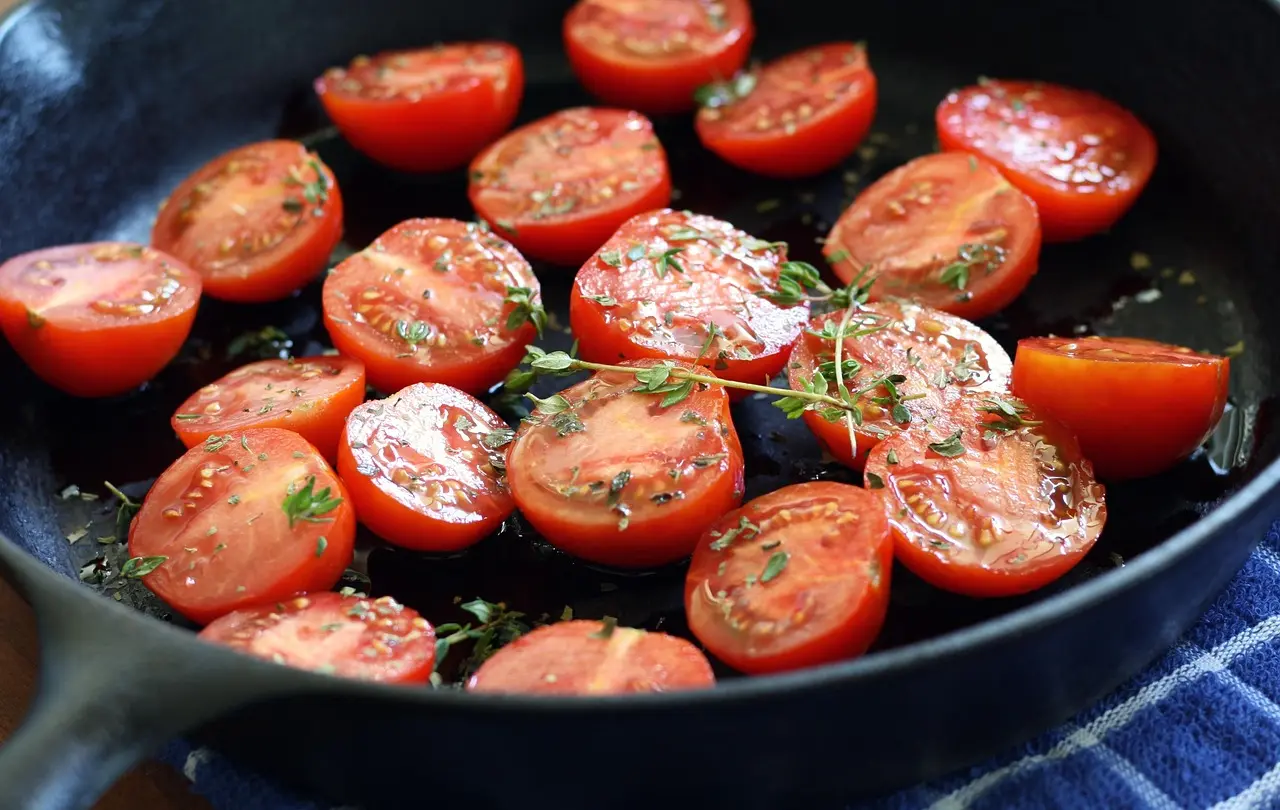
Long-simmered acidic foods are the main problem. Tomatoes, lemon juice, wine, and vinegar can absorb iron flavor and can wear seasoning faster. Short contact is usually less of a concern than long simmering or boiling, but repeated acidic cooking still makes bare cast iron work harder.
When enameled cast iron is the better choice
Enameled cast iron is better for tomato sauces, wine braises, vinegar-forward dishes, and citrus marinades because it does not rely on a seasoned bare surface. It is often easier care for that kind of cooking. Bare cast iron can still be fine for quick searing before the acid goes in, then the dish can finish in a different vessel.
Long simmering and boiling are not ideal in cast iron. A pot of stock simmered for hours or a sauce reduced far past the halfway point increases the chance of flavor change and seasoning wear. For those jobs, enameled cast iron or stainless steel is usually the cleaner choice.
Should you cook this in cast iron?
| Food type | Health/safety risk | Seasoning impact | Iron-transfer likelihood | Best pan type | Recommended cook time / avoidance notes |
|---|---|---|---|---|---|
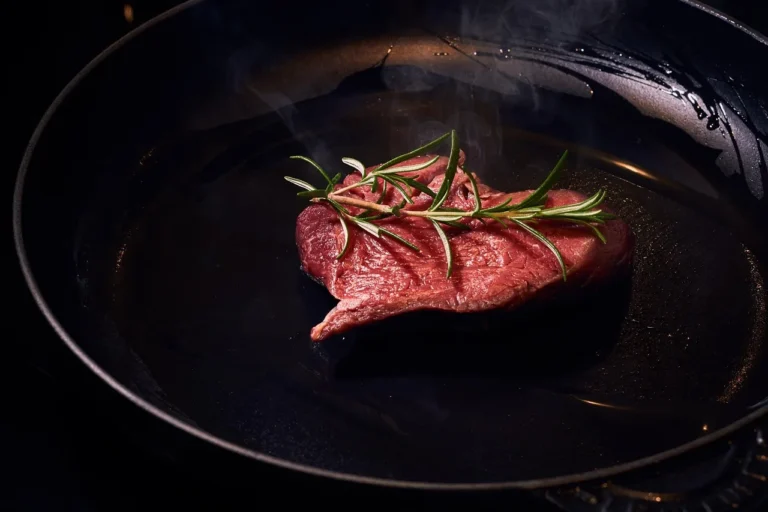
| Steak | Low | Low | Low | Bare | Short, hot sear; dry the steak well first. |
| Chicken thighs | Low | Low | Low | Bare | Good for browning and oven finishing. |
| Fried eggs | Low | Low | Low | Bare | Use a well-seasoned pan and moderate heat. |
| Pan pizza | Low | Low | Low | Bare | Oven use is fine; preheat gradually. |
| Cornbread | Low | Low | Low | Bare | Works well for baking and browning edges. |
| Roasted potatoes | Low | Low | Low | Bare | Roast or sear first, then finish in the oven. |
| Tomato sauce | Moderate | High | Moderate to high | Enameled | Use enameled cast iron for long simmering. |
| Chili | Moderate | High | Moderate to high | Enameled | Bare cast iron is better only for the initial browning. |
| Wine braise | Moderate | High | Moderate | Enameled | Acid can affect seasoning during long cook times. |
| Vinegar slaw dressing | Low to moderate | High | Low to moderate | Another pan | Use a bowl or nonreactive container, not the skillet. |
| Lemon chicken | Low to moderate | Moderate | Low to moderate | Enameled | Fine if the lemon is brief; avoid long simmering. |
| Long-simmered stock | Moderate | High | Moderate | Another pan | Avoid bare cast iron; use enameled cast iron or stainless steel. |
How do you care for cast iron safely?
Safe care is simple: clean off food, dry the pan fully, and keep moisture off the surface. Bare cast iron should not go in the dishwasher. A pan that stays wet or is scrubbed too aggressively is more likely to lose seasoning and rust.
Wash with hot water. Rinse soon after cooking, once the pan has cooled enough to handle safely. Use hot water and a stiff nylon brush or a non-abrasive sponge to remove stuck food without stripping the seasoning.
Use salt for stubborn bits. If food is stuck, add kosher salt as a mild abrasive and scrub with a little warm water. This can clean residue without relying on harsh soap or metal scouring that may damage the surface.
Dry the pan fully. Wipe it dry, then warm it briefly on the stove if needed so no moisture remains. This matters because water left on the metal is the fastest route to rust.
Oil the surface lightly. After drying, rub on a very thin coat of oil or fat. That helps protect the seasoning layer and supports the pan’s natural nonstick performance.
Store it dry. Keep the pan in a dry place with airflow. If stacking cookware, place a paper towel or cloth between pans so trapped moisture does not damage the seasoning.
When to re-season or restore a rusty pan
Re-season when food starts sticking more than usual, the surface looks dull and patchy, or water no longer beads at all. If rust appears, scrub it off, dry the pan, and rebuild the coating. The suggested seasoning bake range is 350–400 degrees F, and seasoning should be baked for at least one hour.
That process matters because seasoning creates the pan’s natural nonstick surface and also protects cast iron from rust. If the pan was stored wet or washed and left damp, restoration is usually possible unless the damage has gone on for a long time.
Can you use cast iron in the oven and on the stovetop?
Yes. Cast iron works on gas, electric, and induction stovetops, and it can also go in the oven. It is also usable over an open flame or campfire. The main limitation is not compatibility, but heat control and weight.
Heat retention and preheating limits
Cast iron heats slowly, then stays warm after heating. That makes it useful for searing and for serving food at the table, but it also means you should preheat gradually. Rapid temperature changes can stress the pan and can make cooking less even.
Use moderate heat first, then raise it as needed. A skillet that is too hot can smoke oil, scorch seasoning, and create hot spots around the center. Slow preheating usually gives better control than rushing the pan.
Gas, electric, induction, and open flame
Gas gives fast visual control, electric works fine with patience, and induction is a strong fit because cast iron responds well to magnetic heating. Campfire or open-flame cooking is also possible, but the heat is less predictable. In those settings, seasoning wear and soot cleanup become more likely.
Frequently asked questions
Is cooking with cast iron harmful?
For most people, no. Harm usually comes from neglected seasoning, rust, or using the wrong pan for long acidic cooking. Bare cast iron is safe when maintained well, while enameled cast iron is often the better choice for tomato-heavy or vinegar-heavy recipes.
Is cast iron healthy?
It can be a healthy cookware choice because it is durable, versatile, and may add a small amount of iron to food. That said, it is not automatically healthier than other cookware. The health value depends on the dish, the seasoning, and how well you maintain the pan.
Is cast iron safe?
Yes, if you keep it dry, avoid dishwasher use, and do not leave acidic foods simmering in bare cast iron for long periods. Safety problems are usually maintenance problems. A well-kept pan is straightforward to use for searing, baking, frying, and roasting.
Is a cast iron skillet healthy?
A cast iron skillet can be a healthy tool for everyday cooking, especially for browning meats, roasting potatoes, and baking cornbread. It is less ideal for long tomato sauces or other acidic dishes. The skillet is only as practical as the food you put in it.
Does cooking with cast iron add iron to food?
Yes, but the amount varies and is usually small. Moist, acidic foods pick up more iron than dry foods, and longer cook times increase the chance of transfer. That effect can support dietary intake, but it should not be relied on as treatment for iron deficiency.
Is enamelled cast iron safer than bare cast iron?
It is safer for acidic cooking because the coated surface does not depend on seasoning and is less likely to react with tomatoes, vinegar, or wine. Bare cast iron is still safe for many uses, but it needs more maintenance and has more limits with acidic foods.