Does Cooking in Cast Iron Increase Iron in Food?
Yes, cast iron can add small amounts of iron to food, but the increase matters most with acidic, moist, or long-cooked dishes and is often tiny with dry, short-cooked foods. If you treat every meal the same, you may miss a useful iron source or overstate how much you are getting. This guide explains when cast iron matters, when it barely changes intake, and who should not rely on it to correct low iron.
Does cast iron add iron to food?
Yes. Cast-iron cookware can transfer iron from the pan into food, and the amount depends on what you cook, how long it cooks, and whether the pan is bare cast iron or enameled. Acidic, wet, slow-cooked dishes usually pick up more iron than dry foods or foods cooked quickly.
What changes iron transfer in the pan
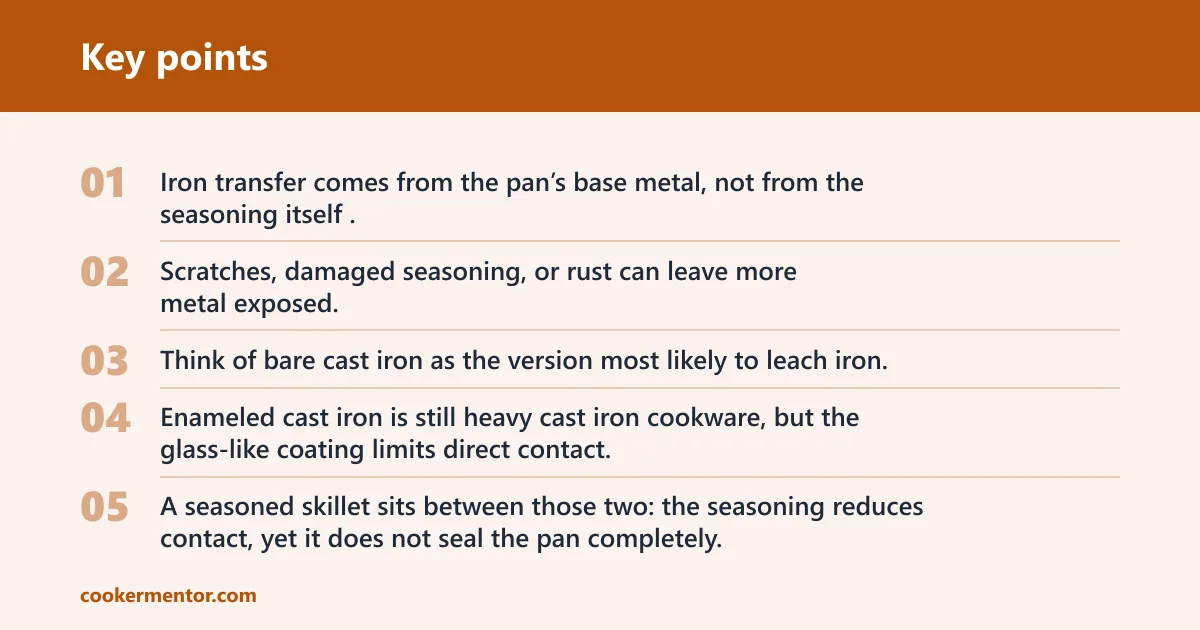
Iron transfer comes from the pan’s base metal, not from the seasoning itself. Seasoning is a polymerized oil coating that forms on uncoated cast iron, and it can slow contact with food, but it does not stop transfer. Scratches, damaged seasoning, or rust can leave more metal exposed.
Bare cast iron usually contributes more iron than enameled cast iron, since the enamel coating separates food from the metal surface. Enameled skillets and Dutch ovens may still work well for cooking, but they are a weaker choice if your goal is to raise iron intake.
Bare cast iron vs enameled cast iron
Think of bare cast iron as the version most likely to leach iron. Enameled cast iron is still heavy cast iron cookware, but the glass-like coating limits direct contact. A seasoned skillet sits between those two: the seasoning reduces contact, yet it does not seal the pan completely.
Variants matter too. A bare cast-iron skillet used for a simmering sauce usually contributes more iron than a lightly used enameled Dutch oven with a quick sauté. Surface area, moisture, acidity, and time all matter at once.
Why seasoning does not block all transfer
Seasoning helps protect the pan and can reduce rusting, but it is not a metal barrier. If the surface is well seasoned, transfer may be lower than from a rough, bare pan. If the coating is worn, flaking, or scrubbed down, more iron can reach the food.
A common first-timer mistake is to assume a shiny, seasoned skillet adds no iron at all. It usually adds less than a bare pan, but not none.
Iron transfer decision table
| Food type | Pan type | Cook time | Expected impact |
|---|---|---|---|
| Tomato sauce | Bare | Long | Higher |
| Tomato sauce | Enameled | Long | Moderate |
| Chili | Bare | Long | Higher |
| Chili | Enameled | Long | Moderate |
| Eggs | Bare | Short | Low |
| Eggs | Enameled | Short | Low |
| Steak | Bare | Short | Low |
| Steak | Enameled | Short | Low |
| Stir-fry | Bare | Short | Low |
| Stir-fry | Enameled | Short | Low |
- “Higher” means the pan is more likely to make a noticeable contribution to dietary iron.
- “Moderate” means some added iron is plausible, but it should not be treated as a major source on its own.
- “Low” means the cookware choice is unlikely to change intake much in a practical way.
Which foods pick up the most iron?
Tomato sauce, chili, stew, and braised dishes tend to pick up the most iron because they are moist, often acidic, and cooked for longer periods. Eggs, steak, and stir-fry usually pick up less because they are drier, cooked faster, or both. Food composition and cook time matter more than pan shape alone.
Tomato sauce and other acidic sauces
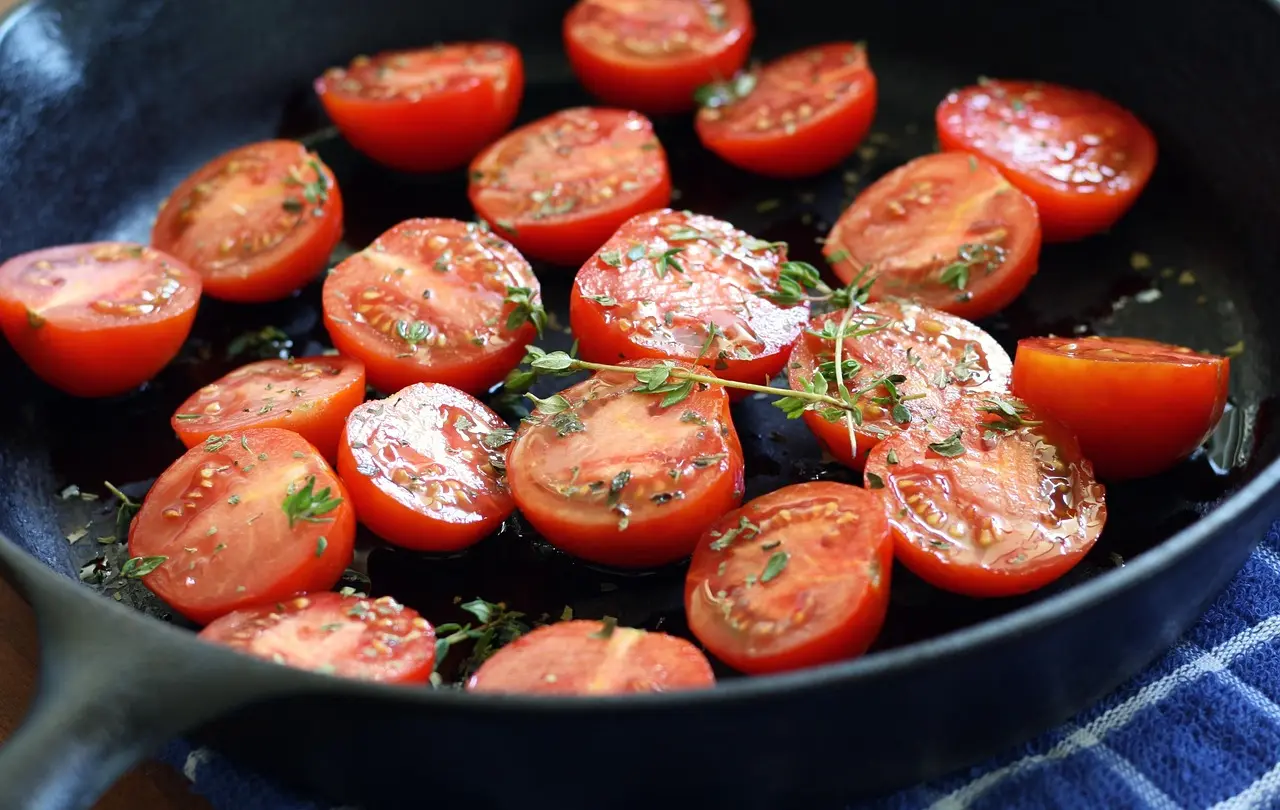
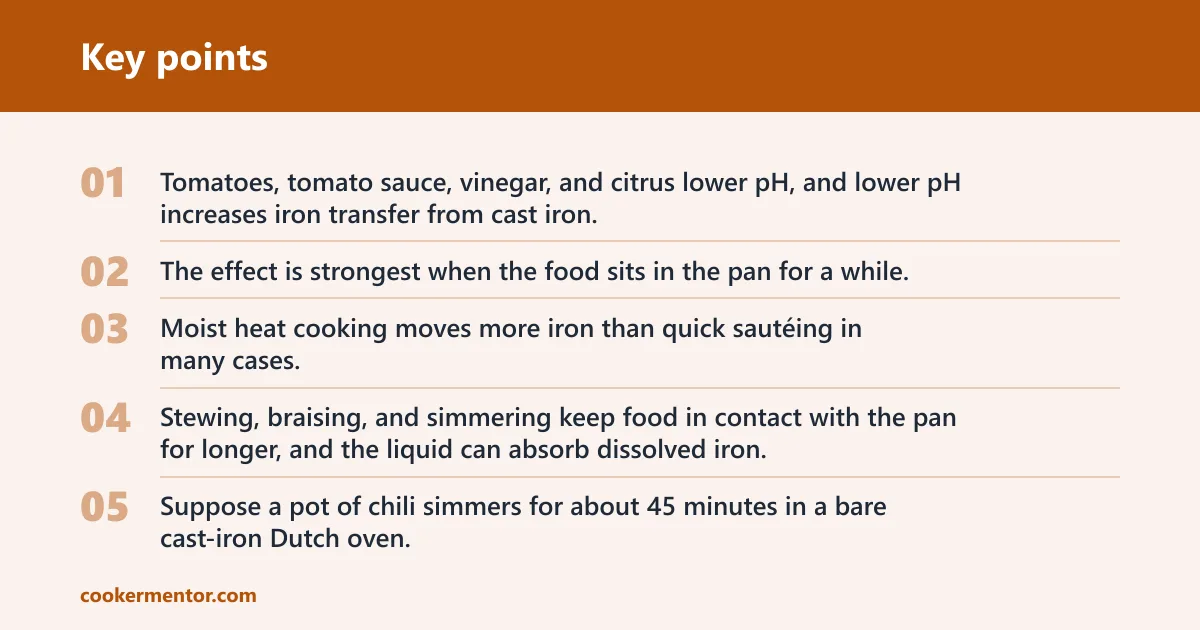
Tomatoes, tomato sauce, vinegar, and citrus lower pH, and lower pH increases iron transfer from cast iron. The effect is strongest when the food sits in the pan for a while. A pot of tomato sauce left to simmer in a bare Dutch oven is a better candidate for iron transfer than a fast pan sauce finished in a few minutes.
Frequent contact matters. A sauce that stays in contact with the pan bottom for about 20 to 30 minutes has more opportunity to pick up dissolved iron than one that is tossed briefly and served right away.
Chili, stew, and braised dishes
Moist heat cooking moves more iron than quick sautéing in many cases. Stewing, braising, and simmering keep food in contact with the pan for longer, and the liquid can absorb dissolved iron. That makes these dishes better candidates if the goal is to add iron through cookware.
Suppose a pot of chili simmers for about 45 minutes in a bare cast-iron Dutch oven. That dish is generally more likely to pick up iron than a 5-minute egg scramble in the same pan.
Eggs, steak, and stir-fry
Eggs, steak, and stir-fry are usually lower on the list because they are cooked quickly and often have less free liquid. That does not mean they never gain iron, only that the effect is usually small compared with wet, acidic, slow-cooked dishes. If your main meals look like these, cast iron is unlikely to make a large difference.
Why acid and time matter
Lower pH, more moisture, and longer cook times all increase the chance that iron moves from the pan into the food. Acidic ingredients help release iron from the surface, liquid holds the dissolved iron, and simmering or braising gives the transfer more time to happen. Dry, fast heat does less of that work.
Lower pH increases iron transfer
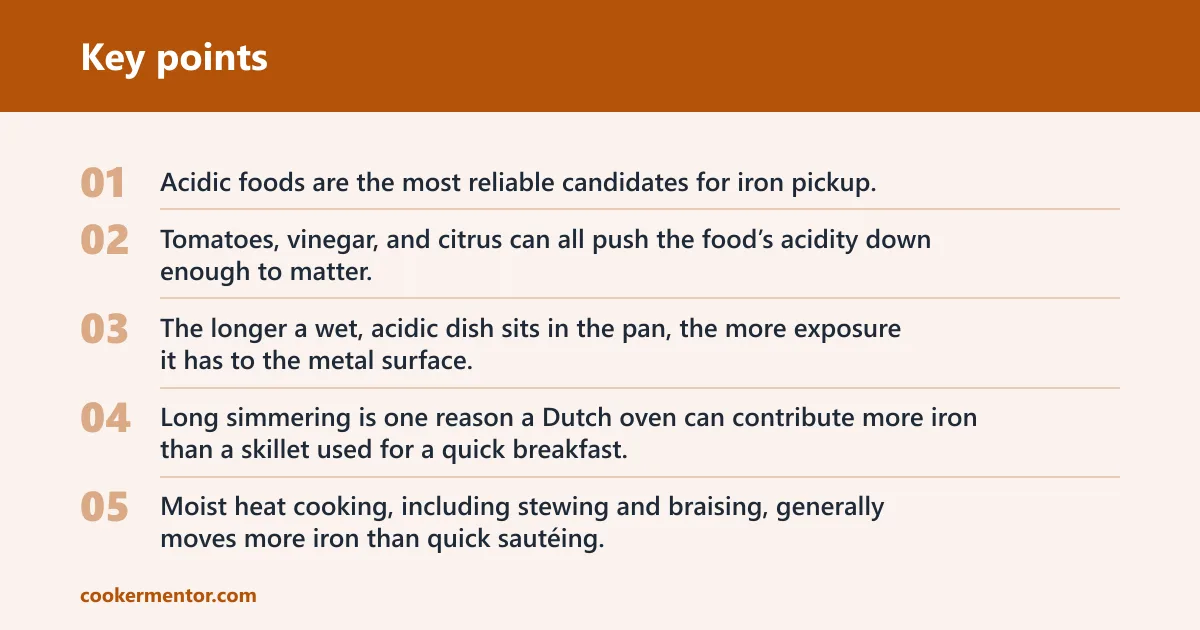
Acidic foods are the most reliable candidates for iron pickup. Tomatoes, vinegar, and citrus can all push the food’s acidity down enough to matter. The more acidic the dish, the more likely it is to pull iron from bare cast iron, especially if the pan is not heavily coated.
Food moisture also matters. Soups, sauces, and stews can hold dissolved iron in the liquid, while a dry sear leaves less room for iron to move into the food itself.
Long simmering raises contact time
Time is a simple multiplier. The longer a wet, acidic dish sits in the pan, the more exposure it has to the metal surface. Long simmering is one reason a Dutch oven can contribute more iron than a skillet used for a quick breakfast.
Moist heat moves more iron than dry heat
Moist heat cooking, including stewing and braising, generally moves more iron than quick sautéing. Water content gives the iron somewhere to dissolve, and the food stays in contact with the pan longer. Dry foods generally pick up less because they do not hold dissolved iron as readily.
Can cast iron help with iron deficiency?
Cast iron may support dietary iron intake, but it is not a medical treatment for iron deficiency or anemia. A diagnosis needs medical guidance, and supplements are more predictable than cookware when someone truly needs to raise iron. Food sources help, but they are supportive, not therapeutic.
Dietary iron vs medical treatment
Dietary iron includes heme iron from animal foods and non-heme iron from plant foods and fortified foods. Your daily needs vary by age and sex, and bioavailability depends on what else is on the plate. Cast iron can add to intake, but it does not replace treatment when a clinician has diagnosed deficiency.
That distinction matters because a person can eat iron-containing meals and still remain deficient. Cast iron may help at the margin, especially with meals already high in non-heme iron, but it should not be treated as a cure.
Why supplements are more predictable
Supplements deliver a known amount of iron, while cookware does not. The amount transferred from a pan varies with the food, pan surface, acidity, moisture, and cook time. If a clinician says iron repletion is needed, a supplement plan is easier to control than hoping a skillet adds enough.
When to ask a clinician
If fatigue, shortness of breath, pale skin, heavy menstrual bleeding, or known anemia are part of the picture, get medical advice rather than relying on cookware. Cast iron can be part of a practical food pattern, but it should not be the main strategy for suspected deficiency.
- Choose food-first support only if deficiency has not been diagnosed.
- Ask about labs if symptoms suggest low iron.
- Use supplements only as directed, because more iron is not always better.
Who should not seek extra iron?
Some people should be careful about trying to add more iron through cookware. Children, pregnant people, and people with hemochromatosis may need different advice, and more iron is not automatically safer for any of them. Medical guidance matters when iron needs or iron loading risk is unusual.
Children and pregnant people
Children have age-specific needs, and those needs are not the same as an adult’s. Pregnant people also have changing iron requirements, which is why advice should come from a clinician or prenatal care team rather than a cookware tip alone. Cast iron may fit into a balanced diet, but it should not be used as a stand-in for prenatal assessment.
Picture a pregnant person using a cast-iron pot for tomato sauce several times a week and assuming that covers the entire iron need. That guess may be too high or too low, because actual needs and absorption vary.
People with hemochromatosis
People with hemochromatosis absorb too much iron and often need to avoid adding extra iron unless a clinician advises otherwise. For them, choosing cast iron specifically to increase intake is the wrong move. Enameled cookware or non-iron cookware may be a better default when extra iron is a concern.
When medical guidance matters
If a person has a known iron disorder, pregnancy, childhood growth needs, or a history of abnormal iron labs, cookware choice should not be the only plan. A clinician can interpret lab results and decide whether the goal is more iron, less iron, or simply stable intake.
Not enough for deficiency: Cast iron can support iron intake, but it is not a reliable treatment for iron deficiency or anemia. Supplements and medical care are more predictable when correction is needed.
Best use cases
Cast iron is worth choosing when the meal is wet, acidic, and slow-cooked, or when you already want the heat retention of a skillet or Dutch oven and extra iron would be a useful side benefit. It is least useful for dry, fast-cooked meals where transfer is usually small.
-
Use bare cast iron for sauces.
Cook tomato sauce, chili, stew, or braised dishes in a bare skillet or Dutch oven when you want the highest chance of extra iron. Let the food simmer long enough to stay in contact with the pan. -
Keep seasoning in good shape.
Maintain a smooth seasoning layer, but do not expect it to block iron completely. If the pan is heavily scratched, rusted, or stripped, the food can contact more bare metal. -
Prefer moist dishes.
Use soups, braises, and sauces if your goal is dietary iron support. Dry pan-fried foods usually make a small difference. -
Do not rely on it alone.
Pair cookware choices with iron-rich foods, including heme iron sources and non-heme sources that fit your diet. If deficiency is suspected, get labs and treatment advice.
Frequently asked questions
Does cooking in cast iron increase iron in food?
Yes. Cast iron can increase iron in food, especially when the dish is acidic, moist, and cooked for longer. The effect is usually strongest with tomato-based sauces, chili, and braised foods, and much smaller with quick, dry dishes like steak or stir-fry.
Does cooking in cast iron increase dietary iron?
It can increase dietary iron, but the size of the increase depends on the meal. Bare cast iron, low pH, and longer simmering all raise the chance of transfer. Enameled cookware usually contributes less, and quick-cooked foods often gain only a little iron.
How much iron can leach into food from cast iron cookware?
The amount varies a lot, so there is no single number that fits every meal. Food acidity, water content, cook time, and whether the pan is bare or enameled all change the result. A simmered tomato sauce in bare cast iron can pick up more than a dry, fast-cooked egg dish.
Is cast iron a reliable way to treat iron deficiency?
No. Cast iron is not a reliable treatment for iron deficiency or anemia. It can support intake, but supplements and medical care are more predictable when a true deficiency exists. If low iron is suspected, a clinician should confirm it and recommend the right plan.
Which foods pick up the most iron from cast iron?
Tomato sauce, chili, stew, and braised dishes usually pick up the most iron because they are acidic, wet, and cooked longer. Foods like eggs, steak, and stir-fry generally pick up less because they cook quickly and have less liquid to absorb dissolved iron.
Who should not count on cast iron for extra iron?
People with hemochromatosis should not try to boost iron this way, and children or pregnant people should get condition-specific advice. Cast iron can be a useful cookware choice, but it should not be used as a substitute for medical guidance when iron needs are unusual or already known to be high.