Cast Iron Rust vs Seasoning: How Can You Tell?
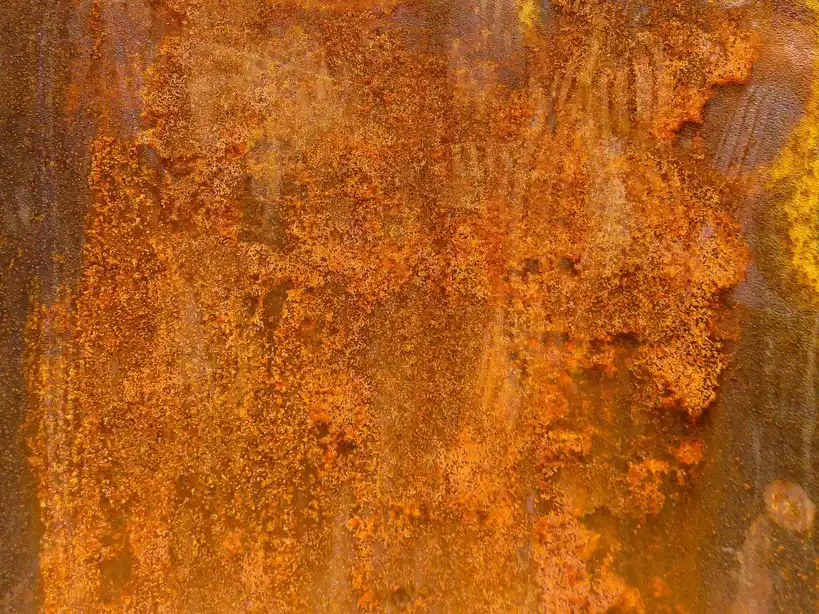
Rust is usually orange, flaky, and water-staining. Damaged seasoning is usually dark, patchy, and slick or sticky. A quick water test can help separate them in a few seconds. Confusing the two can leave rust under a repair or strip sound seasoning you want to keep. This guide shows the color, feel, and water-response checks, plus the next step for each result.
| Decision factor | Cast iron rust | Seasoning | Winner |
|---|---|---|---|
| Color under bright light | Orange, orange-brown, or rust-red dust; may look powdery | Dark brown to black, sometimes patchy or dull gray where worn | Cast iron rust for orange dust; seasoning for dark patches |
| Surface feel | Dry, gritty, or sandy; may leave residue on a fingertip | Slick, waxy, or slightly tacky; usually smooth when intact | Cast iron rust if gritty; seasoning if smooth |
| Water response | Water beads poorly and may turn orange quickly on bare spots | Water beads or slides more easily on intact areas | Seasoning |
| Repair effort | Often scrubbable if it is surface rust; pitting needs stronger restoration | Usually needs cleaning, drying, and a thin oil coat if the layer is worn | Tie |
| Risk if ignored | Can spread and eat into the metal | Can lose its rust protection and stick more | Cast iron rust |
What healthy seasoning should look and feel like
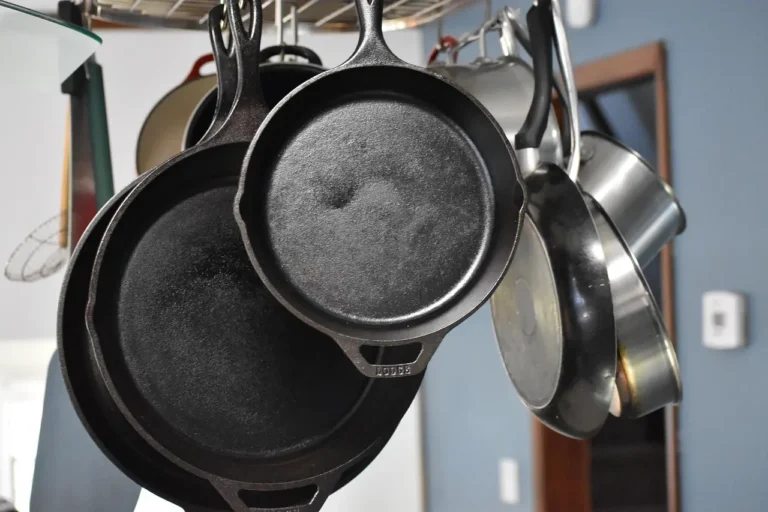
Seasoning is a thin film of oil that has reacted with heat and bonded to the pan, building with each proper cook and oil cycle. It can form a water-repelling barrier, help food release, and slow rust. Field calls it the first line of defense against rust. Healthy seasoning often looks dark, but dark alone does not prove it is healthy.
Good seasoning feels smooth and a little slick, not sandy. It may be black, deep brown, or uneven in color, especially on a well-used pan. Brown or patchy seasoning can still be serviceable if it feels bonded to the metal and does not dust off.
What you’ll need
- Hot water
- Chainmail scrubber for light rust and stuck-on residue
- 0000 steel wool for rusted or stripped spots
- White vinegar diluted 1:1 with water for spot treatment
- Neutral oil such as canola or vegetable oil
- Clean towels or paper towels
How can you tell if cast iron is rust or seasoning?
Check the pan in bright light, rub it with a dry fingertip or cloth, then add a little water and watch what happens. Rust usually feels gritty and may transfer orange dust. Seasoning usually feels smoother and may look dark, even when it is stained or worn. Use the water test as one clue, then confirm with touch and color before you decide.
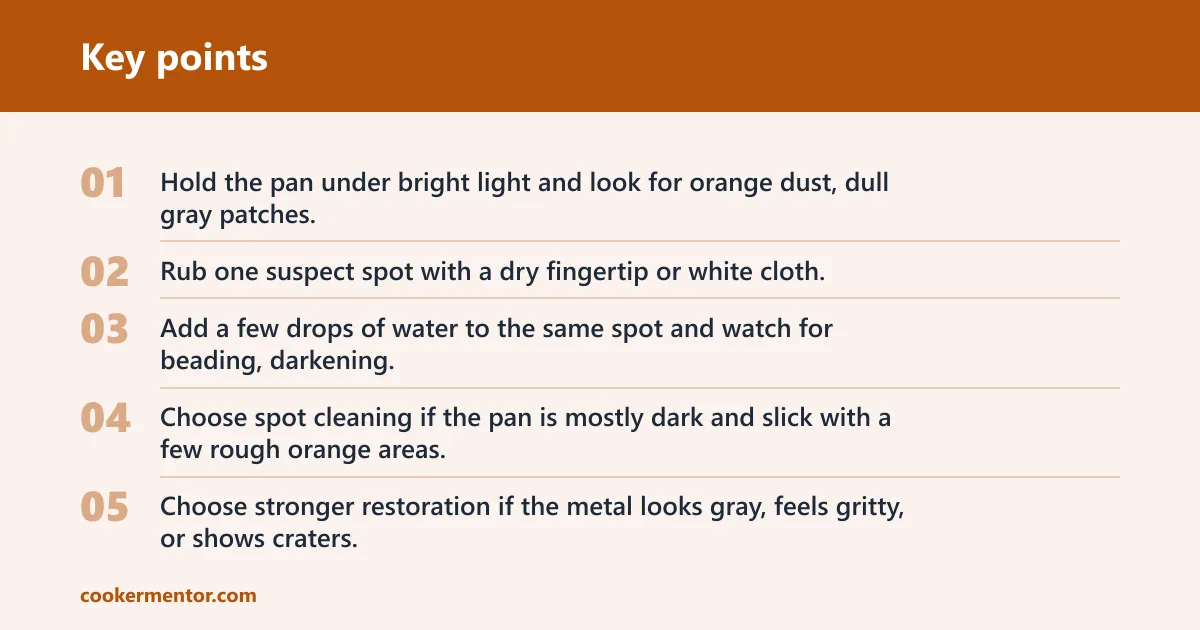
- Hold the pan under bright light and look for orange dust, dull gray patches, or dark greasy areas.
- Rub one suspect spot with a dry fingertip or white cloth.
- Add a few drops of water to the same spot and watch for beading, darkening, or orange bleed.
- Choose spot cleaning if the pan is mostly dark and slick with a few rough orange areas.
- Choose stronger restoration if the metal looks gray, feels gritty, or shows craters.
Suppose a 10-inch skillet has a dark cooking surface with one orange ring near the handle. If the ring feels sandy and smears onto a cloth, treat it as rust. If the dark center still feels slick and the orange area is tiny, spot-cleaning is usually the right first move.
Cast iron rust matrix
This table separates the cases that confuse most owners: flash rust, stained seasoning, bare iron, and deeper damage. Use the visual cue first, then confirm with touch. The next action tells you whether to scrub lightly, clean a spot, or move into restoration.
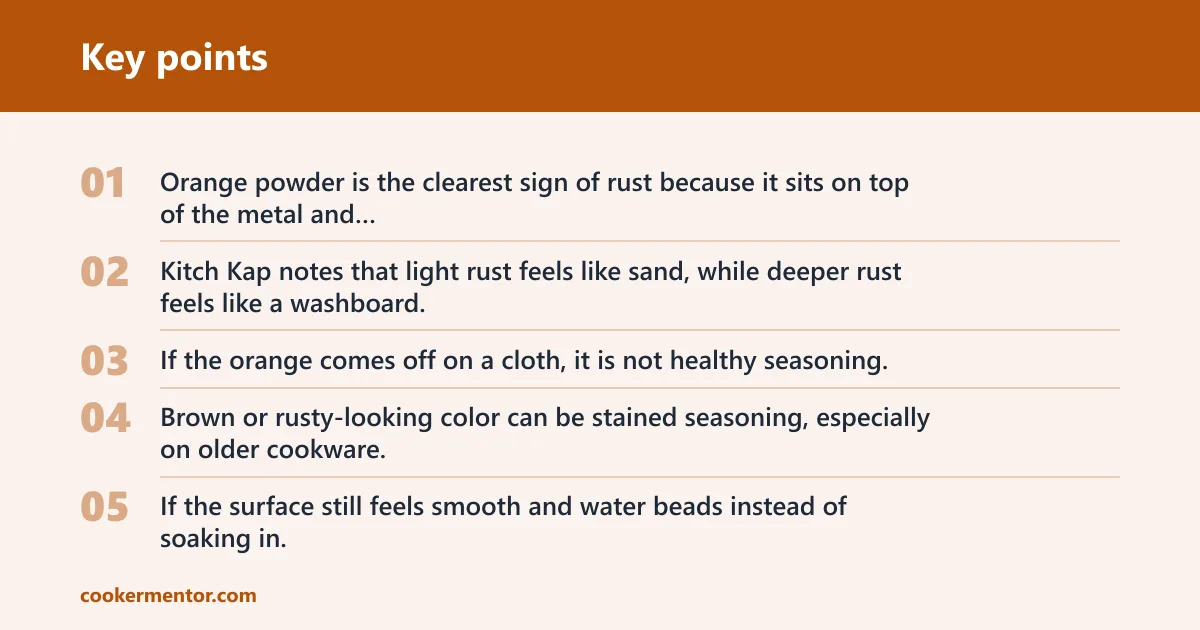
| Visual cue | Tactile cue | Likely diagnosis | Next action |
|---|---|---|---|
| Orange dust | Dry, gritty, rubs off as powder | Surface rust | Scrub with hot water and a chainmail scrubber; dry fully, then oil very thinly |
| Brown stains | May feel smooth or slightly sticky, not sandy | Stained or worn seasoning | Wash, dry, and judge again before stripping anything |
| Gray bare patches | Dry metal feel, little slickness | Bare iron | Clean gently, dry at once, then apply a thin oil coat and reseason |
| Flaky scales | Lifts at the edge, may shed chips | Rust with failing coating | Use 0000 steel wool or a scrubber, then dry and reseason |
| Slick dark patches | Smooth, waxy, and water-resistant | Healthy seasoning | Leave it alone; wash, dry, and oil lightly after use |
| Cratered metal | Washboard-like pits or pockmarks | Deep pitting | Move to stronger restoration; scrubbing alone may not fix it |
Why orange dust usually means rust
Orange powder is the clearest sign of rust because it sits on top of the metal and transfers easily. Kitch Kap notes that light rust feels like sand, while deeper rust feels like a washboard. If the orange comes off on a cloth, it is not healthy seasoning.
Why brown stains are less certain
Brown or rusty-looking color can be stained seasoning, especially on older cookware. That is why feel matters so much. If the surface still feels smooth and water beads instead of soaking in, the pan may need only a wash and dry, not a full strip.
What bare iron looks like
Bare iron is usually dark gray or silver rather than glossy black. The same source says it can turn orange within minutes when wet. If a spot looks raw and loses its dark coating after washing, the seasoning there is gone.
Is orange powder always rust?
No. Orange powder is usually rust, but some orange-brown marks are stained seasoning or residue sitting on top of a worn layer. The difference is texture: rust feels dry and sandy, while stained seasoning often feels smooth or a bit greasy. Water helps separate the two fast.
If the orange wipes away easily and the metal under it looks gray, treat it as rust. If the spot stays dark and slick after washing, it is more likely stained seasoning. A single rinse may settle the question before you reach for vinegar or steel wool.
How do you tell if rust is only surface rust or deeper damage?
Surface rust is a scrub-off level problem. Deep pitting means rust has eaten into the iron and left craters or pockmarks. If the surface feels like sandpaper or a washboard, scrubbing may clean the top layer but not repair the damage underneath.
For shallow rust, a chainmail scrubber with hot water often works, and small rust spots may be handled with a Lodge Rust Eraser. For stronger cases, some guides use distilled white vinegar in a container big enough to submerge the pan, but it should not stay there too long. The same source suggests a 1:1 vinegar-water mix for moderate rust and a 30-minute soak, no more.
If that didn’t work, try this next
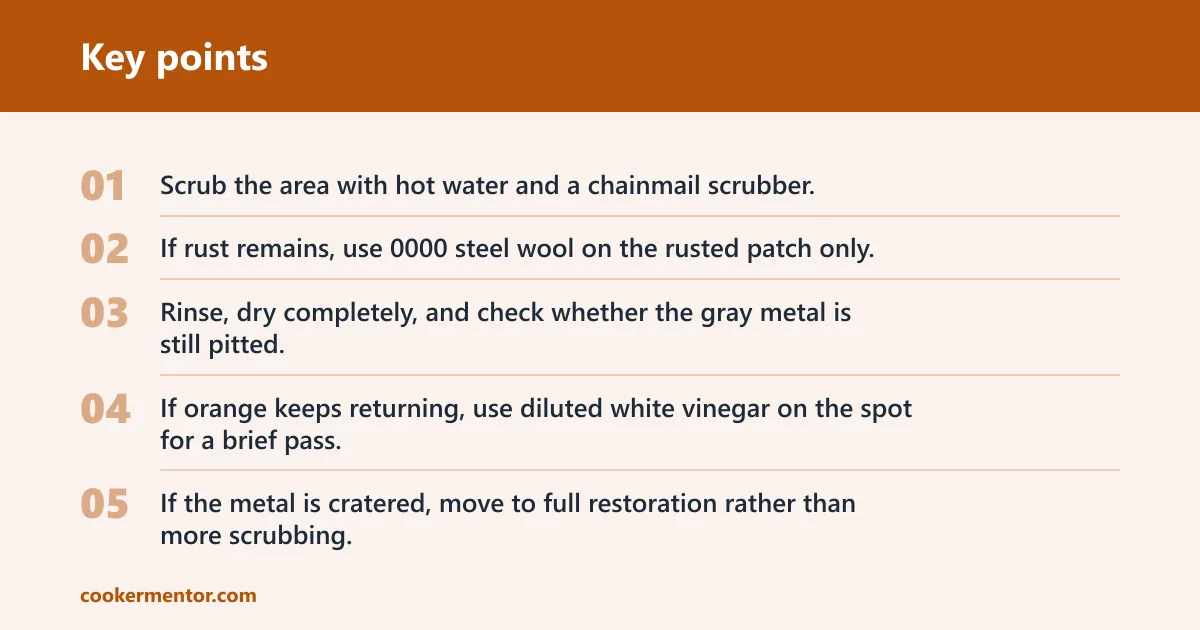
- Scrub the area with hot water and a chainmail scrubber.
- If rust remains, use 0000 steel wool on the rusted patch only.
- Rinse, dry completely, and check whether the gray metal is still pitted.
- If orange keeps returning, use diluted white vinegar on the spot for a brief pass, then rinse at once.
- If the metal is cratered, move to full restoration rather than more scrubbing.
A common first-timer mistake is seeing a slick dark pan with one orange edge and assuming the whole skillet needs stripping. If the rest of the surface is smooth and water-resistant, spot-cleaning the damaged area is usually enough.
Common mistakes
Using vinegar too long: White vinegar can help with rust, but it should not sit on cast iron for an open-ended soak. Kitch Kap’s 30-minute limit for a 1:1 mix is a useful ceiling for moderate rust, and even then you should rinse right away.
Oiling before the pan is fully dry: Wirecutter says cast iron should be dried completely before storage. Trapped moisture can leave you right back at rust.
Scrubbing bare iron too hard: Bare spots need drying, oil, and reseasoning, not endless abrasion. Too much force can remove more of the remaining coating.
Treating stained seasoning like rust through the whole pan: Brown or patchy seasoning may still protect the metal. Clean, dry, and recheck before stripping everything.
How to tell the pan has bare iron under the coating
Bare iron shows up as dark gray or silver metal with little or no slickness. It often turns orange quickly when wet, which is a strong clue that the seasoning is gone. If the spot looks raw after washing and does not repel water, treat it as exposed metal.
Once you find bare iron, dry it right away and apply a very thin layer of neutral oil such as canola or vegetable oil. Then reseason. Field says seasoning is the first line of defense against rust, so exposed metal needs that barrier back fast.
Choose cast iron rust if…
Choose Cast iron rust if the spot is orange, sandy, or turns orange again as soon as it gets wet. Choose seasoning if the area is dark, slick, and still sheds water after a wash. If the surface is cratered, it is usually not just a simple seasoning problem and may need deeper restoration.
Frequently asked questions
What does rust on cast iron look like compared with seasoning?
Rust is usually orange, orange-brown, or flaky and often feels gritty. Seasoning is usually dark brown to black and feels smooth or slick when it is intact. A quick water test helps: rust tends to stain water or bleed orange, while seasoning tends to repel it.
Can seasoning look brown or patchy instead of black?
Yes. Seasoning can look brown, mottled, or dull gray where it is thin or worn. Color alone does not decide the issue. If the surface still feels bonded and slightly slick, it may still be serviceable seasoning rather than rust.
What does healthy cast iron seasoning feel like?
Healthy seasoning feels smooth, lightly slick, and not sandy. It should not rub off as powder on a fingertip. Because seasoning is a polymerized oil layer, it usually feels more like a thin hard coating than loose residue.
How do you tell if the pan has bare iron under the coating?
Bare iron looks dark gray or silver and often turns orange quickly when wet. It also feels less slick than seasoned areas. If a spot loses its dark coating after washing and flashes orange, the seasoning there is gone.
When should you spot-clean cast iron instead of stripping it?
Spot-clean when most of the pan still looks dark and feels slick, but one area shows orange dust or a rough patch. Use hot water, a chainmail scrubber, or 0000 steel wool only on the damaged spot, then dry fully and apply a very thin oil coat.
How can you tell if rust is only surface rust or deeper damage?
Surface rust feels dry and sandy and usually scrubs off. Deeper rust feels rougher, like a washboard, and may leave pits after cleaning. If you can see craters or pockmarks, scrubbing alone is unlikely to be enough.