
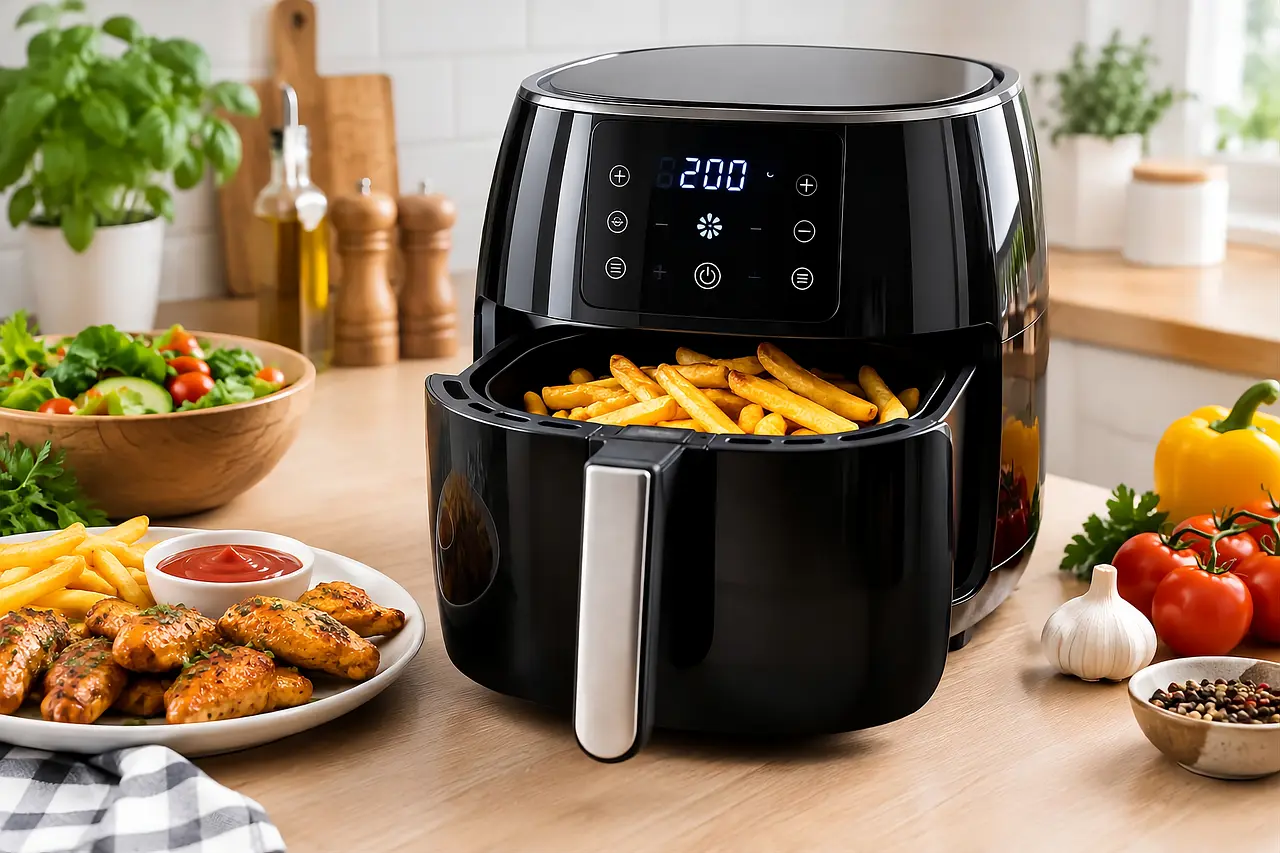
How to Clean an Air Fryer Basket and Tray Without Damage
Clean the basket and tray after every use with warm water and mild dish soap, using a soft sponge; use baking soda paste or a short soak for baked-on grease, and keep metal tools or abrasive pads away from nonstick or ceramic coatings. Scrubbing the wrong way can strip the coating, leave residue that smokes or tastes off, and shorten the life of the basket and tray. This guide shows the safest cleaning method by residue type and surface so you can remove grease without damage.
Before you clean
Unplug and cool fully
Unplug the air fryer first, then wait until the basket and tray are fully cool before you handle them. Hot metal and coated surfaces can burn you and can be harder to wash safely.
Inspect the parts before washing
Remove the basket and tray, then check both for flaking coating, warping, rough patches, and loose residue in the corners. If the nonstick surface is peeling or rough, stop using that part and follow the manufacturer’s replacement or repair guidance before you scrub; damaged coating needs gentler handling.
Why the cleaning method changes
Fresh crumbs, oily film, and baked-on carbon do not respond the same way. A light rinse is enough for loose debris, but carbonized grease usually needs a deeper rescue step. The basket’s holes and the tray’s seams also trap residue, so the safest method depends on both the soil level and the surface.
What you’ll need
- Mild dish soap and warm water
- Non-abrasive sponge for coated surfaces
- Soft-bristle brush for holes, seams, and corners
- Baking soda and water for a short paste
- White vinegar, diluted, for light grease or odor only
- Clean towel or drying rack
How do you clean the basket and tray?
Start with loose crumbs, then wash the removable basket and tray in warm soapy water using a soft sponge. For nonstick or ceramic surfaces, gentle wiping is safer than hard scrubbing. Dry both parts completely before you put them back, because trapped moisture can leave odor, spotting, and residue.
- Dump out crumbs and loose grease.
- Rinse the basket and tray with warm water.
- Add mild dish soap to warm water and wipe with a non-abrasive sponge.
- Use a soft-bristle brush only where holes, corners, or seams hold residue.
- Rinse until no soap film remains.
- Dry with a clean towel, then air-dry fully before reinserting.
If the parts are dishwasher-safe, the manual should say so plainly. Do not assume every removable insert can go in the dishwasher. Hand-washing is still the safer default for coated parts that are not clearly labeled dishwasher-safe.
How do you remove baked-on grease?
Use a baking soda paste or a short soak when grease will not lift with normal washing. For coated surfaces, the goal is to soften the buildup, not grind it off. If the residue stays hard or the coating looks worn, stop and inspect instead of pushing harder.
- Mix baking soda with just enough water to make a thick paste.
- Spread the paste on stuck-on spots only.
- Let it sit for a few minutes, then wipe with a damp sponge.
- Rinse and check the surface.
- Repeat once if needed; do not keep scrubbing the same patch.
A common first-timer mistake is treating carbonized grease like fresh oil. A dark ring around the center after a 400°F cook cycle can be a sign of baked-on residue. A paste works better than force, but repeated scraping can roughen nonstick coating and make the next cleanup harder.
Can you soak air fryer basket and tray in hot soapy water?
Yes, if the parts are removable and the residue is stuck but not carbonized. Use hot or warm soapy water for a short soak, then check whether the grease has loosened.
Do not treat soaking as a cure-all. If the basket has worn nonstick coating, warping, or a finish that looks brittle, stop the soak and inspect. Long soaking is less suitable when the manufacturer warns against it or when the residue is trapped in damaged coating.
How do you clean holes and corners?
The perforations in an air fryer basket catch crumbs and grease, so they need direct attention. Use a soft-bristle brush to work through the holes and along the corners, then rinse out loosened residue. Do not pry at trapped carbon with a knife, skewer, or metal brush.
- Hold the basket over the sink and flush the holes with warm water.
- Add a drop of dish soap to the brush.
- Brush each perforated area gently from both sides if needed.
- Rinse until water runs clear through the holes.
- Inspect the corners for sticky residue before drying.
Picture a basket with dozens of small holes lined with browned oil. A soft brush gets into those openings without cutting the coating, while a sharp tool can widen the damage and leave a rough edge that traps more grime next time.
Basket and tray decision table
| Residue level | Surface type | Recommended action | Red flags |
|---|---|---|---|
| Fresh crumbs | Nonstick | Rinse, then wash with warm water and mild dish soap | Avoid scraping if the coating looks thin or rough |
| Fresh crumbs | Ceramic | Rinse and wipe with a non-abrasive sponge | Stop if you see chips, cracks, or flaking edges |
| Oily film | Dishwasher-safe metal | Wash by hand first, or use the dishwasher only if the manual allows it | Do not load it if the finish is coated but not labeled dishwasher-safe |
| Baked-on carbon | Nonstick | Apply baking soda paste briefly, then wipe and inspect | Do not scrape or keep soaking if the coating is lifting |
| Baked-on carbon | Ceramic | Use a short soak, then a soft-bristle brush and gentle wipe | Stop if the surface feels gritty, scratched, or uneven |
| Any residue that will not lift | Any surface | Stop and inspect before repeating the method | Flaking coating, warping, or exposed metal means do not force it |
Common mistakes
Steel wool, abrasive scrubbers, metal scourers, and sharp tools can scratch nonstick coating and may shorten the usable life of the parts. Harsh cleaners can also leave residue behind or dull the finish.
- Do not scrub nonstick surfaces with the abrasive side of a sponge.
- Do not soak every part for a long time.
- Do not put non-dishwasher-safe inserts in the dishwasher.
- Do not reinstall the basket or tray while they are still damp.
White vinegar can help with light grease or odor, but use it diluted and only on basket or tray finishes that the manufacturer says can handle it. It is not the right choice for every material or every stubborn spot. Baking soda also needs limits; short contact and gentle wiping are safer than aggressive rubbing.
How do you dry air fryer basket and tray after washing?
Dry both parts completely before you put them back in the appliance. A towel removes surface water, but the holes, seams, and corners still need air-drying time. Drying matters because trapped moisture can cause odor, spotting, and a damp smell the next time you cook.
- Pat the basket and tray dry with a clean towel.
- Set them on a drying rack or clean counter.
- Check the perforations and corners for hidden moisture.
- Reinsert only when every surface feels dry.
Suppose the tray looks dry at a glance but water is still sitting in the rim channel. That hidden moisture can end up back in the fryer cabinet and turn into steam, spots, or a stale smell after the next cycle.
How often should you clean them?
Grease residue can accumulate after just three to five uses, so waiting too long makes cleanup harder. A practical rule is to clean the basket and tray after every one to three uses, and to clean after every use when food splatter is heavy or oily.
If you notice smoke, lingering odor, or a sticky film, move from routine washing to deep-clean rescue right away.
Frequently asked questions
How do you clean an air fryer basket and tray without damaging the nonstick coating?
Use warm water, mild dish soap, and a non-abrasive sponge. Rinse first, then wipe gently, and dry fully before reinserting. For stuck-on grease, use a short soak or a baking soda paste instead of scraping, because metal tools and abrasive pads can damage nonstick coating.
What should you not use to clean an air fryer basket?
Avoid steel wool, metal scourers, abrasive scrubbers, sharp tools, and harsh cleaners. Those can scratch coating, leave residue, or dig into perforations. A metal scourer should be avoided, and the safest manual-cleaning tools are a soft-bristle brush and a non-abrasive sponge.
How do you remove baked-on grease from an air fryer tray?
Start with a short soak in hot soapy water, then apply a thick baking soda paste to the stubborn spots. Let it sit for a few minutes and wipe gently. If the residue still holds, stop and inspect the coating rather than escalating to hard scraping.
Is it okay to put air fryer basket and tray in the dishwasher?
Only if the manual says the removable parts are dishwasher-safe. Some models are not. If the coating is nonstick or the label is unclear, hand-washing is the safer choice. Do not place damaged or flaking parts in the dishwasher, because water pressure and heat can make wear worse.
How long should you let an air fryer cool before cleaning it?
Wait until it is fully cooled before touching the basket or tray. A 30-minute cooling period is common, and if the parts still feel warm, leave them out until they are safe to handle.