Egg Skillet vs Omelette Pan: What Is the Difference?
An omelette pan is shallow and sloped so eggs slide out and fold cleanly; a skillet is wider and better for fried eggs, sautéing, and mixed cooking. Pick the wrong shape and the eggs can cling, tear, or cook unevenly across the pan. This guide compares size, slope, coating, heat use, and which pan fits your egg routine.
| Decision factor | Egg skillet | Omelette pan | Winner |
|---|---|---|---|
| Side height and depth | Shallow to moderately sloped sides; more room for stirring and browning | Low, sloped sides; shallow profile helps eggs slide out cleanly | Omelette pan |
| Egg handling | Good for fried eggs, scrambled eggs, and larger batches | Best for folding, rolling, and quick sliding of delicate eggs | Omelette pan |
| Spill control | Better than a very flat pan, but still open on the sides | Lower sides can spill if the pan is too full or too wide for the egg count | Egg skillet |
| Versatility | Handles eggs, pancakes, searing, and everyday cooking | More focused on eggs and low-fill cooking | Egg skillet |
| Best fit for delicate omelettes | Works if the size is right, but less specialized for folding | Built for French omelettes and neat American omelettes | Omelette pan |
| Best fit for mixed meals | Easy choice for eggs plus toast, hash, or vegetables | Less flexible when you want to switch between egg styles and other foods | Egg skillet |
Pan shape and cooking use
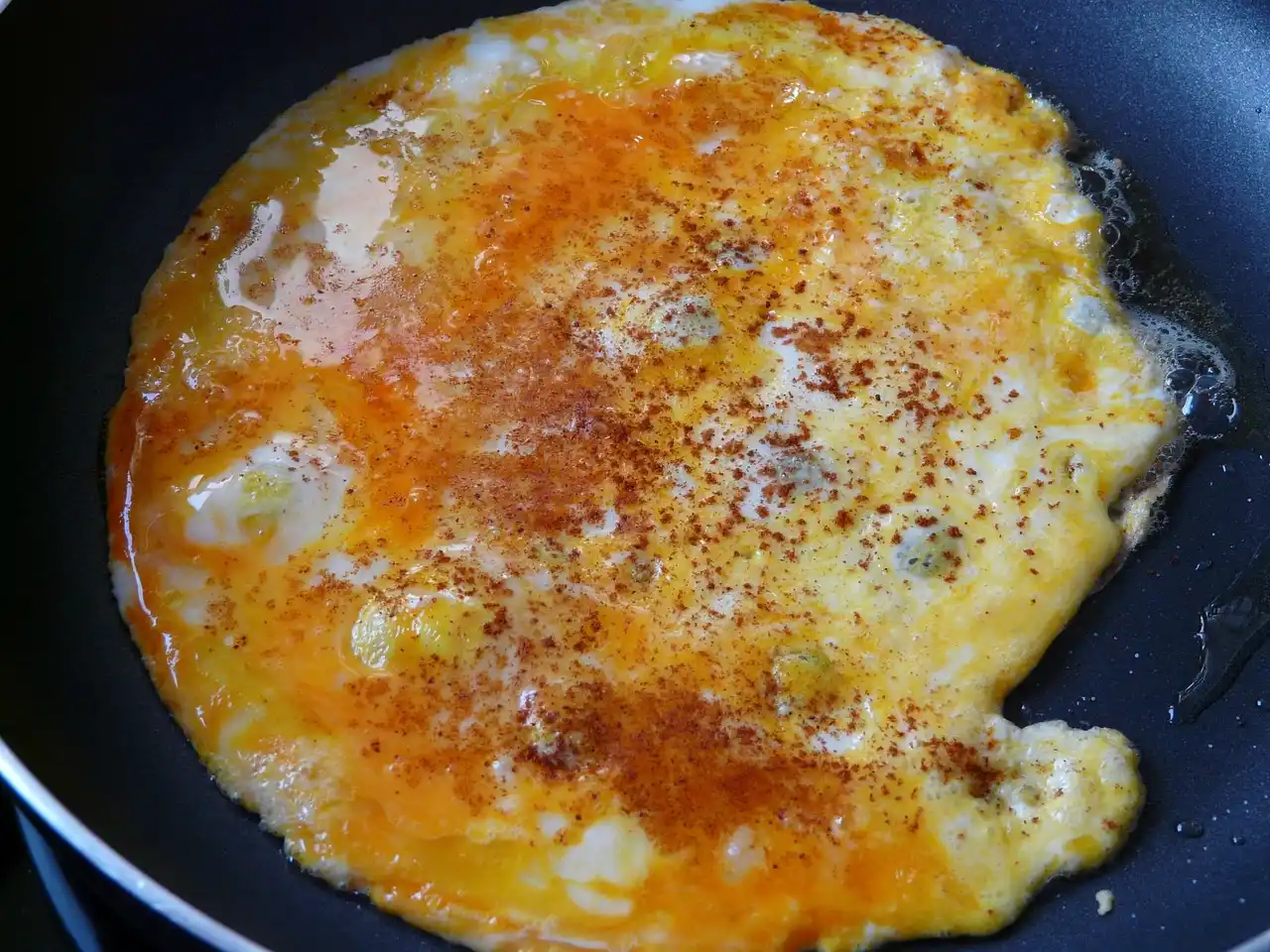
The main difference is what each pan does best. An omelette pan is shaped for quick release, folding, and controlled egg movement, while an egg skillet gives you more room for fried eggs, scrambled eggs, pancakes, and other cooking jobs. If you want one pan for more than eggs, the skillet usually wins.
Side height and spill control
Low, sloped sides make it easier to slide an omelette onto a plate and flip the eggs without catching the edge. A skillet or frying pan gives you a broader working area and usually more spill control than an ultra-shallow egg pan, especially when you stir, toss, or add fillings.
Suppose you are making a two-egg omelette with mushrooms and cheese. In a pan that is too wide, the egg layer spreads thin and the filling can crowd one side. In a pan that is too steep, the eggs can set before you get a clean fold.
Egg count, flipping ease, and best use
For delicate folding, the omelette pan is the better shape. For fried eggs, scrambled eggs, and mixed cooking, the skillet is the safer all-round choice because the flatter, broader surface leaves more room to move food around without a spill.
Versatility and one-line recommendation for each pan type
- Egg skillet: Choose it if you want a pan for eggs plus daily cooking tasks.
- Omelette pan: Choose it if your main goal is neat omelettes with easy release.
- Skillet: Choose it if you want the broadest use across breakfast and dinner.
- Sauté pan: Choose it only if you need more depth and fewer spills than a shallow pan can offer.
Is an omelette pan the same as a skillet?
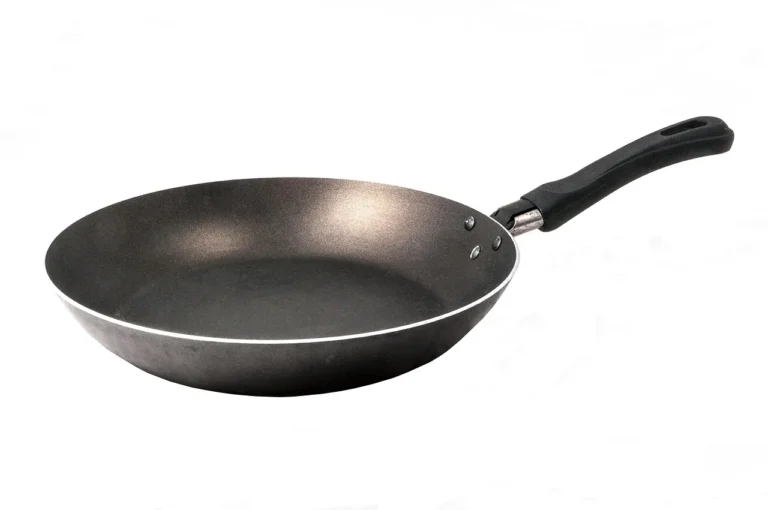
No. The terms overlap, but they are not the same in use or shape. An omelette pan is usually a smaller nonstick skillet, 8 to 10 inches, with low, sloped sides made for sliding and folding eggs. A skillet is a broader everyday pan category, and frying pans are often called skillets interchangeably.
Where the shapes stop being interchangeable is in the rim and wall profile. A true omelette pan is tuned for egg release and quick movement. A general skillet can still cook eggs well, but it is usually built for wider use, not a single egg style.
What makes an omelette pan different?
Low, sloped sides are the main difference, and they matter because they let the egg move instead of catching on the wall. Omelette pans are usually 8 to 10 inches, and the smaller footprint helps you control a thin layer of eggs without spreading them too far. Nonstick surfaces are common because release matters more here than browning.
Low, sloped sides for sliding and folding
The slope gives you a clean path for the omelette to leave the pan. That helps with French omelettes, where the egg is folded and rolled, and with American omelettes, where the fold needs a clear edge to close cleanly. Too-steep sides can interrupt that motion and make the egg pile against the wall.
Typical 8- to 10-inch sizing
An 8-inch pan is suggested for a 2- to 3-egg omelette. A 10-inch pan is suggested for a 3- to 4-egg omelette. Larger diameters can add flexibility, but they also spread the eggs thinner, which can make the center cook less evenly if the heat is uneven or the pan is oversized for the batch.
Why nonstick surfaces are common
Nonstick helps eggs release cleanly, which is especially useful when you want a smooth fold or a soft turn. PTFE coatings, often called Teflon, are known for strong release and are common in egg pans. Ceramic-coated pans can also be nonstick, but they tend to be more sensitive to wear and rough utensils, so care matters.
Can you use a frying pan for omelettes?
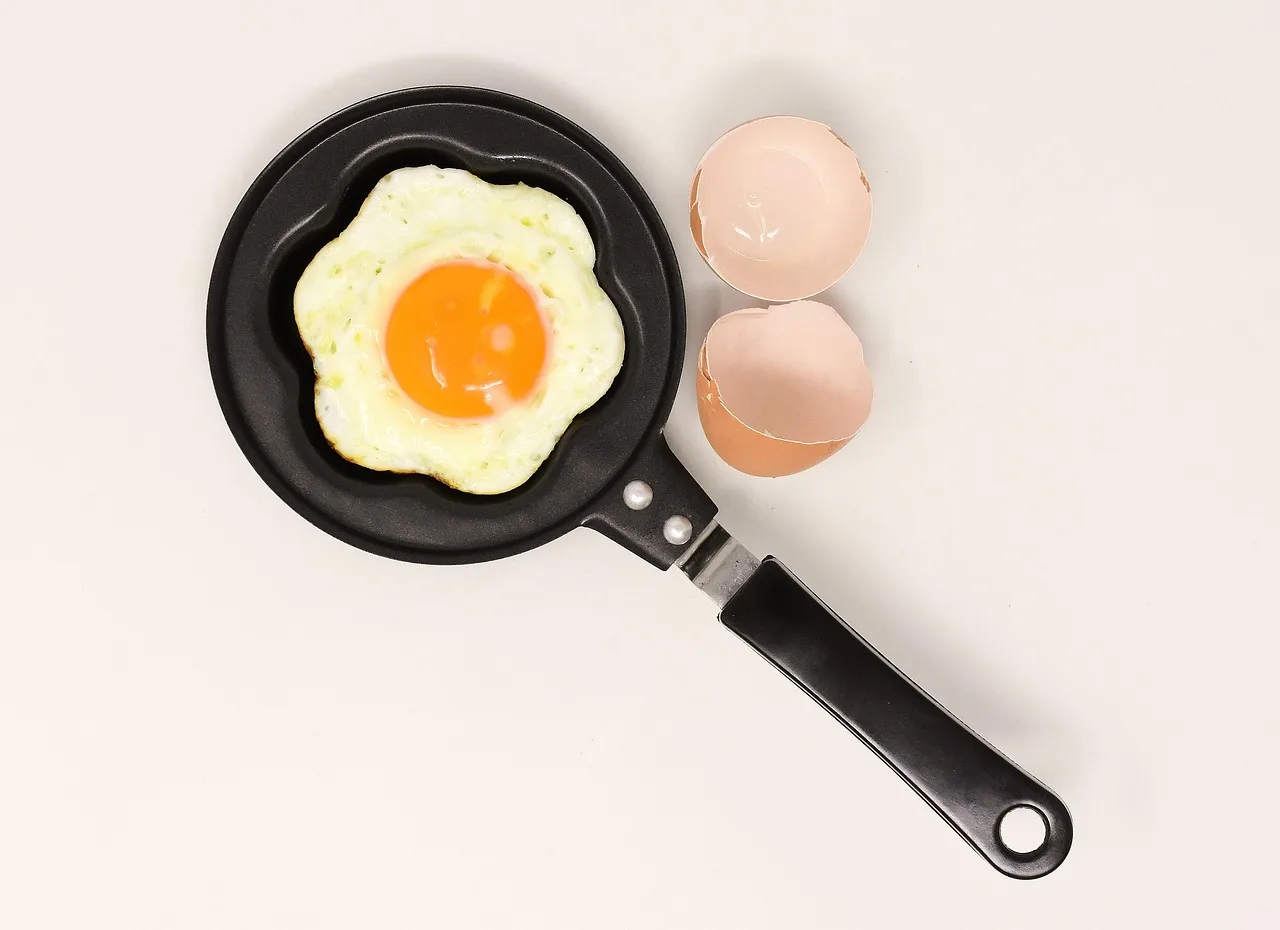
Yes, as long as the size and shape are reasonable for the number of eggs. A frying pan can make a good omelette when it has enough nonstick performance and a diameter that roughly matches the egg count. A skillet is often the better substitute than a sauté pan, because its lower, sloped sides are closer to what omelette work needs.
When a frying pan works fine
A frying pan works fine for an omelette when you are cooking a small batch and the eggs can form a compact layer. That is common for scrambled eggs, simple American omelettes, and fried eggs. A common first-timer mistake is using a pan that is much too wide, which can leave the egg spread thin and more likely to tear during the fold.
When a skillet is better than an omelette pan
A skillet is better when you want more versatility and less fuss about exact egg style. It gives you a larger working surface for searing, pancakes, and batch cooking, and many cooks treat frying pan and skillet as the same tool. For fried eggs, that broader surface is often more practical than a specialized omelette pan.
When a sauté pan is the wrong substitute
A sauté pan usually has straight sides, is deeper than a frying pan, and often comes with a lid. That depth helps with volume and spill control, but it is awkward for delicate egg folding because the eggs must climb a taller wall before they slide out. For omelettes, that extra depth is usually a disadvantage.
Pan size and egg count
Size affects both control and texture. An 8-inch pan suits a 2- to 3-egg omelette, while a 10-inch pan suits a 3- to 4-egg omelette. If the pan is too large, the eggs spread out and cook thinner; if it is too small, they crowd together and are harder to fold cleanly.
8-inch pans for 2- to 3-egg omelettes
An 8-inch pan keeps a small omelette centered, which helps with even cooking and a tidy fold. It is a practical size for one person or for a lighter breakfast. It also reduces the chance that a small egg mix will run across too much surface and dry out at the edges.
10-inch pans for 3- to 4-egg omelettes
A 10-inch pan gives more room when you need a fuller omelette or a broader surface for fillings. That extra diameter is useful for a 3- to 4-egg omelette because the eggs can set without crowding. The trade-off is that the pan needs steady heat, or the center can lag behind the outer edge.
How larger diameters change heat and control
Larger pans give you more flexibility, but they also demand more attention to heat distribution. Even heating matters for eggs because hot spots can burn the edge while the center stays soft. Thicker bottoms help limit that problem by spreading heat more evenly across the cooking surface.
Material and coating differences
Material changes how the pan heats, how long it lasts, and how easy it is to clean. For eggs, even heating and a smooth release matter most. Cast iron, stainless steel, aluminum, hard-anodized aluminum, and ceramic-coated pans can all work, but they tend to behave differently on the stove.
PTFE/nonstick vs ceramic-coated surfaces
PTFE coatings are usually the easiest for eggs to release from, which is why they are common in omelette pans. Ceramic-coated pans can also release well at first, but they are generally less tolerant of rough treatment and can lose slickness sooner if you use metal utensils or abrasive cleaning tools.
Cast iron, stainless steel, aluminum, and hard-anodized aluminum
Cast iron is common in skillets and holds heat well, but it is heavier and not as naturally slick for eggs unless it is well seasoned. Stainless steel is durable, yet eggs can stick without careful heat control and enough fat. Aluminum heats quickly, hard-anodized aluminum is more durable than bare aluminum, and both are common choices where even heating matters.
How heat distribution affects egg results
Uneven heating can burn the edges before the center sets, which is a common failure point in omelettes. A thicker base usually helps smooth that out. For egg cooking, a pan that heats evenly is often more important than a pan that simply gets very hot.
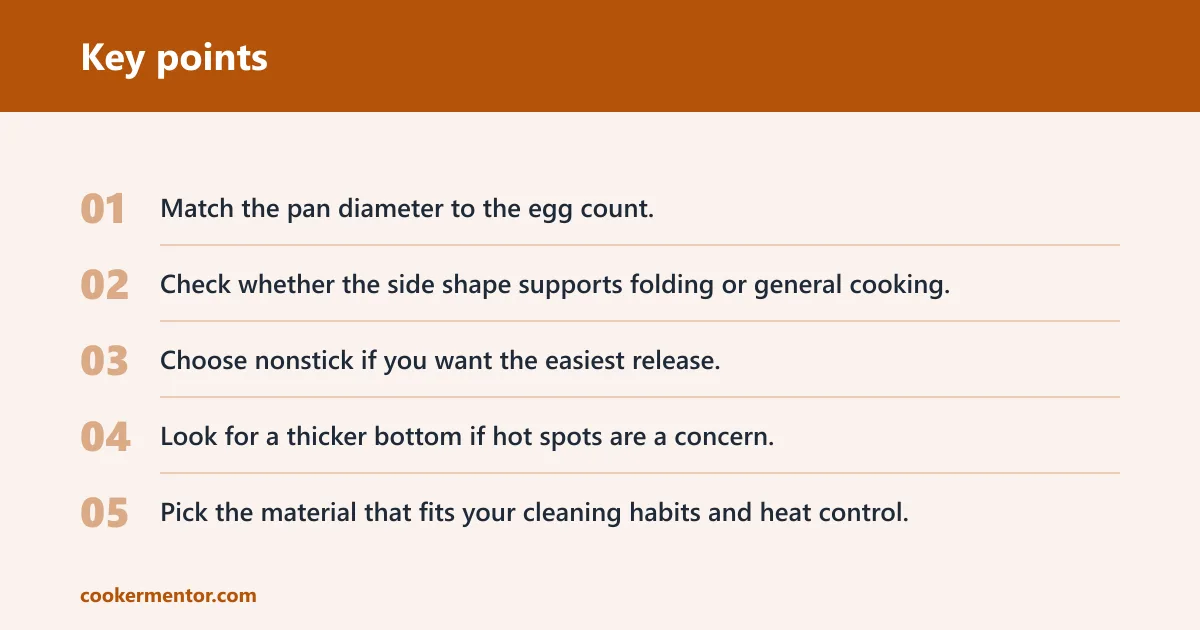
- Match the pan diameter to the egg count.
- Check whether the side shape supports folding or general cooking.
- Choose nonstick if you want the easiest release.
- Look for a thicker bottom if hot spots are a concern.
- Pick the material that fits your cleaning habits and heat control.
Choose Egg skillet if… / Choose omelette pan if…
Choose Egg skillet if you want one pan for more than eggs, if you fry eggs often, or if you want a broader cooking surface for pancakes, sautéing, and batch breakfast work. Choose omelette pan if your main goal is a neat fold, easy release, and the closest fit for French or American omelettes.
If you cook more than one egg style, the skillet is usually the better default. If you want the cleanest omelette workflow and do not mind a more specialized pan, the omelette pan is the better tool.
Frequently asked questions
What makes an omelette pan different from a frying pan?
An omelette pan is usually 8 to 10 inches and has lower, more sloped sides that make folding and sliding easier. A frying pan is built for broader use and may have slightly higher or less specialized sides. That difference matters most when you want a clean omelette instead of a general cooking surface.
What size omelette pan do I need for 2 eggs?
An 8-inch pan is the usual suggestion for a 2- to 3-egg omelette, so it fits a 2-egg omelette well. That size keeps the eggs concentrated enough to fold without spreading too thin. A larger pan can still work, but it gives you less control over thickness.
Why do omelette pans have sloped sides?
Sloped sides help the egg slide instead of catch. That shape makes it easier to turn, fold, and lift the omelette without tearing the surface. It also helps the pan act more like a guide, which is useful when the eggs are still soft and fragile.
Can I use a sauté pan instead of an omelette pan?
You can, but it is usually a poorer fit for delicate egg work. A sauté pan has straight, vertical sides and more depth, which is useful for volume and spill control but not for quick sliding or folding. For omelettes, that extra depth usually gets in the way.