What Pieces Should a Stainless Steel Cookware Set Include?

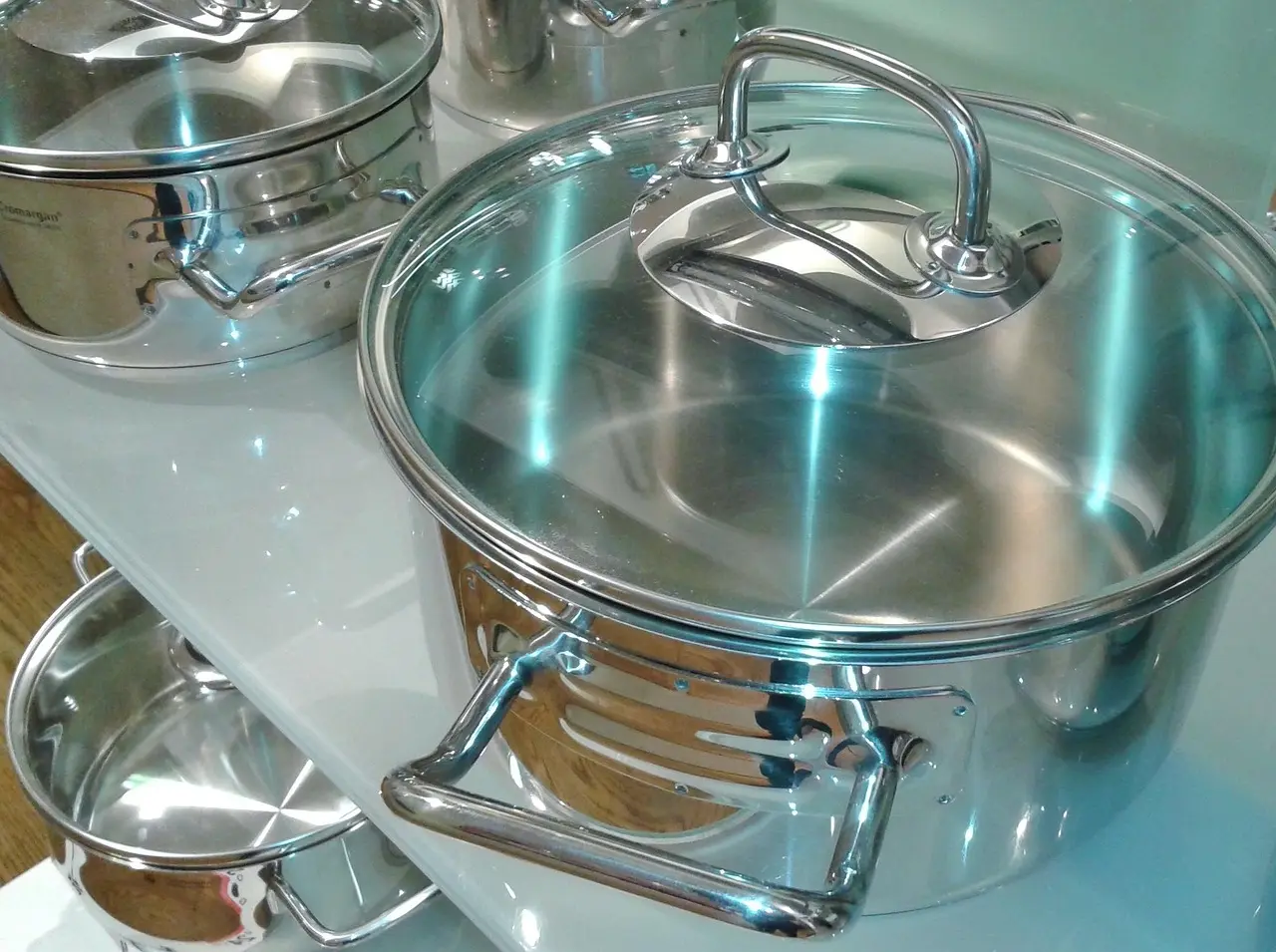
A practical stainless steel cookware set should include a 10- to 12-inch skillet, a 3-quart saucepan, a 6-quart stockpot, and at least one lid for each size you’ll use most. If those pieces are missing, you pay for extras you rarely touch and still need to buy the basics later. This guide shows the smallest useful set, the extras worth paying for, and the filler pieces to skip.
Minimum pieces to look
The smallest useful stainless steel set covers searing, simmering, and boiling without packing in duplicates. At minimum, look for one skillet, one saucepan, and one stockpot, with lids for the pieces that will see covered cooking. Anything beyond that should earn its spot by changing what you can cook, not by raising the piece count.
What pieces stainless steel checklist
| Piece | Ideal size | Why it matters | Essential or optional | Common mistake |
|---|---|---|---|---|
| Skillet / frying pan | 8-inch and 10-inch | Used for everyday searing, eggs, and sautéing | Essential | Buying only one small pan and running out of space |
| Saucepan | 1.5-quart and 3-quart | Core piece for sauces, grains, and reheating | Essential | Choosing a tiny pot that cannot handle rice or pasta sides |
| Sauté pan | 3 to 3.5-quart | Offers more capacity than a standard skillet | Optional | Buying one when a second skillet would be more useful |
| Stockpot | 6-quart or 8-quart | Needed for soups, pasta, and batch cooking | Essential for many households | Getting an oversized pot that stores poorly and sees little use |
| Lid | Matched to each pan size | Helps trap heat and moisture | Essential for saucepans, sauté pans, and stockpots | Accepting loose lids that rattle or release steam |
This checklist is the buying filter. If a set lacks the right saucepan size, skips a stockpot you know you need, or piles on extra small pans, the piece count is doing marketing work instead of kitchen work.
Which pans do you actually need first?
Start with two skillet sizes and one saucepan size if you want a set that handles most weeknight cooking. The 8-inch skillet suits smaller portions, while the 10-inch skillet is the workhorse for searing and sautéing. A 3-quart saucepan is the most versatile everyday pot, with a 1.5-quart pot useful for smaller jobs.
Skillet sizes: 8-inch and 10-inch
Paired skillets are common because they cover different jobs without forcing you to crowd food. An 8-inch pan works for eggs, single portions, and quick reheating. A 10-inch pan gives you more surface area for browning and keeps moisture from building up when you cook vegetables or protein in batches.
Sets that include both are easier to live with than sets that give you one large skillet and a lot of accessories. All-Clad D3 includes 8.5- and 10.5-inch skillets, and Tramontina includes 8- and 10-inch frying pans. Hestan Nanobond includes 8.5- and 11-inch skillets, which shows how brands often pair a smaller and larger pan rather than duplicate the same size.
Saucepan sizes: 1.5-quart and 3-quart
A 1.5-quart saucepan handles small reheats, melted butter, and quick sauces. A 3-quart saucepan is the more important size for most buyers because it handles grains, soups for two, and larger batches of vegetables or leftovers. Most sets include lids on both, which matters because a covered saucepan heats faster and loses less moisture.
All-Clad D3 includes 1.5- and 3.5-quart saucepans with lids, while Tramontina includes 1.5- and 3-quart saucepans with lid. Hestan Nanobond also includes 1.5- and 3-quart saucepans with lids. That pattern is a good sign: a small pot plus a practical mid-size pot covers more daily use than two tiny ones.
When a sauté pan beats a second skillet
A sauté pan is worth choosing when you want more capacity, straighter sides, and a lid. A common 3 to 3.5-quart size makes a sauté pan useful for shallow braises, saucy chicken dishes, and one-pan meals that might splash out of a skillet. If you already have a 10-inch skillet, a sauté pan is often the better upgrade than a second frying pan.
Picture a 10-inch skillet crowded with chicken cutlets and tomato sauce. The food fits, but splatter and evaporation rise fast. A 3.5-quart sauté pan gives the same footprint with taller sides and a lid, so it can move from browning to simmering without switching pans.
Do you need a stockpot and lids in the set?
Most households do need a stockpot, but the right size depends on how you cook. A 6-quart pot is enough for soups, pasta, and smaller batches, while an 8-quart pot helps when you cook for a crowd or batch-cook stock. Lids matter just as much as the pot itself because they control heat, evaporation, and boil time.
Stockpot sizes: 6-quart and 8-quart
A 6-quart stockpot is the safer minimum for many buyers because it stores more easily and still covers pasta, soups, and beans. An 8-quart pot makes more sense if you regularly cook for 4 or more people, want to blanch vegetables, or like to make large amounts of broth. Bigger is not automatically better if it stays empty most weeks.
All-Clad D3 includes a 6-quart stock pot with lid, while Tramontina includes an 8-quart stock pot with lid. Hestan Nanobond includes an 8-quart stockpot with lid. Those examples show the split clearly: 6 quarts is the compact standard, and 8 quarts is the batch-cooking choice.
Why lids should fit tightly
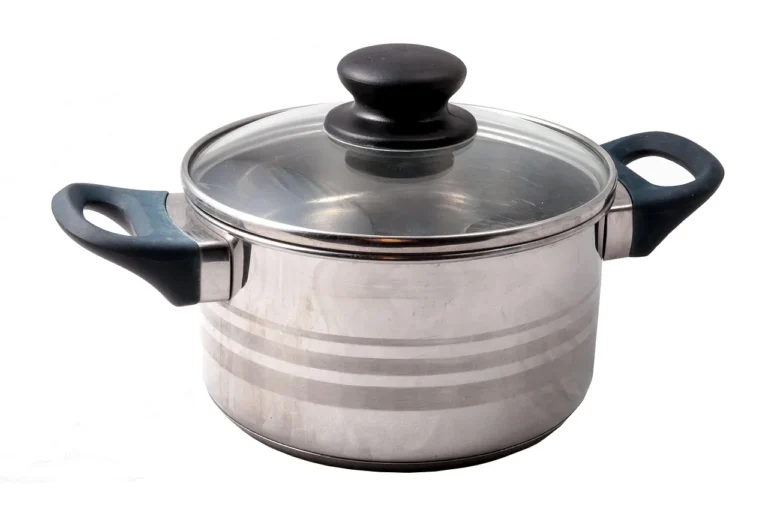
Lids should sit flat and seal closely enough to trap heat and moisture. A loose lid lets steam escape, which slows simmering and can dry out grains or sauces. Tight-fitting lids also reduce splatter and make it easier to keep a boil or simmer steady once the pot is covered.
- Check the lid match. Put each lid on the pan it is meant for and look for even contact around the rim. If it rocks, rattles, or sits crooked, expect more steam loss and less predictable cooking.
- Prioritize covered pieces. Make sure the saucepan, sauté pan, and stockpot each have a matching lid if you plan to simmer, braise, or reheat often. A skillet lid is useful, but it is less central than a lid for a pot.
- Skip loose extras. If a set counts an accessory lid as a major piece but leaves the main pot uncovered, keep shopping. The included lid should serve the piece you will use most.
Suppose you simmer rice in a 3-quart saucepan and the lid lifts steam the whole time. The rice still cooks, but it takes longer and may dry unevenly. A snug lid changes the result more than an extra decorative pan does.
What specs matter beyond piece count?
Piece count matters less than build, compatibility, and comfort. Tri-ply construction is a common quality marker because it helps spread heat more evenly and reduces hot spots. After that, check whether the set works on your cooktop, whether it is dishwasher safe, and whether the handles and lids hold up in the oven.
Tri-ply construction
Tri-ply, or 3-ply stainless steel, means layers of metal are bonded together. That structure is valued because it usually heats more evenly than thin single-layer steel and helps reduce scorching in the center of a pan. It is not a guarantee of performance, but it is a stronger signal than piece count alone.
Induction compatibility
Induction compatibility should be stated plainly in the product specs if you cook on an induction range. Stainless steel is often compatible, but not every set is built the same way. Check for explicit induction support before you buy, especially if the base construction or cladding is not clearly described.
Dishwasher safety
Dishwasher-safe labels are convenient, but they are not the same as best-for-everyday-care. Many stainless steel sets can go in the dishwasher, yet hand-washing may help preserve shine and reduce water spots. Treat dishwasher safety as a convenience filter, not a proof of better cookware.
Oven safety and handle design
Oven safety matters if you finish steaks, move a skillet from stovetop to oven, or use a broiler. Some sets are safe up to 600 degrees Fahrenheit, but that limit depends on the handles and lid materials as much as the steel itself. Handles should also be easy to grip, with a shape that stays manageable when the pan is hot.
- Match the set to your cooktop. Confirm induction compatibility before you compare anything else if you own an induction range. A strong pan that will not work on your burner is the wrong buy.
- Check oven limits. Look for the stated oven-safe temperature and compare it to your usual cooking methods. If you finish food under high heat, choose a set that supports that use without forcing you to remove the lid or swap handles.
- Test the grip mentally. Read the handle shape and placement carefully. A handle that feels comfortable on paper is less likely to surprise you when the pan is full and hot.
Minimum set by household size
The right minimum set changes with how many people you cook for and how often you batch-cook. A 1- to 2-person household can often stay lean with a few essential pieces, such as 8-inch and 10-inch skillets, 1.5-quart and 3-quart saucepans, and a 6-quart stockpot. A 3- to 4-person household usually needs more capacity in the saucepan or stockpot. Batch cooks should prioritize the larger pot and at least one roomy skillet.
| Household or cooking style | Recommended minimum set | Why this works |
|---|---|---|
| 1-2 people | 8-inch skillet, 10-inch skillet, 1.5-quart saucepan, 3-quart saucepan, 6-quart stockpot | Covers eggs, quick sautés, small sauces, and basic boiling without excess bulk |
| 3-4 people | 10-inch skillet, 3-quart saucepan, 6-quart or 8-quart stockpot, optional 3 to 3.5-quart sauté pan | Better for family portions, covered simmering, and one-pan meals |
| Batch cooks | 10-inch skillet, 3-quart sauté pan, 3-quart saucepan, 8-quart stockpot | Prioritizes capacity, lids, and oven-friendly pieces for larger volumes |
For beginners, the best starting point is usually the smallest set that includes a good skillet, a useful saucepan, and a stockpot with matching lids. More pieces only help if they change the way you cook. If the set adds duplicate small pans before it adds a better pot, the value is weaker.
Common mistakes when choosing a set
The most common errors are simple: buying too many small pans, ending up with too few lids, choosing piece count over function, and ignoring compatibility with your cooktop or oven. These mistakes create clutter and still leave gaps in the kitchen.
- Too many small pans. A set packed with 1-quart and 1.5-quart pieces can look complete while still lacking a truly useful cooking surface.
- Too few lids. If several core pieces share one lid, simmering and reheating become less convenient and less precise.
- Buying for piece count. Extra utensils, inserts, or duplicate pans can inflate the total without improving day-to-day cooking.
- Ignoring compatibility. Check induction support, dishwasher safety, and oven-safe limits before price or finish color.
Frequently asked questions
What pieces should a stainless steel cookware set include?
The most useful stainless steel set includes at least one skillet, one saucepan, and one stockpot, plus lids for the pieces you cover often. A 10-inch skillet, a 3-quart saucepan, and a 6-quart stockpot cover most everyday cooking without piling on duplicates or low-value extras.
What is the minimum cookware set you actually need?
The minimum useful set for most cooks is one skillet, one saucepan, and one stockpot. If you cook small meals, an 8-inch and 10-inch skillet pair plus a 1.5-quart and 3-quart saucepan gives more flexibility, but the core idea stays the same: one pan for searing, one for simmering, one for boiling.
Should a stainless steel set include a stockpot or sauté pan?
A stockpot belongs in many sets because it handles soup, pasta, and batch cooking. A sauté pan is optional and best chosen when you want a covered, higher-sided pan around 3 to 3.5 quarts. If you already have a good skillet, the stockpot is usually the more universal buy.
How many saucepans and skillets should come in a set?
Two skillets and two saucepans are a practical setup for many households: an 8-inch and 10-inch skillet, plus 1.5-quart and 3-quart saucepans. That mix handles small and medium jobs without leaving you with a drawer full of near-duplicates that do the same work.
What pieces make a stainless steel set good for induction?
The set should list induction compatibility clearly, and the base should be built for even contact with the cooktop. Tri-ply construction is a strong sign of better heat spread, but the key filter is explicit induction approval in the specs. Do not assume every stainless steel pan will work equally well.
What should beginners prioritize in a cookware set?
Beginners should prioritize the right sizes, tight lids, and handles that are easy to grip. A good starter set is more about control than volume. Choose the smallest configuration that gives you a useful skillet, a real saucepan, and a stockpot that match your stove and cooking habits.