Why Is My Air Fryer Smoking on First Use?
A little smoke on first use usually comes from factory oils, packaging traces, or protective coatings burning off inside a new air fryer. Thick smoke, a burning smell, or smoke that returns after cleanup means stop and check the basket, heating element, and manual first. Wrong smoke can ruin food, coat the appliance in residue, and, in rare cases, point to an unsafe fault. This guide shows how to tell normal break-in smoke from cleaning mistakes or defects, and what to do next.
Normal first-use smoke and oil haze
First-use smoke usually comes from residue, packaging traces, or protective coatings burning off inside a new air fryer. Some odor and a little visible smoke can be normal during the first run, but color, smell, and timing matter. White or gray smoke is often linked to grease, steam, or excess oil; blue, dark, or black smoke can point to a different problem.
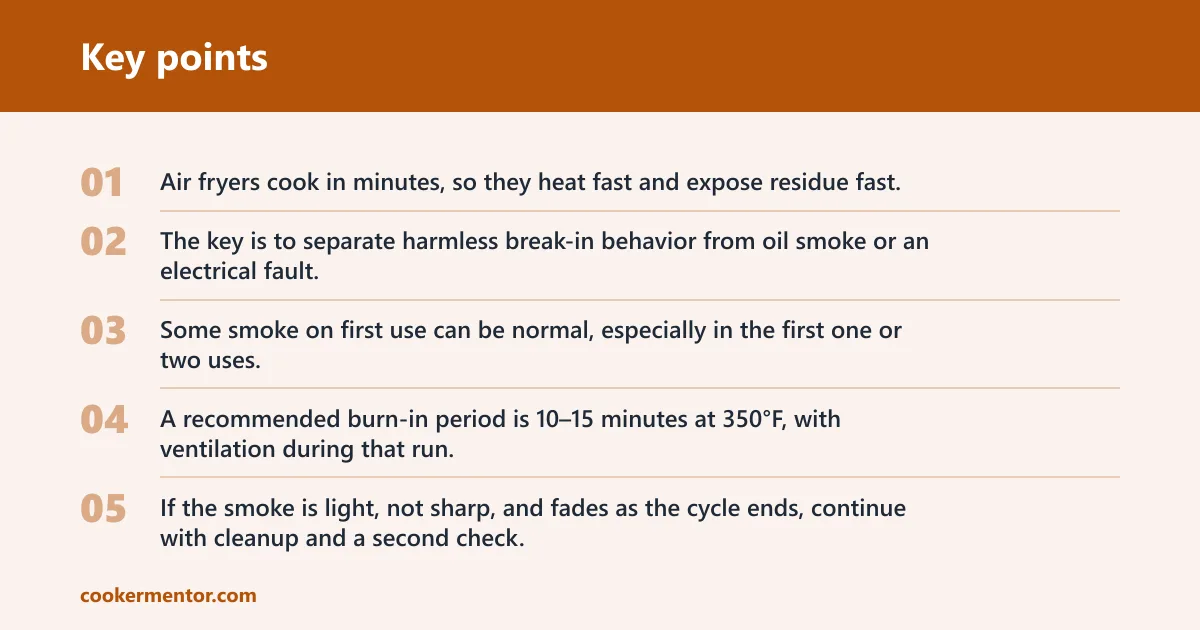
Air fryers cook in minutes, so they heat fast and expose residue fast. That speed is why a new machine may smell odd before it settles down. The key is to separate harmless break-in behavior from oil smoke or an electrical fault.
Normal burn-off from a new machine
Some smoke on first use can be normal, especially in the first one or two uses. A new machine may give off smell from factory residue, protective coatings, or packaging traces heating up for the first time. A recommended burn-in period is 10–15 minutes at 350°F, with ventilation during that run.
That first run is best done empty unless your manual says otherwise. If the smoke is light, not sharp, and fades as the cycle ends, continue with cleanup and a second check. If it gets thicker or turns dark, stop.
Oil smoke versus steam
White or gray smoke is often grease or steam, especially when food releases fat onto a hot basket or drawer. Too much oil can smoke too, and sprays with additives can burn faster than a light coating of plain oil. High-smoke-point oils tend to perform better than low-smoke-point oils.
Steam is usually brief and wispy. Oil smoke looks denser and lingers longer. If the basket has pooled oil or food drippings, that residue can burn on the hot surfaces and keep the smoke coming.
When odor appears without visible smoke
An odor with no visible smoke often points to off-gassing from new parts, not a cooking fault. That smell should fade after the burn-in period and a full cool-down. If the smell stays chemical, gets sharper, or comes with heat discoloration, stop and inspect the unit.
A plastic-like odor without smoke is still worth checking. Make sure no packing material is trapped near the heater or air path. Remove labels, inserts, tape, and any shipping protection before the next run.
Smoke triage table
| Symptom | Likely cause | Safe action | Escalation level |
|---|---|---|---|
| Visible white smoke on first use | Factory residue, protective coating, grease, or a thin layer of oil on hot parts | Let the run finish if the smoke is light, ventilate the room, then clean the basket, drawer, and cavity | Monitor |
| Plastic-like odor with no smoke | Off-gassing from new parts or leftover packaging material near the heater | Stop if the smell is strong, inspect for tape, labels, inserts, and residue, then run a short empty burn-in only if the manual allows it | Monitor or stop if strong |
| Smoke after the second or third use | Built-up grease, leftover residue, too much oil, or loading error | Clean the basket, drawer, and cavity, reduce oil, and lower heat; if it keeps happening, check the manual and contact support | Stop and inspect |
| Blue or dark smoke with a burning smell | Electrical failure, overheating, or burning insulation | Unplug immediately, let it cool, and do not use it again until it has been checked or replaced | Immediate unplug |
What to inspect before the first run
Before you power up a new air fryer, inspect every removable part and the cavity itself. Check for packing tape, labels, plastic inserts, and any residue left from manufacturing or shipping. That small inspection catches the kind of material that can smoke on contact with the heating element.
-
Remove all packaging.
Take out tape, labels, inserts, foam, and any plastic parts that are meant for shipping only. A forgotten insert can melt or smoke during the first preheat. -
Wash removable parts.
Wash removable parts in warm soapy water before first use, then rinse and dry them fully. Dishwasher-safe parts vary by model, so check the manual before putting anything in the dishwasher. -
Wipe the cavity.
Never submerge the main unit. Wipe the air fryer cavity and interior housing with a damp cloth, then dry it completely before the next use so moisture does not turn into steam or residue. -
Check the heating path.
Look for leftover manufacturing residue, loose crumbs, or anything touching the heating element or fan path. If the cavity still smells strongly of plastic after cleaning, delay cooking and run ventilation first.
A common first-timer mistake is washing the basket but skipping the drawer rails and underside of the basket. Grease and dust collect there, and that residue can smoke even on an otherwise clean machine.
Say your 6-quart basket air fryer smells faintly like plastic on the first empty run but shows no visible smoke. That points more toward off-gassing than a grease problem, so ventilation and a short burn-in are reasonable first steps. If the smell turns sharp or the unit runs hot in one spot, stop.
How to stop an air fryer from smoking
To stop first-use smoke, start with cleaning, then reduce the fuel that creates smoke, then improve airflow. Wash removable parts, use less oil, choose a higher-smoke-point oil, and keep the kitchen ventilated during the first few uses. If the smoke is dark or electrical-smelling, do not keep cooking.
One source of guidance recommends switching to avocado, canola, or light olive oil. It also suggests reducing oven-adapted temperatures by 25°F. Those adjustments matter because air fryers heat quickly, and food that works in a standard oven can smoke sooner in a smaller cavity.
-
Wash and dry first.
Clean the basket and drawer in warm soapy water, then dry every surface fully. Any leftover grease, detergent film, or water droplets can create smoke or steam on the first run. -
Use less oil.
Apply a light coating only. Too much oil can smoke, and aerosol sprays with additives can burn more readily than a thin layer of plain oil. -
Lower the heat.
If you are following an oven recipe, reduce the temperature by 25°F as a starting point. That helps prevent oil and food drippings from smoking before the food is done. -
Cook in batches.
Do not overcrowd the basket. Crowding traps fat and moisture, which can drip onto hot surfaces and create white or gray smoke. -
Ventilate the room.
Open a window or run the range hood during the first few uses. Good airflow clears lingering odor and can reduce smoke alarm trips in small kitchens.
Suppose a chicken wing batch smokes on the first cook at 400°F with a heavy spray of oil, but the same fryer runs normally at 375°F with a light coat of avocado oil. The difference is the oil load and heat, not necessarily a fault in the appliance. That pattern points back to cooking method.
Why does my air fryer smell like chemicals?

A chemical smell on a new air fryer usually means off-gassing from new parts, factory residue, or packaging traces warming up for the first time. If the odor fades after a short burn-in and cleanup, that is usually normal. If it stays strong, sharp, or appears with dark smoke, treat it as a warning sign.
Off-gassing from new parts
New plastics, coatings, and finishes can give off odor when heated for the first time. That smell should be temporary. Running the unit empty for 10–15 minutes at 350°F is a common burn-in approach, but manuals can differ, so follow the model guide if it says something else.
Good kitchen airflow can help move odor out faster. It helps move the odor out faster and reduces the chance that the smell lingers long enough to trigger a smoke alarm or make the room unpleasant.
When odor is not normal
If the smell becomes acrid, electrical, or plastic-like and does not fade after the first one or two uses, stop the machine. That is especially true if the smell comes with blue, dark, or black smoke, buzzing, tripping, or an unusually hot housing. Those signs are not normal break-in behavior.
Do not keep running the air fryer to “burn through” a burning smell. That can make a minor fault worse and may damage the unit further.
When smoke means a problem
Smoke after a couple of uses is less likely to be normal first-use burn-off. At that point, treat it as a cleaning issue, a loading issue, or a possible fault. Blue, dark, or black smoke with a burning smell needs immediate unplugging.
Smoke color matters. White or gray is often grease or steam. Blue, dark, or black smoke is more concerning because it can point to electrical failure, overheating, or burning insulation.
Repeated smoke after a few cooks
If the air fryer keeps smoking after the first few uses, inspect the basket, drawer, and cavity for grease build-up and residue. Remove food debris from the bottom drawer and the heating area, then run a short empty cycle only if the machine is cool, clean, and the manual allows it.
If repeated smoke continues after careful cleaning, stop using the unit and contact support. A fault can hide behind what looks like ordinary grease smoke.
Blue, dark, or black smoke
Blue, dark, or black smoke is not a normal first-use sign. Unplug immediately and let the appliance cool. Do not reopen the unit to test it again until you know why the smoke appeared.
Burning smell plus dark smoke is the clearest stop signal in this guide. If a circuit breaker trips, the cord feels hot, or the housing shows scorch marks, the appliance should be considered unsafe until checked or replaced.
What if the basket smells fine but the cavity smokes every time? That points away from the removable parts and toward residue near the heating area or a fault in the appliance itself. In that case, cleaning alone may not solve it.
Frequently asked questions
Why is my air fryer smoking the first time I use it?
First-use smoke usually comes from factory residue, protective coatings, or leftover packaging traces burning off. A little white or gray smoke can be normal during the first empty run. Thick smoke, a burning smell, or blue or dark smoke is different and should stop the cycle.
Is a little smoke from a new air fryer normal?
Yes, a small amount can be normal on the first one or two uses, especially during a burn-in. It should fade as the unit heats and cools. If the smoke gets heavier, smells burnt, or keeps returning after cleaning, treat it as a problem instead.
How do I stop my air fryer from smoking on first use?
Wash the basket and drawer in warm soapy water, dry them fully, and wipe the cavity with a damp cloth before you start. Use a light coating of oil, choose a higher-smoke-point oil, reduce the temperature by 25°F if needed, and keep the kitchen ventilated.
Do I need to run a new air fryer empty before cooking?
Often, yes. A short empty burn-in helps clear factory residue and makes it easier to spot abnormal smoke before food goes in. A common guide is 10–15 minutes at 350°F, but follow the manual if your model gives different instructions.
What should I clean before using an air fryer for the first time?
Clean the basket, drawer, and any other removable parts that the manual says are washable. Remove packing tape, labels, plastic inserts, and loose residue from the cavity. Never submerge the main unit, and make sure every part is fully dry before the first run.
What if my air fryer keeps smoking after the first few uses?
Repeated smoke after the second or third use is not normal first-use burn-off. Clean out grease and crumbs, reduce oil, avoid overcrowding, and lower the temperature if needed. If the smoke continues or turns dark, unplug the unit and contact support.
How long should I burn in a new air fryer?
A common recommendation is 10–15 minutes at 350°F. That short run is enough to clear many factory odors without cooking food. If the manual gives a different preheat or burn-in instruction, follow the model-specific guidance instead.
Do air fryers smoke while cooking?
They can, especially with fatty foods, too much oil, or food that sits too close to the heating element. White or gray smoke usually means grease or steam. Keep the basket clean, use less oil, and cook in batches to reduce the chance of smoke.