What Heat Should I Use for Stainless Steel to Not Stick?
Use medium heat as your starting point for stainless steel. Preheat the empty pan over medium for about 1 to 3 minutes before adding oil, then add food when the oil looks fluid and shimmers lightly. Too much heat can bake food onto the metal and make cleanup harder. This guide gives you a simple heat decision tree, signs to watch, and quick fixes when food starts sticking.
What you’ll need
- Stainless steel pan
- Cooking oil or fat
- Spatula or turner
- Paper towels for drying food
- Optional: a few drops of water for a readiness check
What heat should I use to keep stainless steel from sticking?
Start with medium heat. Medium heat is a common default for most sautéing and searing because it warms the pan evenly without scorching the oil. If food still clings, adjust the heat based on what the pan does next, not on a fixed burner number.
Why medium heat is the default
Stainless steel has an uncoated cooking surface, so it is not naturally nonstick. It works best with controlled preheating. Medium heat gives the metal time to warm evenly, which helps oil spread into a thin film and lowers the chance of hot spots that grab food.
When to move up or down
If the oil barely moves or looks heavy, the pan is probably too cool. If the oil smokes, the pan is too hot. Move up one notch only when the oil is not warming evenly, and move down as soon as the oil starts to smoke or food starts darkening too fast.
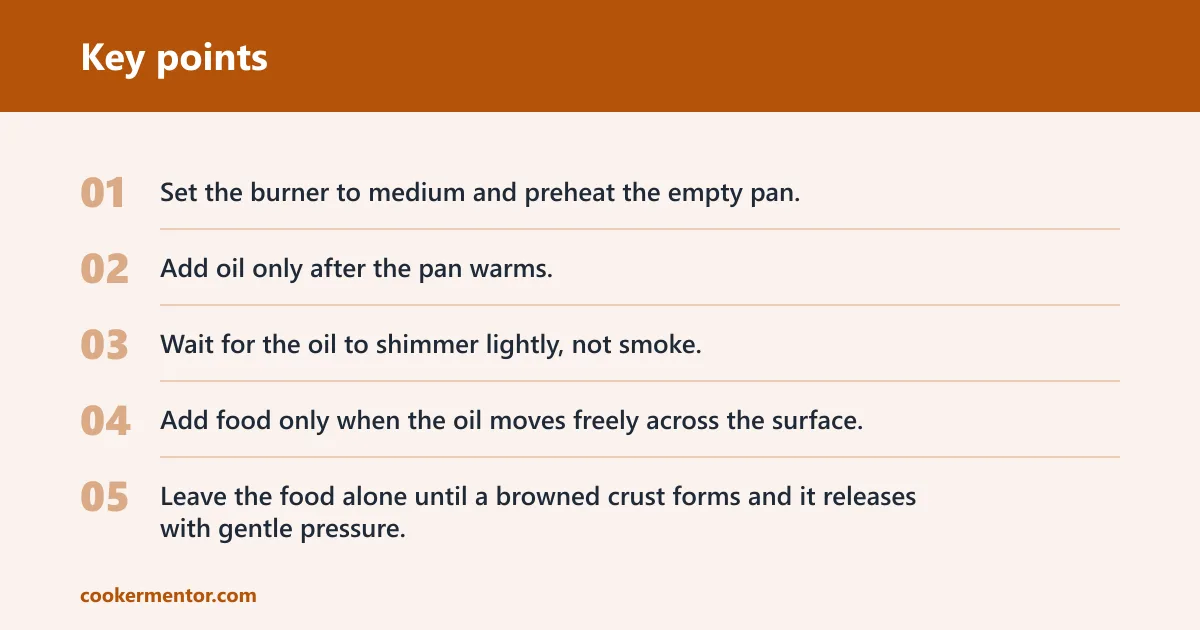
- Set the burner to medium and preheat the empty pan.
- Add oil only after the pan warms.
- Wait for the oil to shimmer lightly, not smoke.
- Add food only when the oil moves freely across the surface.
- Leave the food alone until a browned crust forms and it releases with gentle pressure.
How do I know when a stainless steel pan is hot enough?
A hot-enough pan usually gives you a thin, continuous oil film that moves freely and shimmers. If you use the water-drop test, the drops should evaporate before oil goes in, but that cue is optional and not foolproof. Use it as a backup, not as the only signal.
Add oil after preheating the empty pan
Preheat the empty pan first. Then add oil and swirl it so the whole cooking surface gets coated. A thin film is the goal. Puddles are unnecessary, and dry patches increase sticking because food contacts bare metal.
Watch the oil, not the smoke
Shimmering oil means it is warming properly. Smoke means the pan is too hot for a clean release and may leave burnt residue. If you see smoke, pull the pan off the heat for a moment, lower the burner, and recheck before adding food.
Use the water-drop test only as a backup cue
Few drops of water can help read the surface, but the test has limits. It can fail on very hot pans and on pans with uneven heating. If the pan responds unevenly, trust the oil film and the food’s first contact instead of chasing the water cue.
How should I cook to stop sticking?
Add food only after the oil is ready, keep the pan uncrowded, and let the food form a browned crust before you turn it. Stainless steel usually releases food once browning starts. If you try to flip too early, tearing is more likely than clean release.
Dry the food when the recipe allows it
A dry food surface helps a lot. Patting food dry reduces steam, improves browning, and lowers sticking. This matters most with chicken, fish, and vegetables that carry surface moisture from rinsing or thawing.
Do not crowd the pan
Leave space between pieces so steam can escape and the pan stays hot. Crowding tends to lower pan temperature and trap moisture, which can slow browning and increase sticking. Cook in batches if needed. More space means steadier heat and better contact with the oil-coated surface.
Adjust for gas, electric, or induction response
Gas changes more gradually. Electric tends to hold heat longer. Induction responds fast, so a small setting change can matter quickly. If the oil goes from shimmering to smoking fast, turn it down sooner on induction than you would on gas.
Stainless steel heat table
This table turns pan behavior into a simple next move. Read the stove, watch the oil, then decide whether to increase heat, add oil, wait longer, or lower heat. Use it as a decision tree, not as a fixed temperature chart.
| Stove behavior | Oil cue | Correct next move |
|---|---|---|
| Gas flame is steady, but the pan still feels cool after a brief preheat | Oil sits in a thick pool and moves slowly | Wait longer before adding food |
| Electric burner is on medium and the pan heats slowly | Oil becomes fluid and begins to shimmer | Add food now |
| Induction reacts fast and the pan heats quickly | Oil starts to smoke at once | Lower heat |
| Preheat is too cool | Oil looks dull and patches stay dry | Add oil, then wait longer |
| Preheat is just right | Oil forms a thin, shimmering film | Add food |
| Preheat is too hot | Oil smokes or darkens fast | Lower heat |
| Eggs | Oil is warm but not smoking | Add more fat or lower heat |
| Fish | Oil shimmers, then the fillet threatens to stick on contact | Wait longer before turning |
| Chicken | Oil is ready, but the surface is still damp | Dry the food, then add it |
| Vegetables | Oil is ready, but the pan is crowded | Cook in batches |
What should I do if eggs or fish stick to stainless steel?
Delicate foods need the most help. Eggs and fish often need more fat, lower heat, or both. They are the hardest cases for bare stainless steel, so the fix is usually to reduce heat, add a little more oil, and wait for a release cue before you turn them.
Eggs need the most fat control
For eggs, use a well-coated surface and moderate heat. If they grab immediately, the pan is usually either too cool or too dry. Add about 1 teaspoon more oil or butter, let it warm until fluid again, and try the next egg only when the surface looks even.
Fish needs patience before flipping
Fish releases after a browned crust forms. If the fillet tears, it was moved too soon. Put it back down, lower the heat if the oil is too active, and wait for the edges to look opaque before testing with a gentle nudge.
Say your 10-inch skillet is on medium heat and the oil shimmers, but a thin egg layer still grabs at the edge. Add 1 teaspoon of fat, then wait until the new fat moves freely before trying the next portion. One variable changed: fat level, not stove setting.
Why does food still stick even when I use oil?
Oil helps only when the surface is hot enough, the food is dry enough, and the pan is not crowded. If food still sticks, the usual causes are a too-cool pan, too much heat, excess moisture, or dirty residue left from the last cook. Each cause needs a different fix.
Too cool
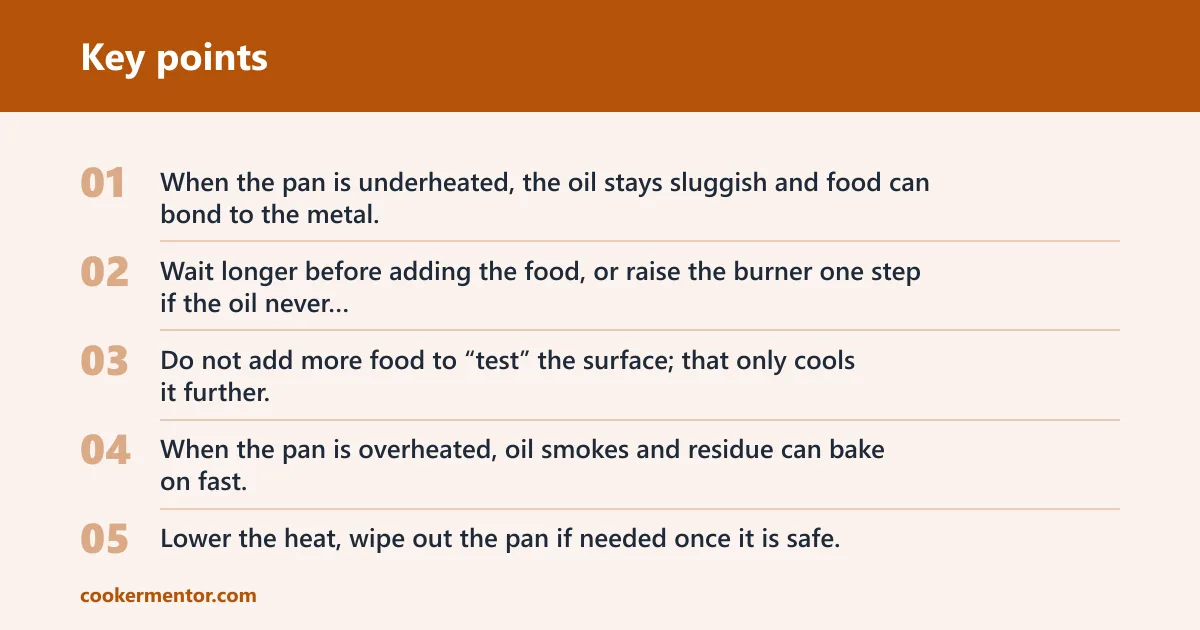
When the pan is underheated, the oil stays sluggish and food can bond to the metal. Wait longer before adding the food, or raise the burner one step if the oil never becomes fluid. Do not add more food to “test” the surface; that only cools it further.
Too hot
When the pan is overheated, oil smokes and residue can bake on fast. Lower the heat, wipe out the pan if needed once it is safe, and restart with a cleaner surface. High heat is not a shortcut for preventing sticking.
Dirty residue
Burnt residue can create an uneven surface and affect the next cook. Soak the pan after it cools, then clean it gently with a non-scratch sponge or cloth. Avoid scraping hard at stuck bits, since rough cleaning can leave the surface patchy.
Suppose a stainless steel sauté pan holds sliced zucchini and onions on a crowded surface. The pan stays busy with steam, the oil never gets a clear shimmer, and the vegetables cling. The fix is batch cooking, not more forceful heat.
Common mistakes
These are the most common reasons stainless steel sticks. Each one is fixable if you match the correction to the cause.
- Using heat that is too low: the oil never becomes fluid enough, so food bonds to the metal.
- Using heat that is too high: oil smokes and residue bakes on, which can make the next cook stick too.
- Adding food too early: the oil has not reached its ready state, so the pan is not prepared for contact.
- Overcrowding: moisture builds up and the pan loses heat, which slows browning and release.
- Cooking with dirty residue left behind: rough, burnt patches create uneven contact and uneven release.
- Skipping drying: wet food steams before it browns, and steam works against browning and release.
Frequently asked questions
Is medium heat better than high heat for stainless steel pans?
Yes for most sautéing and many searing jobs. Medium heat warms the pan more evenly and helps the oil stay within its ready range. High heat is more likely to scorch oil and bake on residue, which can make sticking worse rather than better.
Should I preheat stainless steel empty before adding oil?
Yes. Preheat the empty pan first, then add oil and swirl it to coat the surface. That order gives you a more even film and helps the pan reach a better cooking state before food touches it. Do not wait for smoke.
How much oil do I need so food won’t stick in stainless steel?
Use enough to make a thin, continuous film across the cooking surface. You do not need a deep pool. If dry patches remain, add 1 teaspoon more oil, swirl again, and wait until the oil moves freely before adding food.
Does cold food make stainless steel stick more?
Yes, cold food can drop the pan temperature and delay browning. That makes sticking more likely, especially with crowded pans. Dry the food when possible and give it a little space so the pan keeps enough heat for a browned crust to form.
How do I stop stainless steel from sticking without ruining the pan?
Use medium heat, a dry pan surface, and enough oil to coat the metal. Let food release on its own before turning it. Clean burnt residue gently after cooking. Those habits protect the pan finish and make the next cook more predictable.