
Why Is My Cast Iron Sticky After Seasoning?
Cast iron feels sticky after seasoning when the oil layer stays wet, the coat goes on too thick, or residue remains on the pan; if it stays tacky after cooling, wipe it again and heat it longer. If you leave it alone, it can turn gummy, smoke heavily, or flake instead of forming a hard cooking surface. This guide helps you find the cause and fix it by symptom, without stripping the pan unless you need to.
Sticky fix matrix
Use this table first. Match the symptom before you decide whether to wash, bake again, or strip only the problem areas. A single pan can have more than one issue, but the surface clue usually points to the fastest fix.
| Symptom | Likely cause | What it looks, feels, smells like | Wash? | Bake? | Strip? | Fastest fix |
|---|---|---|---|---|---|---|
| Uniform tackiness | Too much oil or incomplete polymerization | Even gummy feel across the cooking surface; may look glossy, wet, or slightly smeared; can smell oily or smoky | Yes, if it feels greasy or dusty | Yes | No, unless it stays sticky after repeated cycles | Wash, dry completely, wipe on a very thin coat, then bake upside down |
| Spotty tackiness | Uneven wipe-off, pooled oil on sidewalls or bottom, or residue in low-heat zones | Sticky patches near the rim, bottom, corners, or handle; the rest may feel normal | Yes | Yes, after cleaning | Only if spots keep returning after scrubbing | Scrub the sticky zones, wash away residue, dry, then re-season with a thinner coat |
| Black flakes | Carbon buildup or failing seasoning layer | Flakes, rough specks, peeling bits, or a gritty feel; may leave black residue on a towel | Yes | Sometimes, but only after loose material is removed | Maybe, if flakes keep coming off | Use steel wool or a rough scrubber on the loose areas, then re-season right away |
| Sticky after cooking | Food residue, weak seasoning, or old oil that softens with heat | Surface feels tacky after use, especially after cooking eggs, sauces, or high-fat foods; may smell burnt or oily | Yes | Often yes | No, unless the coating is already failing | Wash with soap and water, dry fully, and bake again if the tackiness remains |
| Sticky right after seasoning | Wet oil, heavy coat, or oven heat that did not fully polymerize the layer | Sticky or gummy immediately after cooling; may look shiny or streaky on the sides, bottom, or cooking surface | Yes, if the surface feels greasy | Yes | Only if the problem is thick or patchy after repeated bakes | Wipe off excess oil, heat longer, and repeat the oven seasoning cycle |
Why does cast iron feel sticky?
Sticky cast iron usually means the oil did not finish turning into a hard seasoning layer. The most common cause is too much oil, but dirty residue, the wrong oil, or not enough oven heat can leave the surface tacky too. Humid storage and poor drying after washing can add to the problem.
Too much oil left on the pan
A thick oil film is the most common reason a skillet feels gummy after seasoning. Seasoning works when a very thin layer of oil polymerizes into a protective barrier; too much oil leaves a soft, sticky film instead. That residue often collects on sidewalls, the rim, and the bottom where wipe-off is easy to miss.
Food Republic recommends less than a teaspoon of oil for coating a pan, which is a useful kitchen reference point. If the surface still looks wet before it goes into the oven, the coat is usually too heavy.
Incomplete polymerization in the oven
Oil must get hot enough, long enough, to harden into seasoning. If the oven is not hot enough, or the pan does not stay in long enough, the oil can remain tacky instead of forming a dry film. Uno Casa recommends heating the skillet upside down in the oven for at least an hour, and Food Republic also points to about an hour at high temperature.
A 12-inch skillet may come out of the oven with a glossy ring near the rim and a sticky center. That usually points to uneven heating or too much oil, not a ruined pan. A second round often helps once the excess is removed.
Residue from food, soap, or old oil
Residue can feel like failed seasoning even when the oil layer itself is sound. Food bits, soap film, dust, and old oil can all make the pan feel sticky. Campfires and Cast Iron lists a dirty pan as one cause of sticky seasoning, and soap and water are appropriate here before you season again.
That cleaning step should be followed by complete drying. A pan that is still damp can trap moisture under the oil and interfere with the next round of seasoning.
Moisture left after washing or storage
Cast iron needs full drying after washing. If water sits in the pores, along the rim, or in the handle area, the next coat can bind poorly and feel tacky. Humid storage can also leave a film that looks like sticky seasoning when the real issue is moisture or oxidation starting under the surface.
A common first-timer mistake is seasoning a pan that still feels cool and slightly damp after washing. That extra moisture can keep the oil from setting the way it should.
What sticky seasoning looks like
Sticky seasoning is not one single defect. A pan can feel uniformly gummy, show wet-looking spots, or shed black flakes. The texture tells you whether you should wash, scrub, bake again, or strip only the bad patches.
Tacky or gummy to the touch
A tacky pan feels slightly grabby when you run a dry fingertip or paper towel across it. If the whole surface feels the same, excess oil is the likeliest cause. If the tackiness is strongest on the sidewalls or bottom, oil probably pooled there during the first seasoning round.
Patchy shine or wet-looking streaks
Patchy shine usually means the oil was wiped unevenly. Some areas polymerized, while others were left with a heavier coat. The result is a surface that looks partly normal and partly oily, especially around the rim, handle base, or pan bottom where wipe-off is easy to miss.
Black flakes or peeling spots
Black flakes may point to carbon buildup or a failing layer, not just a little extra oil. If loose bits come off on a towel, the pan needs more than a quick bake. Use a rough scrubber on the problem spots and remove anything that is already separating.
Sticky sidewalls, rim, or bottom
Oil often pools where heat is weaker or wiping is awkward. The sidewalls, underside, and handle junction can stay sticky even when the cooking surface looks better. That pattern usually means the pan needs a wash and a more careful wipe before another oven round.
How to fix the pan now
Start with washing and drying, then move to scrubbing or rebaking only as needed. Do not rush to strip the whole skillet unless the coating is clearly failing across large areas. Most sticky pans can be restored without replacement.
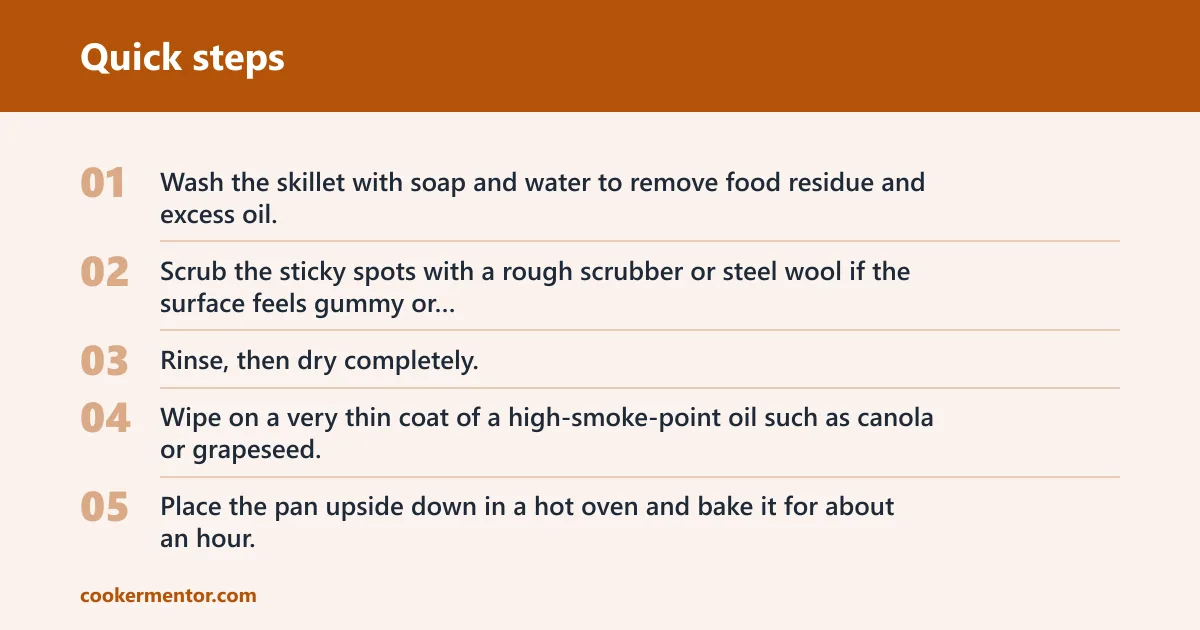
- Wash the skillet with soap and water to remove food residue and excess oil.
- Scrub the sticky spots with a rough scrubber or steel wool if the surface feels gummy or shows loose flakes.
- Rinse, then dry completely. Heat the pan on the stove or in the oven until all moisture is gone.
- Wipe on a very thin coat of a high-smoke-point oil such as canola or grapeseed.
- Place the pan upside down in a hot oven and bake it for about an hour.
- Let it cool, then check the feel. Repeat if tackiness remains.
Wash with soap and water
Soap and water are safe for troubleshooting before reseasoning. Use them to remove surface oil, food residue, and dust. If the pan feels greasy, soapy, or sticky after cooking, this is the right first move. A light scrub may be enough; stubborn spots may need more pressure.
Scrub stubborn spots with steel wool
Use steel wool or a rough scrubber when the issue is more than a light film. That is the corrective tool for black flakes, carbon buildup, or thick sticky patches that do not wash away. If the scrub removes loose material, plan to re-season that area right after drying.
Dry fully and heat off moisture
Drying is not a side note. If water remains in seams, around the rim, or across the cooking surface, the next oil layer can stay soft. Heat the pan until it is fully dry before any oil goes on. That step matters after washing, after storage, and after scrubbing.
Apply a very thin oil coat
Thin coats work better than thick ones because they polymerize more evenly. Wipe oil on, then wipe most of it back off. The goal is a barely-there film, not a glossy wet layer. If the pan looks shiny before it goes into the oven, there is likely too much oil left.
Bake upside down in a hot oven
The upside-down method keeps excess oil from pooling on the cooking surface. Competitor guidance commonly points to about 450-500°F for seasoning, with roughly an hour per round. That does not mean one cycle always fixes everything. If the surface still feels tacky after cooling, repeat the cycle after cleaning and wiping away the excess.
How much oil is too much?
“Too much” means enough oil to stay visible after wiping, not just enough to feel slick when you spread it. A proper seasoning coat should look almost dry before it enters the oven. If it leaves streaks, beads, or puddles, it is too heavy and likely to stay gummy.
What a thin coat should look like
A thin coat disappears into the metal. You should not see a wet sheen, small droplets, or thick streaks on the surface. One practical test is simple: after wiping, the pan should look almost bare, with only a faint satin cast.
Where oil pools most often
Oil pools where the cloth misses or gravity wins. Common trouble spots are the rim, handle base, sidewalls, and the center of a flat-bottomed skillet if too much oil was poured in at once. Those areas often go sticky first because the film stays thicker there.
Why heavy oil leaves a gummy surface
Seasoning is a polymerized oil film, not a layer of grease. When the coat is too heavy, the outer skin can set while the layer underneath stays soft. That leaves a tacky surface that may smoke in the oven and feel sticky long after cooling.
Which oils are better for seasoning?
High-smoke-point oils such as grapeseed and canola are commonly preferred for seasoning because they handle oven heat better than fats that leave heavier residue. Campfires and Cast Iron also notes that the wrong oil or fat can cause stickiness. The oil choice matters, but it will not fix poor drying or a coat that is too thick.
When to stop baking and start over
Stop after one round if the pan dries hard and smooth. Keep baking if it still feels tacky. Strip only when buildup, peeling, or repeated stickiness does not improve after washing, scrubbing, and another seasoning cycle. Older pans and preseasoned pans may need different treatment than a pan that turned sticky after maintenance.
One round may be enough
If the surface is dry, even, and only lightly satiny after cooling, you can usually stop. A cast iron skillet does not need to look lacquered to work well. In many cases, the pan is ready for cooking once the tackiness is gone.
Repeat seasoning when tackiness remains
If the surface still feels sticky after cooling, remove the excess, dry the pan again, and repeat the oven step. That is especially useful when the problem is a light, uniform tackiness or a few shiny patches. The fix is usually another thin coat, not a full strip.
Strip only when buildup or flakes persist
Heavy carbon buildup, repeated peeling, or large sticky areas that survive washing and rebaking point to a deeper problem. In those cases, strip only the affected layer or section if possible. You do not need to remove sound seasoning just because one area failed.
Treat preseasoned and older pans differently
Preseasoned pans can feel sticky if the factory layer is thin and the user adds too much oil on top. Older pans that turned sticky after maintenance often have residue, storage moisture, or old oil buildup instead. Start with cleaning and drying before you assume the whole finish has failed.
Say your 10-inch skillet feels tacky only on the bottom after a maintenance coat, while the cooking surface feels dry. That points to pooled oil on the underside, not a need to strip the entire pan. Wash, scrub the bottom, dry fully, and reseason the whole skillet with a thinner coat.
Frequently asked questions
Why is my cast iron sticky after seasoning it?
Sticky cast iron after seasoning it usually means too much oil was left behind or the oil did not fully polymerize. Residue, dirty spots, or moisture can add to the problem. If it stays tacky after cooling, wash it, dry it completely, and heat it longer with a thinner coat.
Why is my cast iron sticking after seasoning?
It is usually sticking because the seasoning layer is soft, uneven, or contaminated with residue. A stickier pan often has pooled oil on the sidewalls or bottom, or it was not heated enough in the oven. Soap and water are a good first step before you season again.
Why does my cast iron feel sticky after seasoning?
It feels sticky when the oil is still wet, the coating is too thick, or food and old oil are sitting on top of the finish. That feel is different from a smooth, dry but slightly satiny surface. If the pan feels grabby, the fastest fix is cleaning, drying, and rebaking.
Should my cast iron be sticky after seasoning?
A properly seasoned cast iron skillet should usually feel dry or only slightly satiny, not gummy. A sticky feel usually means excess oil, poor wipe-off, or incomplete heat treatment. It is usually fixable without stripping the pan, but it should not be ignored.
Is it normal for cast iron to be sticky after seasoning?
It can happen, but it is not the goal. Sticky usually means the coat is too heavy or has not fully set. If the stickiness is light and even, another cleaning and oven round may solve it. If it is flaky or patchy, scrub the bad spots first.
Why is my cast iron sticky and spotty after seasoning?
Sticky and spotty usually means uneven oil application or oil pooling in low-heat zones. The spots may look shiny, wet, or darker than the rest of the pan. Wash the skillet, scrub the sticky patches, dry it fully, and reseason with a much thinner coat.
