3-ply vs 5-ply Stainless Steel Cookware: What Is the Difference?
For most home cooks, 3-ply is the better buy because it heats faster, weighs less, and usually costs less. Choose 5-ply stainless steel cookware only if you want more heat buffering, a heavier pan, or you cook often on induction at higher heat. Pick the wrong construction and you may get slower response, extra weight, or no cooking gain for the added cost. This guide compares them by how they react to heat, how they perform on induction, and how they feel in the hand.
| Factor | 3-ply | 5-ply stainless steel cookware | Winner |
|---|---|---|---|
| Heat response | Usually faster to react to burner changes | Usually slower to change temperature | 3-ply |
| Heat steadiness | Good, but less buffered | Often feels steadier and more even | 5-ply stainless steel cookware |
| Weight and handling | Lighter, easier to tilt and lift | Heavier, more tiring in larger pieces | 3-ply |
| Value for most kitchens | Broad fit, usually lower price | Often costs more without a universal payoff | 3-ply |
| Induction readiness | Can be induction-ready if the exterior is magnetic | Can be induction-ready if the exterior is magnetic | Tie |
Why layer count isn’t the whole story
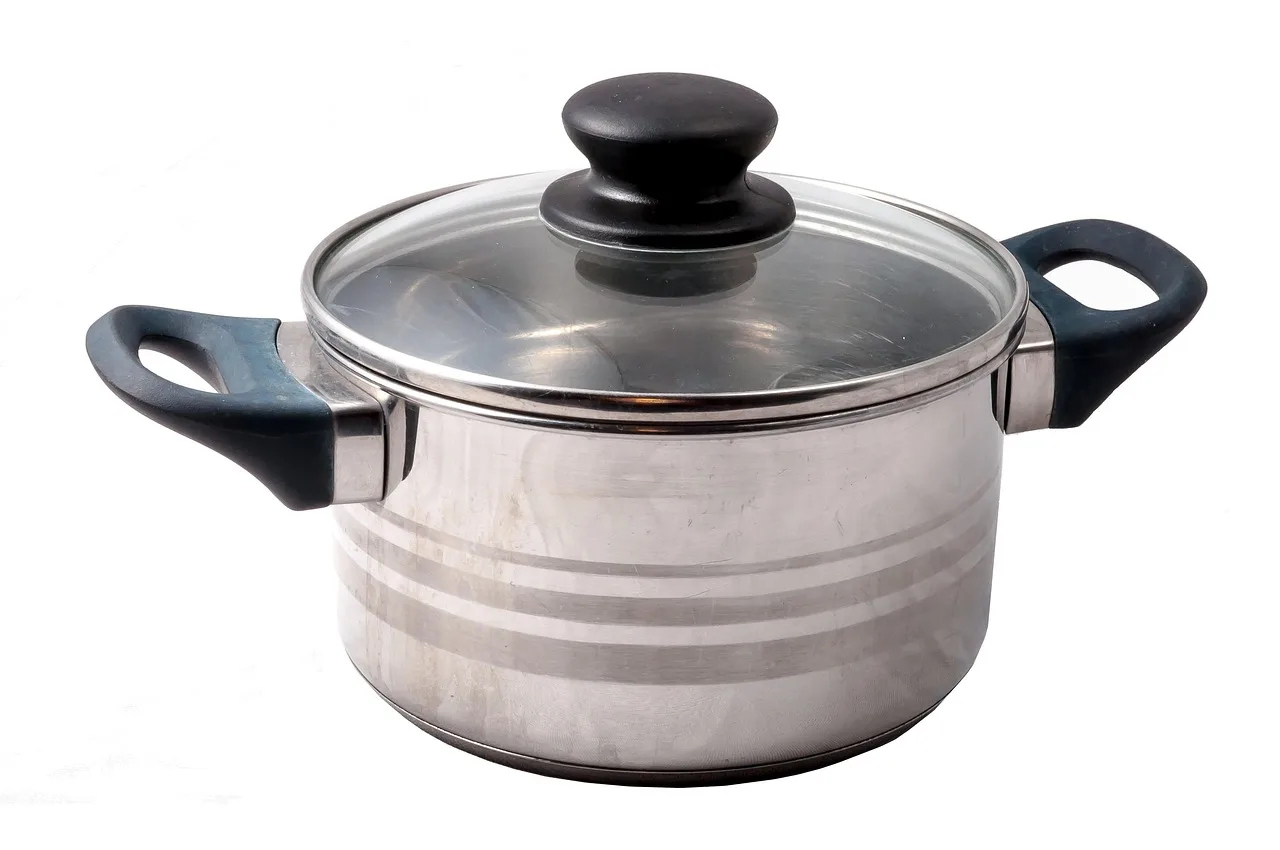
The difference is the number of bonded metal layers, not a guarantee of quality. 3-ply usually means stainless-aluminum-stainless, while 5-ply stainless steel cookware adds more bonded layers and often more total mass. The practical result is usually quicker response from 3-ply and a steadier feel from 5-ply.
What ply count does and does not tell you
Ply count tells you something about construction, but not everything. A thicker aluminum core, a flatter base, better rim shaping, and a more comfortable handle can matter more than the raw layer count. Two pans with the same number of layers can still cook differently if their wall gauge and total thickness differ.
Stainless steel is durable and non-reactive, so both constructions can give you a stainless cooking surface that works well for searing, sautéing, and sauces. Many clad cookware brands use 18/8 or 18/10 steel on the cooking surface, and 304 stainless is a common cooking-surface steel in clad cookware.
Why the core matters more than the label
Aluminum is the main heat-spreading layer in clad cookware. It is far more conductive than stainless steel, around 215 W/m·K versus 17 W/m·K, which is why bonded construction changes how a pan heats. The exact thickness and placement of that aluminum core often matter more than whether the pan is sold as 3-ply or 5-ply.
Does 5-ply cookware heat more evenly than 3-ply?
Often, yes, but only when the extra layers add useful thermal mass or improve core design. 5-ply stainless steel cookware commonly feels steadier and can reduce temperature swings during longer cooks. That said, a well-made 3-ply pan with a thicker aluminum core can still heat very evenly and sometimes outperform a thinner 5-ply design.
When steadiness matters most
Steadier heat helps when you want browning that does not dip as soon as food hits the pan. That is useful for shallow frying, steady sautéing, and maintaining a gentle simmer in saucier-style tasks. It matters less if you want quick burner response for pan sauces or fast temperature changes.
Why more layers do not guarantee better cooking
Five bonded layers can still underperform if the pan is poorly built. A thin aluminum core, uneven bonding, warped base, or weak rim can cancel out the benefit of extra layers. Layer count is a clue, not a verdict.
Is 3-ply cookware lighter than 5-ply cookware?
Yes, 3-ply is usually lighter than 5-ply stainless steel cookware, and that difference matters most in larger pieces. Weight affects flipping, tilting, pouring, and cleaning. For many home cooks, a lighter pan is easier to control and less tiring during everyday use.
Why large pieces feel different
A large sauté pan or saucepot becomes more awkward as the walls get heavier. The extra weight of 5-ply can feel reassuring on the stove, but it also adds strain when you lift a full pan of food, water, or sauce. That tradeoff shows up most clearly in daily cooking, not on a spec sheet.
A 12-inch skillet full of food can be too heavy to tilt comfortably with one hand. The pan that feels “solid” empty may still be the one you avoid using if it is too heavy to tilt comfortably at the sink or move off the burner with one hand.
Handle comfort and balance matter too
Weight is only part of handling. A good handle shape, a balanced center of gravity, and a secure rim all affect whether the pan feels easy or awkward. A heavier pan is not automatically more durable in the ways that matter during cooking.
Should you buy 3-ply or 5-ply for induction?
Buy for the magnetic base and flat contact area first, then decide between 3-ply and 5-ply. Induction compatibility depends on a magnetic exterior and proper base geometry, not ply count alone. Both can work well on induction if the exact construction is right.
What actually matters on induction
Induction requires a magnetic exterior. Flatness and diameter matter too, because poor contact can cause noisy heating, uneven coupling, or weak performance on smaller burners. A pan with the right ply count but the wrong base shape can still disappoint.
How to check a pan before buying
Confirm the exterior is magnetic. Look for a stainless exterior layer or a product description that explicitly lists induction compatibility. If the maker does not state it, do not assume ply count alone will make it work.
Check the base diameter. Match the pan’s contact area to your burner size so heat reaches the center evenly. A burner that is much smaller than the pan can leave the edges underheated, while an oversized burner can concentrate heat too aggressively.
Inspect the base for flatness. A warped or uneven base reduces contact on induction and can cause poor heat transfer. Flat contact matters more than an extra layer if the pan does not sit properly.
Cookware decision matrix
This matrix ties the pan to the task, burner, and wrist strength. It is the shortest path to a practical choice when the layer count alone does not tell you enough.
| Cookware piece | Burner type | Cook style | Wrist-strength level | Best choice | Short rationale |
|---|---|---|---|---|---|
| 10- to 12-inch skillet | Gas | Quick searing and fast pan control | Limited | 3-ply | Lower weight and faster response make it easier to move, tilt, and recover heat quickly. |
| Large sauté pan | Induction | Long sauté sessions and steady browning | Strong | 5-ply stainless steel cookware | Extra mass can help buffer induction’s rapid heat changes and hold a steadier surface during longer cooking. |
| Saucier or small saucepan | Gas or induction | Sauces, reductions, and frequent stirring | Limited | 3-ply | Easy handling matters more here than extra heft, and faster response helps when the sauce tightens quickly. |
| Stock pot | Gas | Boiling, blanching, and long simmering | Average | 3-ply | Weight adds up fast when the pot is full, and the cooking benefit of 5-ply is usually small for this task. |
| Stock pot | Induction | Long simmering and reduced burner cycling | Strong | 5-ply stainless steel cookware | Heavier construction can feel steadier on induction, especially when the burner cycles on and off. |
Which is better for searing, 3-ply or 5-ply?
For searing, either can work, but 5-ply stainless steel cookware can hold surface heat a bit longer under heavy food loads. 3-ply usually recovers faster after you adjust the burner. If you sear small batches, 3-ply is often enough; if you often load the pan heavily, 5-ply can feel steadier.
Why searing does not reward extra layers automatically
Searing depends on a hot, stable cooking surface and enough preheat time. A well-made 3-ply skillet can sear very well if it has a good aluminum core and a flat, well-coupled base. The better choice depends on how much food you load into the pan, not on layer count alone.
Picture a 12-inch skillet on medium-high heat with four steaks added at once. A pan that is slightly heavier may lose less heat at the surface, but a lighter 3-ply pan can recover faster if you work in smaller batches.
Choose 3-ply if… / Choose 5-ply stainless steel cookware if…
3-ply is the better default for most kitchens. 5-ply stainless steel cookware makes sense when you want more heat buffering, a heavier feel, or a steadier surface for longer cooking sessions on induction.
Choose 3-ply if…
- You want lighter cookware for daily lifting, tilting, and cleaning.
- You cook sauces, sautéed vegetables, and smaller searing batches often.
- You prefer faster burner response over extra heat mass.
- You want the broader, usually cheaper option without paying for added heft you may not use.
Choose 5-ply stainless steel cookware if…
- You want a steadier-feeling pan for longer browning or simmering.
- You cook often on induction and want extra buffering against rapid burner changes.
- You are comfortable with more weight in larger skillets or sauté pans.
- You are comparing well-built options and the 5-ply model has the better base, rim, and handle design.
Frequently asked questions
What is the difference between 3-ply and 5-ply stainless steel cookware?
3-ply usually means three bonded layers, often stainless-aluminum-stainless. 5-ply stainless steel cookware adds more bonded layers and often more weight. The practical difference is usually faster response from 3-ply and a steadier, more buffered feel from 5-ply.
Is 5-ply cookware always better than 3-ply?
No. 5-ply stainless steel cookware can feel steadier, but it also adds weight and cost. If you want quicker response, easier handling, or better value, a strong 3-ply pan can be the better buy. The right choice depends on the task and your setup.
Should I buy 3-ply or 5-ply cookware for induction?
Choose the pan with the right magnetic exterior, flat base, and burner match first. If those are equal, 5-ply can feel steadier on induction, while 3-ply is usually easier to manage. Ply count alone does not determine induction performance.
Does ply count matter more than total thickness?
No. Total thickness, core material, wall gauge, and construction quality often matter more than the number of layers. A thicker, well-made 3-ply pan can outperform a thinner 5-ply pan if the heat-spreading core and base are better designed.