Why Is My Pressure Cooker Not Building Pressure Safely?
A pressure cooker usually won’t build pressure because the gasket, vent, lid lock, liquid level, or a damaged part is wrong. Check those in that order. If you ignore the problem, food can scorch, time gets wasted, or the cooker can vent unsafe steam instead of sealing. This guide shows how to match each symptom to the likely cause and the safe fix.
Pressure cooker no-pressure triage table
| Symptom | Likely cause | Safe check | Do-not-do warning | Next action for stovetop versus electric models |
|---|---|---|---|---|
| Steam escapes from the lid edge and pressure never rises | Gasket is dry, hardened, cracked, creased, or not seated | Remove the ring, clean the channel, and press it back in evenly | Do not keep tightening the lid or add more heat first | Stovetop: reseat the ring and recheck the lid lock. Electric: inspect the sealing ring, lid rim, and any error code |
| Steam spurts from the vent but the float stays down | Steam vent, vent pipe, or steam outlet is blocked | Look through the vent path for food particles or grease | Do not poke metal into the opening or run the cooker blocked | Stovetop: clean the vent and regulator. Electric: remove and wash the steam path parts, then retry with liquid |
| Lid will not close smoothly or sits crooked | Lid-locking system is misaligned or damaged | Check the lid rim, tabs, latch, and pot rim for dents | Do not force the lid shut | Stovetop: align and lock before heating. Electric: confirm the lid and inner pot are seated exactly as the maker requires |
| Cooker warms but never builds pressure | Too little liquid, overfill, or wrong valve fit | Confirm liquid meets the recipe minimum and stays below the max fill line | Do not add dry ingredients and expect pressure to form | Stovetop: adjust fill and relock. Electric: correct the liquid amount, then clear any error before restarting |
| Electric display shows no-pressure or overheating error | Seal, vent, sensor, or control fault | Check the ring, vent, float valve, and clean contacts around removable parts | Do not ignore repeated errors or continue cycling power blindly | Stovetop: inspect hardware first. Electric: if cleaning and reseating do not help, the fault may be in a sensor or control part |
What you’ll need
- Soft sponge or cloth
- Warm water and mild dish soap
- Small brush or pipe cleaner for the vent path
- Flashlight
- Clean towel
- Replacement sealing ring that matches the exact model, if the old one is worn
- The cooker’s manual or model number
Why is my pressure cooker not building pressure?
The most common causes are a sealing-ring problem, a blocked steam path, too much or too little liquid, or a lid that is not seated correctly. Modern pressure cookers are generally safe when used correctly and kept in good condition, but blocked vents, worn gaskets, overfilling, and damaged lids can stop pressure from forming.
- Check the gasket first. Remove it, wash it, and inspect it for cracks, hardening, creases, or a flattened shape. It should be clean, flexible, and seated correctly; many rings need replacement about every 12 to 18 months.
- Inspect the vent path. Clear the steam vent, vent pipe, or steam outlet of food particles and grease. A blocked vent can prevent pressure buildup even when the lid looks closed.
- Confirm liquid and fill level. Add cooking liquid before sealing and keep the cooker below the maximum fill line. Overfilling can block steam paths, especially with beans, grains, oats, pasta, or other foamy foods.
Say your stovetop cooker hisses from the rim but never reaches the weight-steady stage. The likely problem is the sealing ring or lid alignment, not the burner setting. Suppose an electric model flashes a no-pressure code right after you start a soup with beans and stock; that points first to overfill or a blocked steam path.
What should you check before cooking?
Before the first heat-up, check the ring, the lid rim, the vent parts, the indicator, and the liquid level. A secure lid-locking system and a working pressure release valve are generally needed for safe operation, and the lid should close smoothly without force. If any part feels off before heating starts, fix that first.
- Seat the sealing ring. Press the gasket into its groove all the way around. A ring that is twisted, partly out of the channel, or stiff from age can leak from the start.
- Check the lid rim. Look for dents, warped edges, or stuck food at the rim and locking points. Even a small misalignment can stop pressurization.
- Verify the indicator parts. Make sure the float valve or pressure indicator moves freely and the regulator or weighted valve matches the exact model. A wrong weight or a misaligned valve can vent too soon.
- Measure the liquid. Add the amount the recipe and model require before sealing. Too little liquid can prevent pressure buildup, while too much can block steam paths.
How do you fix a pressure cooker that will not seal?
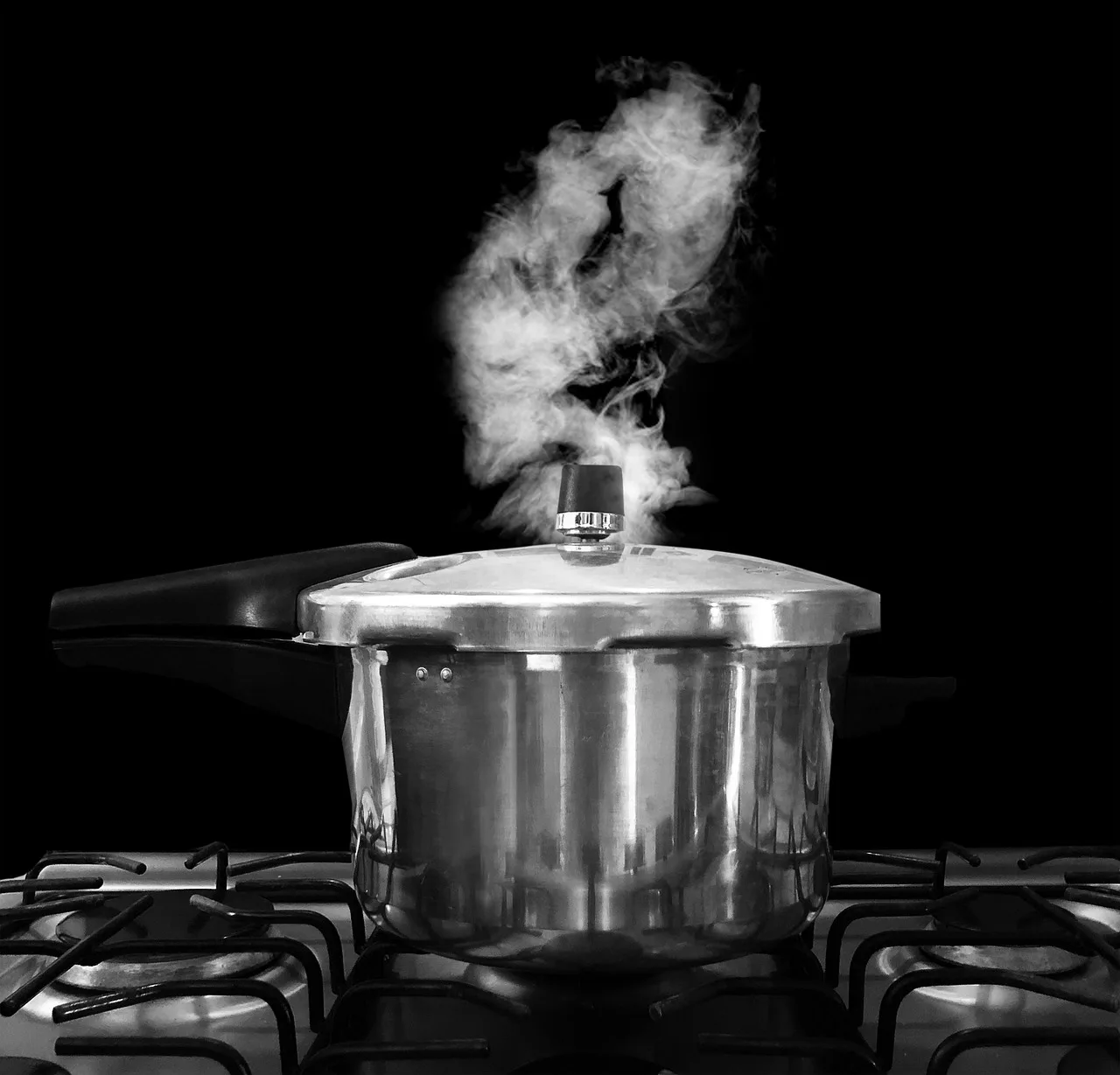
If the cooker will not seal, start with the ring and lid fit, then move to the vent and fill level. Most failures come from a part that is dirty, seated wrong, or worn out. If the lid still leaks after those checks, the problem may be a warped lid, a damaged rim, or a missing safety part.
- Clean and reseat the ring. Wash the sealing ring and channel with warm soapy water, dry them, and press the ring back in evenly. If it feels brittle, cracked, or keeps slipping out, replace it.
- Clear the steam outlet. Use a soft brush or pipe cleaner on the vent, vent pipe, and any removable valve parts. Do not enlarge openings or leave residue behind.
- Correct the lid fit. Align the lid exactly as the cooker requires and close it without forcing. If the pot rim is dented or the lid no longer sits flat, stop using it until the part is replaced or serviced.
If that didn’t work, try this next
Move to the weighted valve or pressure release valve. It must fit the exact model, sit squarely, and move the way the manual describes. If it is the wrong part or off by position, the cooker can vent too early and never rise to pressure.
- Match the valve. Compare the part number or model fit before reinstalling. Never swap in a similar-looking regulator from another cooker.
- Test the float movement. Make sure the float valve rises as pressure begins and drops fully before opening. Staying down or halfway can signal a blocked path or a lid problem.
Electric pressure cooker error codes
An electric cooker that shows a no-pressure or overheating code may have a seal problem, a blocked vent, a sensor fault, or a control issue. The display is often the clue that separates a mechanical leak from an electrical failure. If the ring and vent are clean and the code returns, the fault is more likely beyond basic cleaning.
- Reset after a full cool-down. Unplug the cooker, let it cool completely, then open it only after the pressure indicator has fully dropped. Reassemble the ring and lid before trying again.
- Clean the removable parts. Wash the lid parts, gasket, and vent pieces. A residue film can trigger heating problems or keep the cooker from sealing.
- Check for repeat errors. If the same code returns after the ring is seated, the vent is clear, and the liquid amount is correct, the sensor or control system may need service.
Picture an electric cooker that stops at the preheat stage with a no-pressure alert after you filled it with only a thin sauce and very little stock. In that case, the first fix is usually liquid amount, not a full part replacement. If the same code appears with enough liquid and a clean vent, stop troubleshooting the user-accessible parts.
Common mistakes
These errors cause most repeat failures. They are easy to avoid once you know what to look for.
- Ignoring a hardened or creased gasket. If the ring does not spring back, replace it.
- Overfilling, especially with beans, oats, pasta, or other foamy foods. Leave room for steam flow.
- Using the wrong weighted valve or regulator. The part must fit the exact model.
- Forcing a lid that does not line up. A lid that closes with resistance usually needs cleaning, reseating, or repair.
- Trying to open the cooker before the float valve drops fully. Wait until pressure is completely released.
- Ignoring repeated electric error codes after cleaning and reseating the parts.
Clean the gasket, vent parts, and lid after each use, then inspect the ring before cooking. IKEA also recommends taking apart parts like gaskets and lids and cleaning every valve, which helps catch residue before it turns into a leak.
Frequently asked questions
Why is steam leaking from my pressure cooker lid?
Steam at the lid edge usually means the sealing ring is dirty, hard, cracked, or not seated correctly. A warped lid or dented rim can do the same thing. Clean the rim, reseat the ring, and replace the ring if it no longer feels flexible.
What should I check if my pressure cooker won’t seal?
Check the gasket, lid rim, locking tabs, vent, and fill level. The lid should close smoothly, the ring should sit flat, and the cooker should have enough liquid to make steam. If any of those fail, the cooker can leak instead of pressurizing.
Can overfilling stop a pressure cooker from building pressure?
Yes. Overfilling can block steam paths and keep pressure from rising, especially with foamy foods like beans, grains, and pasta. Stay below the maximum fill line and leave enough headspace for steam to move through the vent system.
Does a blocked vent prevent pressure buildup?
Yes. The steam vent, vent pipe, or steam outlet must stay clear for pressure to rise normally. Food particles and grease can clog the path, which keeps the cooker from sealing into a stable pressure cycle. Clean the passage before trying again.
When should I replace a pressure cooker sealing ring?
Replace it when it is cracked, hardened, creased, or no longer springs back into shape. Many rings need replacement about every 12 to 18 months, but wear can happen sooner if the cooker is used often or cleaned harshly.
Is it safe to keep using a pressure cooker that never reaches pressure?
No. If the cooker keeps failing after basic checks, stop using it until the fault is found. Repeated leaks, damaged lids, bad valves, or electric error codes can point to a part that needs repair or replacement rather than more heat.