
How to Do Natural Pressure Release on an Instant Pot
To do a natural pressure release on an Instant Pot, turn off the cooker or let the cycle end, leave the valve sealed, and wait until the float valve drops on its own, often about 10 to 30 minutes depending on the food. Rushing it can cause sputtering, splatters, overcooked food, and steam burns. This guide shows the steps, timing rules for common foods, and when to pair natural release with quick release.
How the float valve shows when it’s safe to open
Natural pressure release means the cooker loses pressure on its own after the cooking cycle ends. The pot will beep when the cycle is finished, and the float valve, the small metal pin, drops when the pressure is fully gone. That drop is the safe signal for opening the lid.
Quick release is different. With quick release, you turn the steam release valve, or venting knob, from sealing to venting so steam escapes fast. Natural release is slower and usually kinder to meat, beans, grains, and other foamy foods.
What the float valve tells you
If the float valve is up, the pot is still pressurized. It may still be cooking or may simply be cooling with trapped steam inside, so do not force the lid. When the pin drops, the lid can open safely.
That difference matters. A pot can look “nearly done” because the food has stopped bubbling, yet the pin is still up and the chamber still holds pressure.
How do you do natural pressure release on an Instant Pot?
After the cooking program ends, leave the steam release valve in the sealing position and wait. Do not move the venting knob unless the recipe tells you to switch to quick release later. Keep your face and hands away from the top of the lid while the pot vents on its own.
Natural pressure release does not need the Keep Warm function to be turned off. Most Instant Pot models automatically begin NPR after cooking ends, and Keep Warm can stay on while pressure falls.
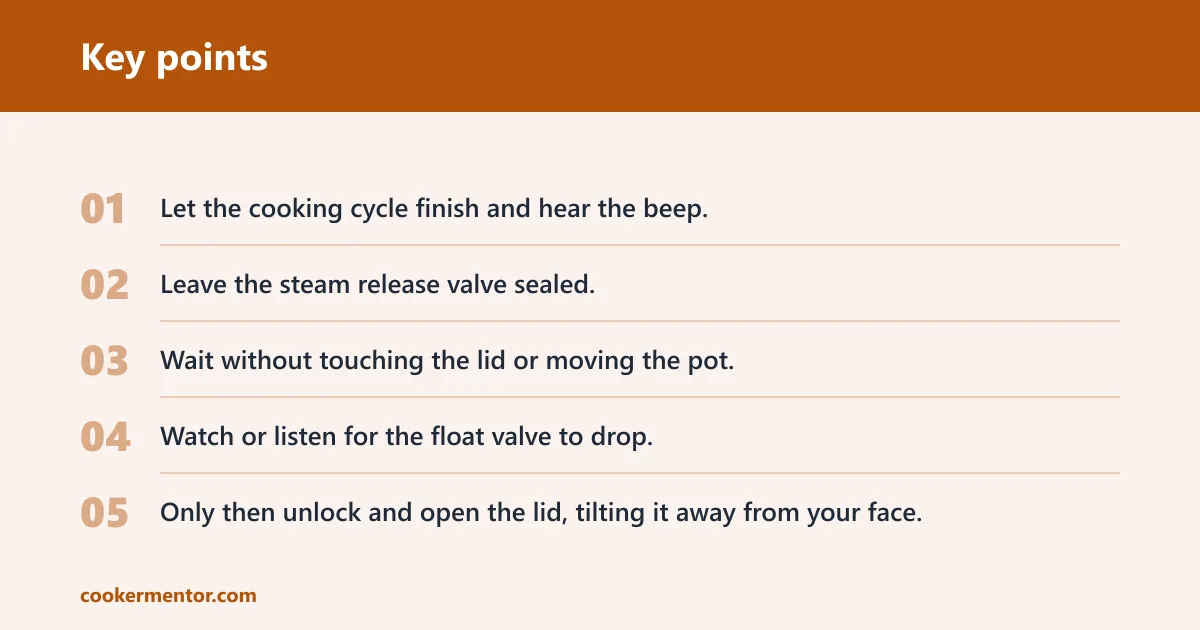
- Let the cooking cycle finish and hear the beep.
- Leave the steam release valve sealed.
- Wait without touching the lid or moving the pot.
- Watch or listen for the float valve to drop.
- Only then unlock and open the lid, tilting it away from your face.
Pressure cooker steam leaves the valve at a temperature that can scorch skin in seconds. Open the lid slowly, and keep your face out of the steam path. In a small kitchen, also clear the cabinet space above the cooker before you start so steam does not hit overhead cabinets.
Suppose a 6-quart pot of bean soup finishes cooking with the pin still up. The soup may have stopped actively boiling, but pressure is still trapped inside. Wait for the pin to fall before opening, or the soup can spurt upward when the lid moves.
How long does natural pressure release take on an Instant Pot?
Natural release can take 5 to 30 minutes depending on the food, and it may take as little as 5 minutes or as long as 40+ minutes. Fuller pots and soupier foods take longer. A pot filled near the max line can need a long wait before the float valve drops.
Liquid load matters. More broth, more soup, and more total volume mean more heat stored in the pot, so the pressure falls more slowly. A small amount of water with eggs may release quickly, while a full pot of soup can take a long time, sometimes well over 40 minutes.
What changes the timing
Food type changes the wait. Dense cuts of meat and large volumes of liquid hold heat longer. Foamy foods can also behave differently because starch and protein foam can rise during venting, which is one reason natural release is often safer for them.
A common first-timer mistake is assuming the pot is ready as soon as the cooking time ends. It is not. If the recipe calls for natural release, the clock keeps running after the beep until pressure drops on its own.
When should you use natural release?
Use natural release when you want pressure to fall slowly and the recipe calls for it, especially with meat, poultry, beans, grains, and liquid-heavy dishes. It is often the better choice when fast venting would cause sputter, clogging, or overcooking.
Meat and poultry
Natural release helps meat finish gently. It is especially useful for whole chicken or turkey breasts because the skin stays intact and the surface is less likely to tear or dry out. Shorter waits are common for smaller pieces, while larger cuts may need a longer rest.
Beans, grains, and foamy foods
Foamy foods like beans, grains, pasta, oatmeal, and applesauce benefit from natural release. The slower drop can prevent clogging or spurting in the valve. If a recipe uses starch or foam, do not rush straight to quick release unless the recipe says to do so.
Soups and broth-heavy recipes
Soups and broth-heavy recipes often need longer NPR because the pot holds more heat and more liquid. A full pot can still be venting 40+ minutes later. If the recipe specifies a timed natural release, follow that exact timing and then use quick release for the rest.
Natural release timing chart
This chart gives a practical decision rule for common Instant Pot jobs. Use full NPR when the food benefits from a long, slow pressure drop. Use timed NPR then quick release when you want some gentle carryover cooking but need to stop the cycle before the food softens too much.
| Food or recipe | Recommended NPR time | Full NPR or timed NPR then QPR | Main risk if timing is wrong |
|---|---|---|---|
| Chicken thighs | 10 minutes | Timed NPR then QPR | Too long can soften texture; too short can vent juices forcefully |
| Whole chicken | 15 minutes | Timed NPR then QPR | Too short can dry the meat; too long can overcook the breast |
| Turkey breast | 15 to 20 minutes | Timed NPR then QPR | Too short can release hot broth abruptly; too long can dry the meat |
| Dry beans | 15 to 20 minutes | Full NPR | Quick venting can cause sputter or clogging in the valve |
| Lentils | 10 minutes | Timed NPR then QPR | Too long can turn them mushy |
| White rice | 10 minutes | Timed NPR then QPR | Too short can leave excess surface moisture; too long can make rice overly soft |
| Brown rice | 10 to 15 minutes | Timed NPR then QPR | Too short can leave uneven texture; too long can soften grains too much |
| Broth | 15 to 20 minutes | Full NPR | Quick release can send hot liquid toward the valve and splatter |
| Soup near the max line | 20 to 30 minutes | Full NPR | Releasing too soon can produce a foamy, messy vent |
| Hard-boiled eggs in 1 cup water | 5 to 10 minutes | Timed NPR then QPR | Too long can overcook the yolks |
| Oatmeal | 10 to 15 minutes | Full NPR | Quick release can sputter and clog the vent |
| Applesauce | 15 minutes | Full NPR | Fast venting can splatter thick foam through the release valve |
Use the table as a starting point, not a fixed rule. More liquid, a fuller pot, or a foamer like oatmeal can push the wait longer. Less volume usually means a shorter release.
Do you need to turn the Instant Pot off for natural release?
No. You do not need to turn the Instant Pot off to speed natural release, and Keep Warm does not need to be switched off. The cooker can continue warming while pressure falls, and that does not stop natural release from happening.
App control can matter on some models. An Instant Pot Pro Plus can automate release through the app, which may be useful if you want a timed venting step, but the same safety rule applies: keep clear of hot steam and wait for the float valve to drop before opening.
Why recipes call for natural release
Recipes call for natural release because it changes how the food finishes. It can keep meat tender, reduce sputter with foamy foods, and prevent grains or starches from overcooking from a sudden blast of steam.
Why it helps meats stay tender
Meat keeps cooking from its own retained heat after the burner or heating cycle stops. A slower pressure drop lets that finish more gently, which helps larger cuts settle without a hard stop from quick venting.
Why it reduces sputter with foamy foods
Beans, pasta, oatmeal, and applesauce can foam. If you vent them too fast, the foam can surge toward the valve and spit out in bursts. Natural release lowers that risk and can help keep the vent clear.
Why it can protect grains and starches
Starches can go from tender to mushy fast once the cooking ends. A timed natural release can give enough carryover heat to finish the dish without letting it sit under pressure too long. That is why many recipes use natural release followed by quick release.
Picture a pot of oatmeal with extra milk and fruit stirred in. If the recipe asks for a 10-minute natural release, use that window, then switch to quick release only if the pin is still up and the recipe says to finish venting manually. The goal is to stop before it turns gluey.
Frequently asked questions
What does natural pressure release on an Instant Pot mean?
It means the cooker lowers pressure on its own after the cycle ends. You leave the valve sealed and wait for the float valve to drop. That drop tells you the lid is safe to open.
How long is a natural pressure release on an Instant Pot?
It can be 5 to 30 minutes for many foods, and it may run to 40+ minutes for a full pot of soup or other liquid-heavy recipes. The exact time depends on volume, food type, and how much heat the pot is holding.
How does natural pressure release work on an Instant Pot?
After cooking stops, the sealed pot cools and pressure falls gradually. Steam condenses inside the cooker until the float valve drops. You then know the pot is depressurized and ready to open.
What does natural release do on an Instant Pot?
It slows the end of cooking and keeps steam from blasting out all at once. That helps meats stay tender, reduces foam-related sputtering, and can keep grains or starches from turning too soft too fast.
Do you turn Instant Pot off for natural release?
No. You do not need to turn it off, and Keep Warm does not need to be disabled. Let the cycle finish, leave the valve sealed, and wait for the float valve to drop on its own.
How do I let my Instant Pot release pressure naturally?
Leave the steam release valve in the sealing position after cooking ends, keep your face and hands away from the steam path, and wait. When the float valve drops, open the lid slowly and away from your body.